February 27, 2026
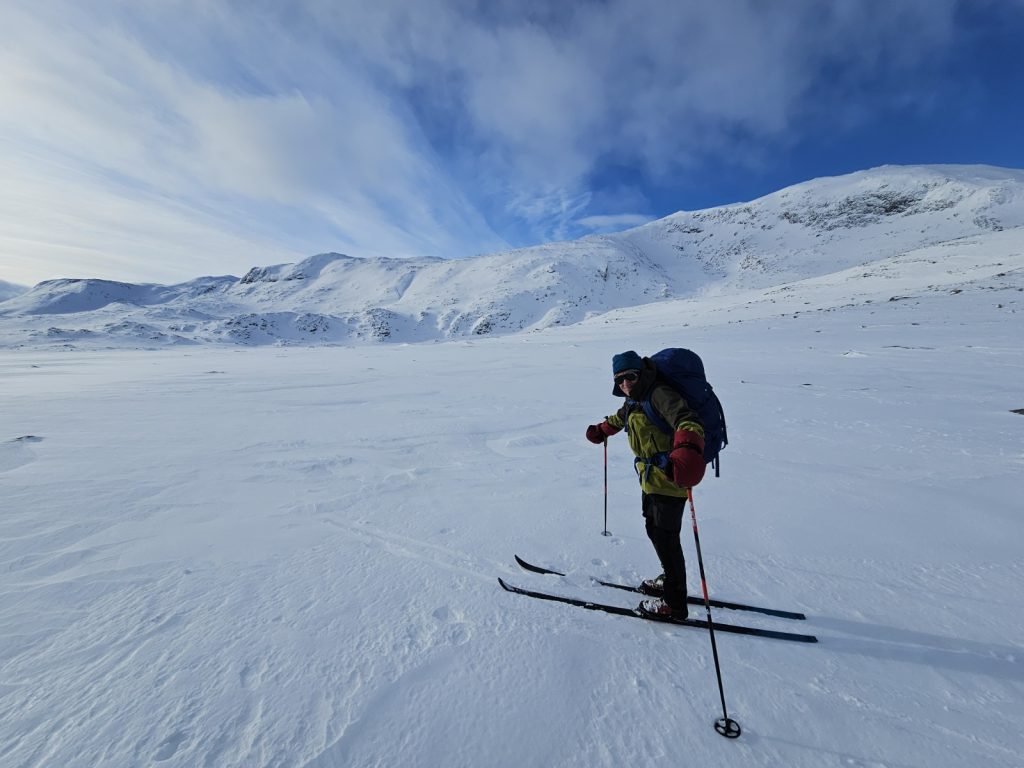
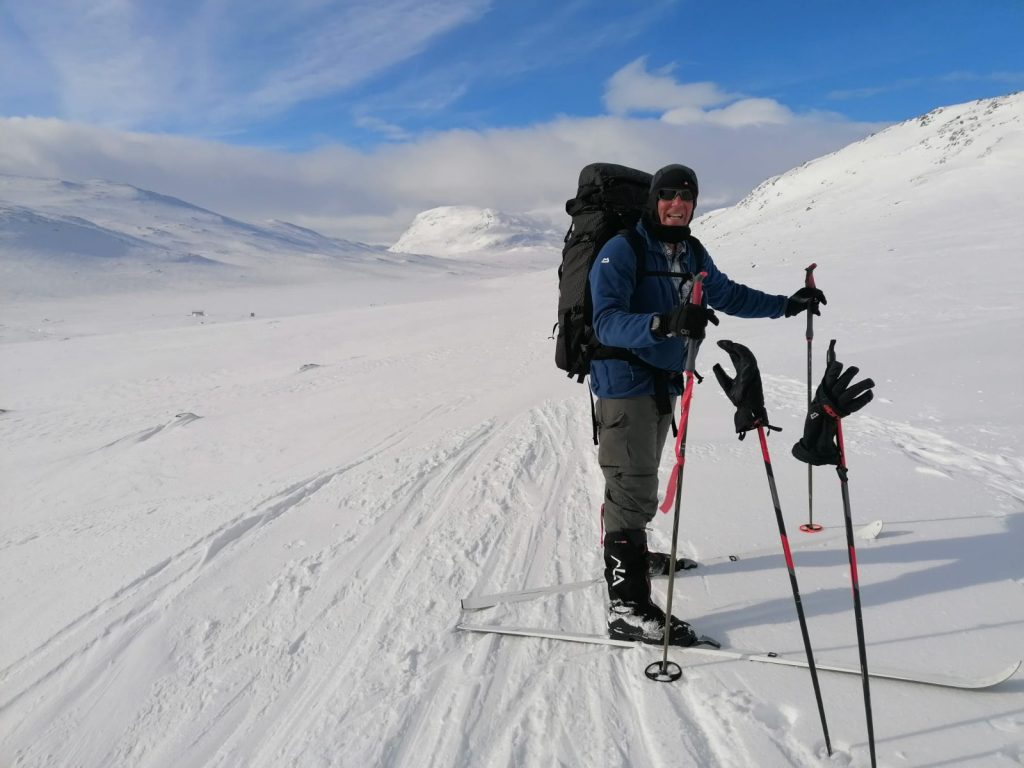
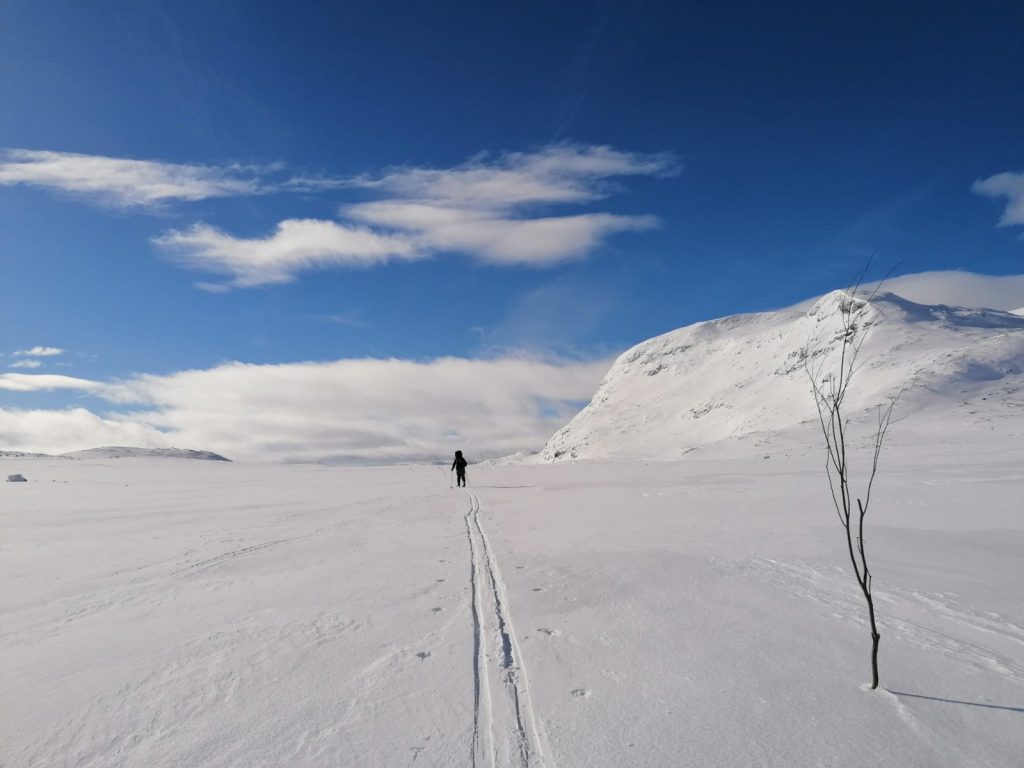
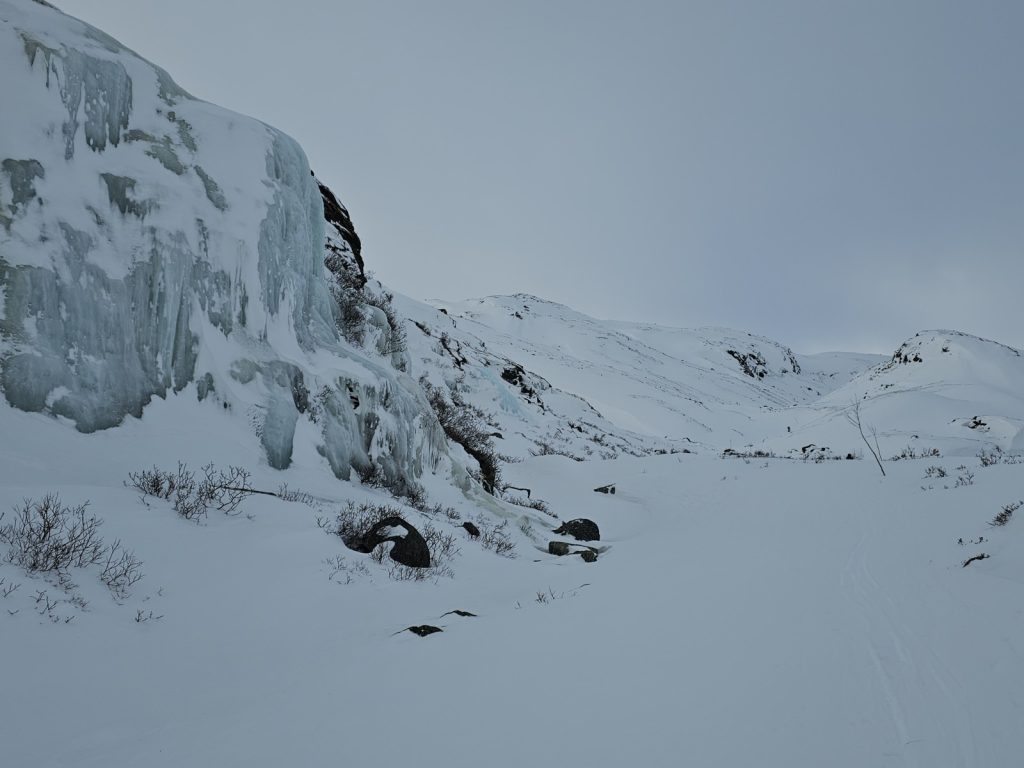
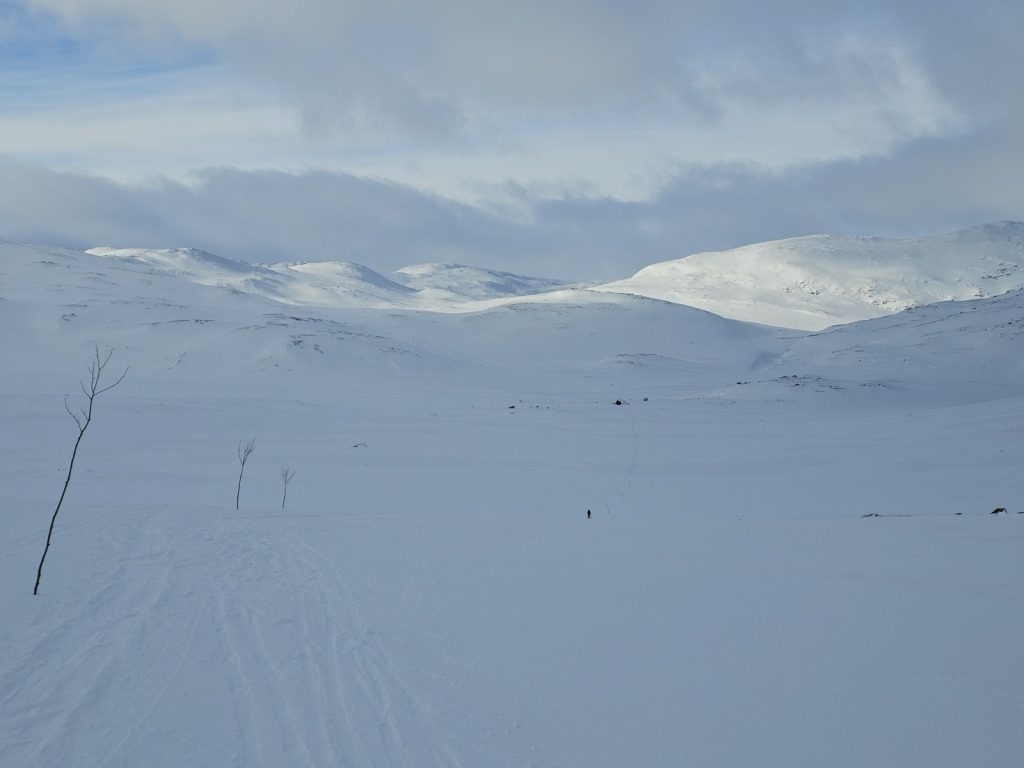
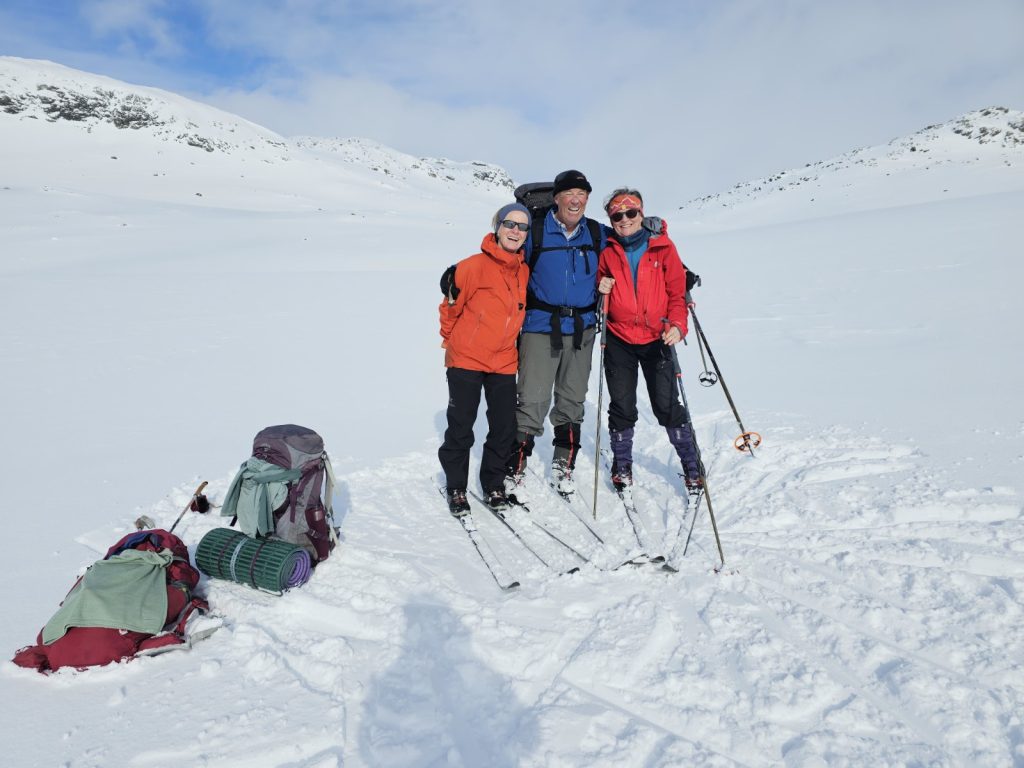
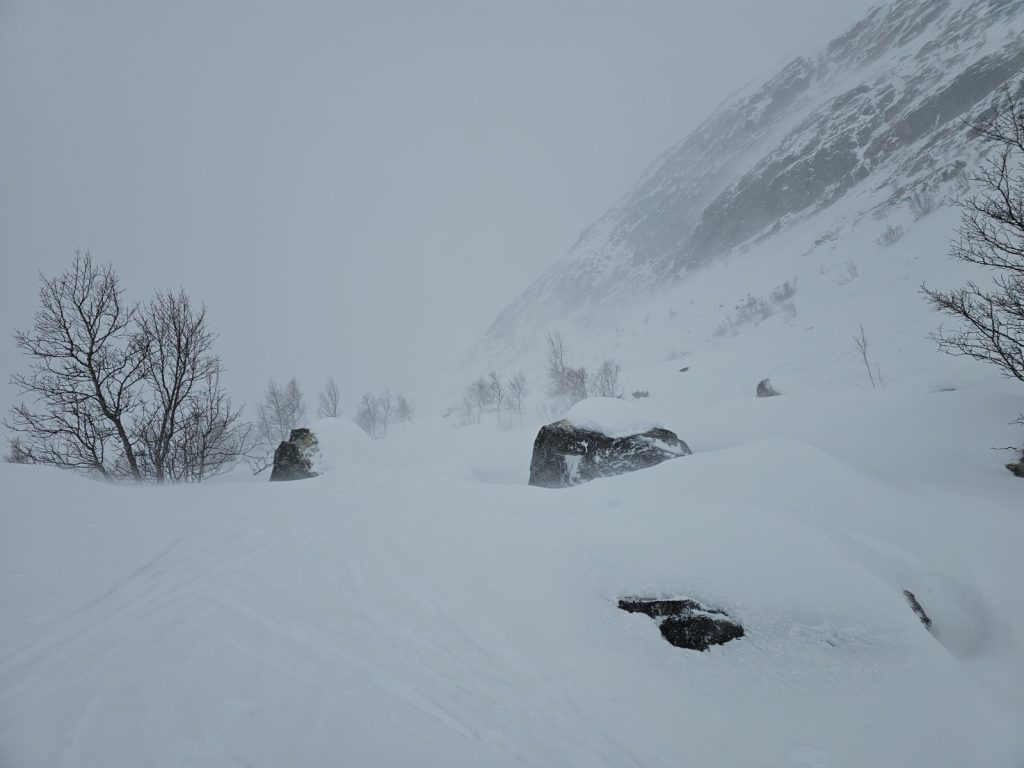
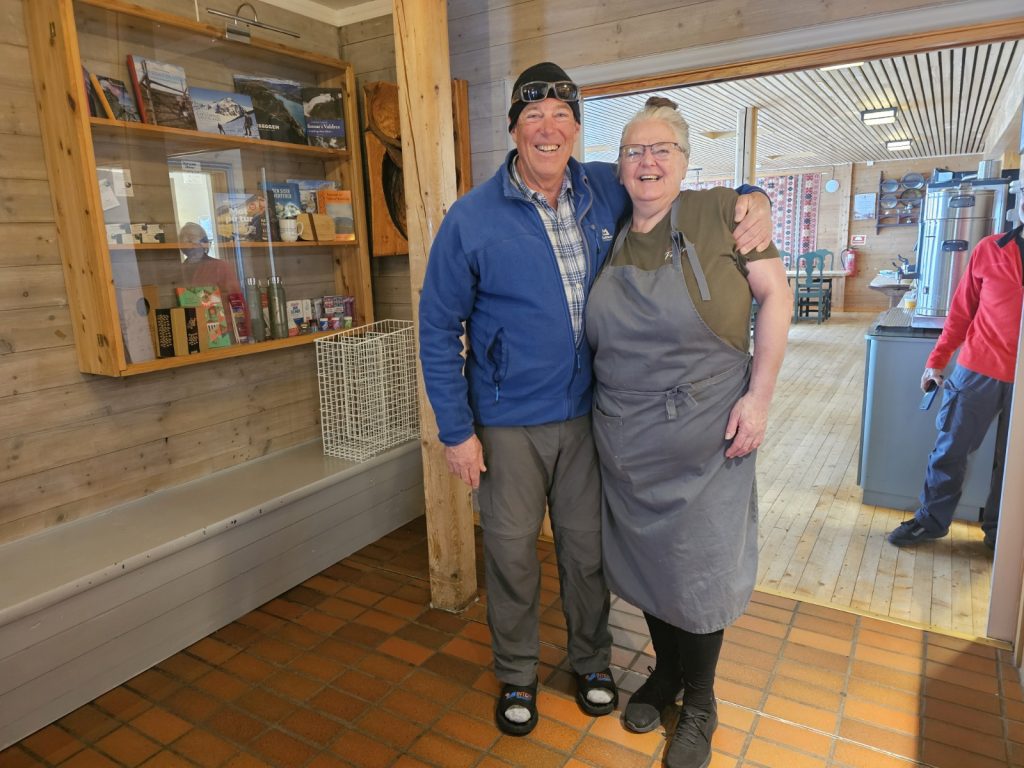
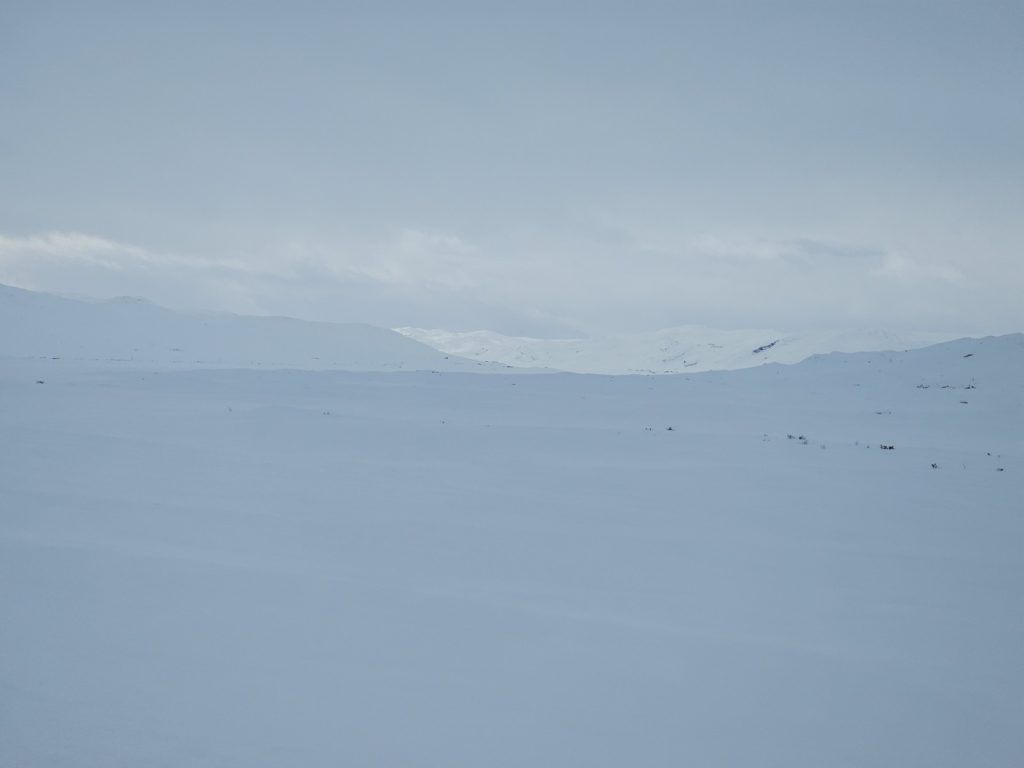
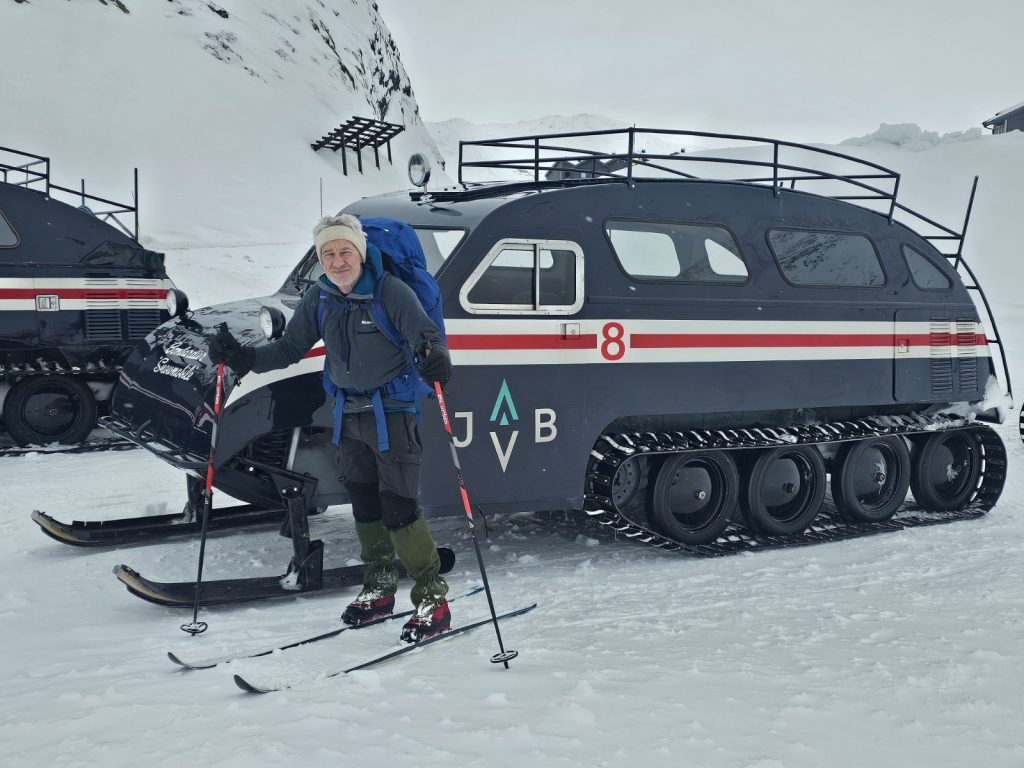
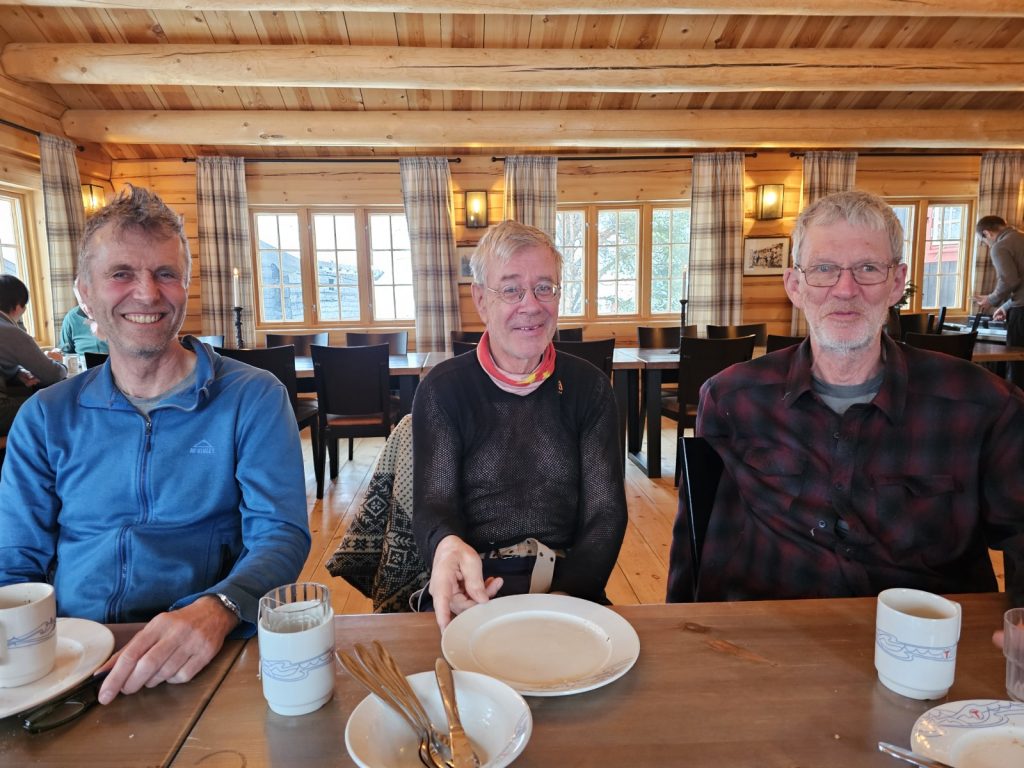
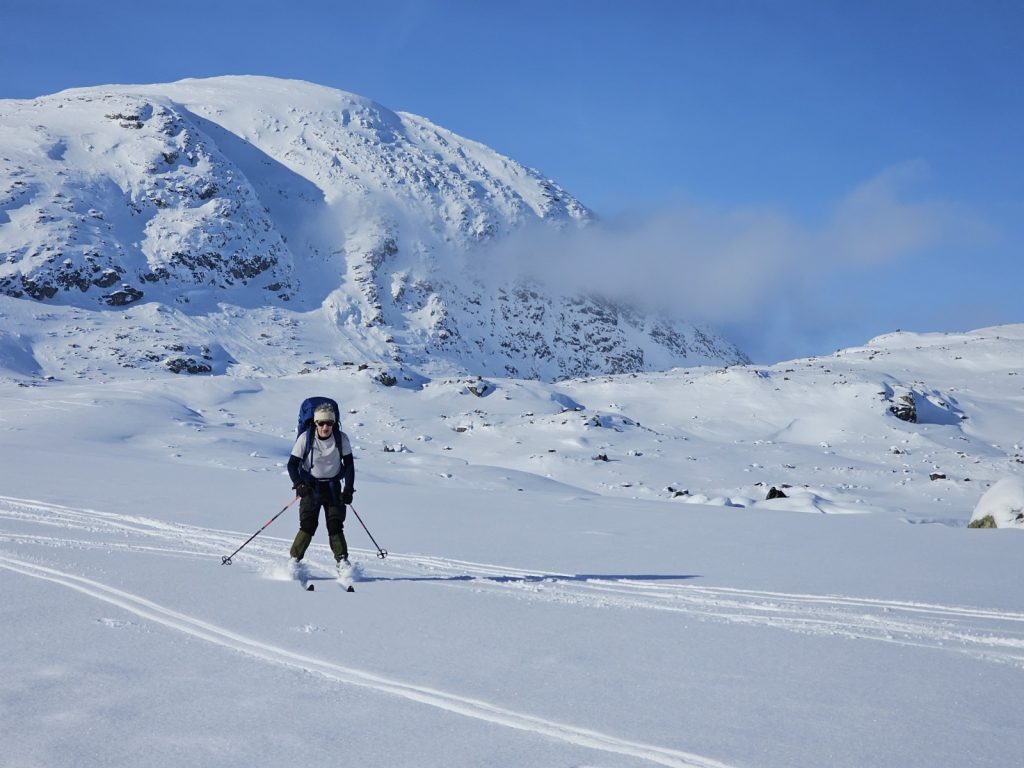
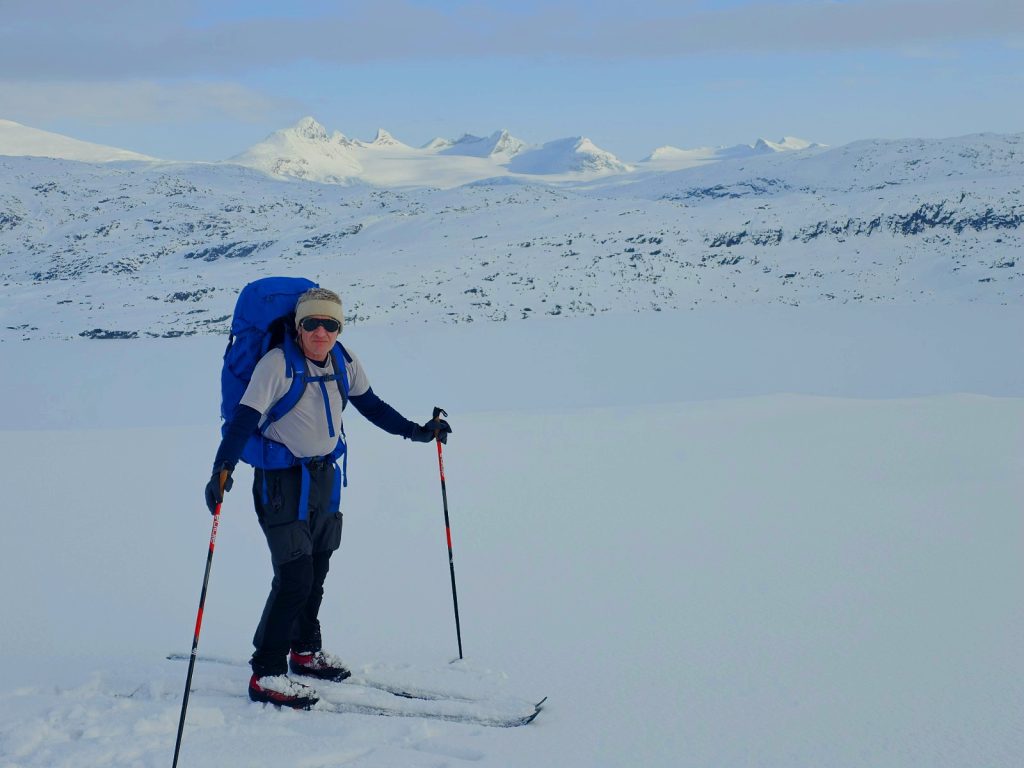
Day 20. Finse to Kjeldebu. 28 km. 7 hours. 480m up. 640 m down. Breakfast was even more of a bun fight at Finsehyttya as there were so many people staying. However the hosts had perfected the system and there were two streams. It started at 0730 and by 0900 we had eaten well, made our sandwiches for the day and packed. We then said goodbye to the witty Wilhelm who had been great company for the last 5 days. I also said goodbye to Cat Burford, the Molar Explorer. When we set off there was a slight wind and it was overcast, but the forecast was great for the day. As we headed south and skied over Finsevatnet lake to the south there were many groups of people heading off on small expeditions and day trips. Finse was a busy place and there was quite a vibe here but it was also a little noisy and even stressful. The further we skied from the lodge, hotel and railway station the quieter it got until in the end it was in the past.
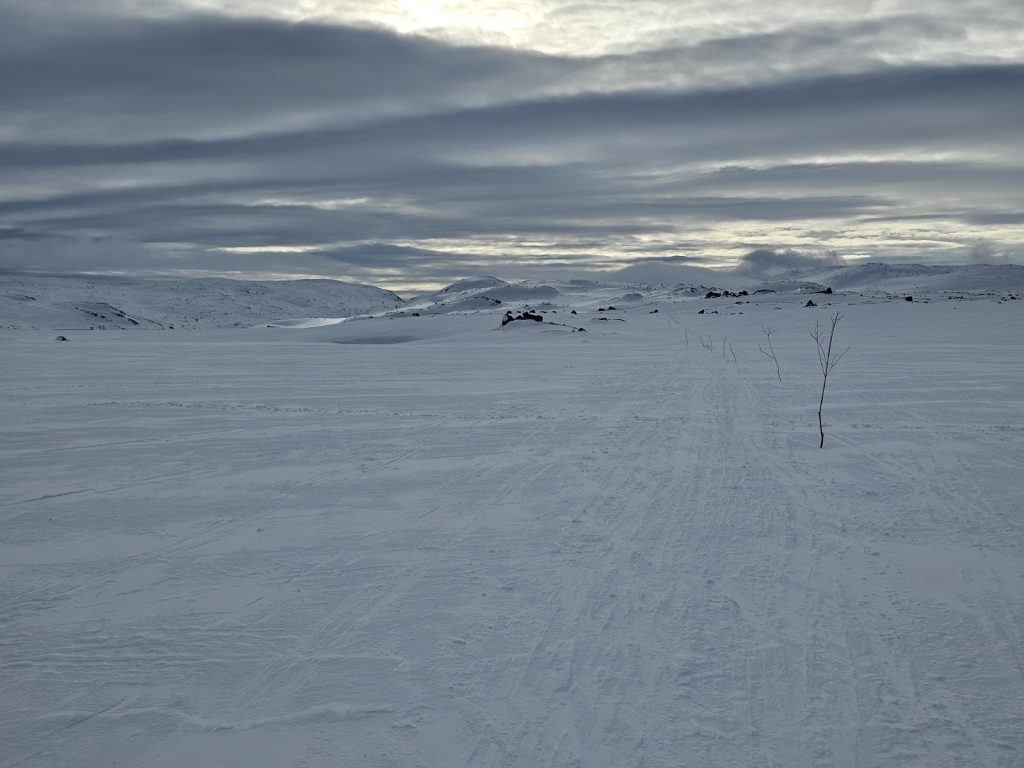
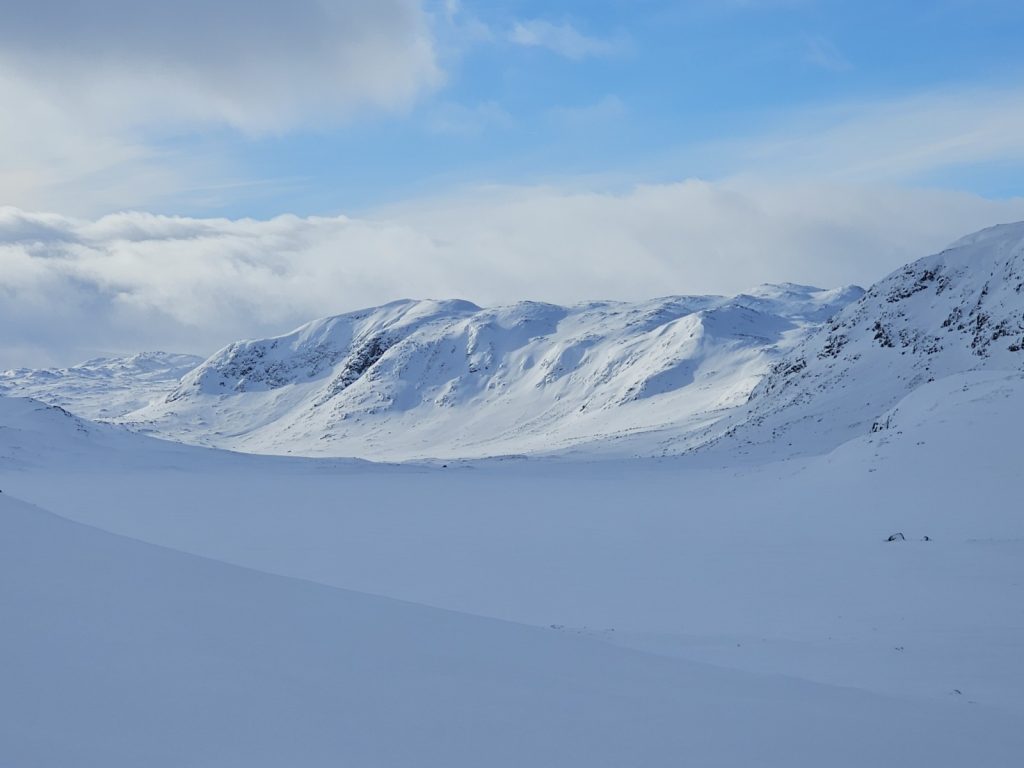
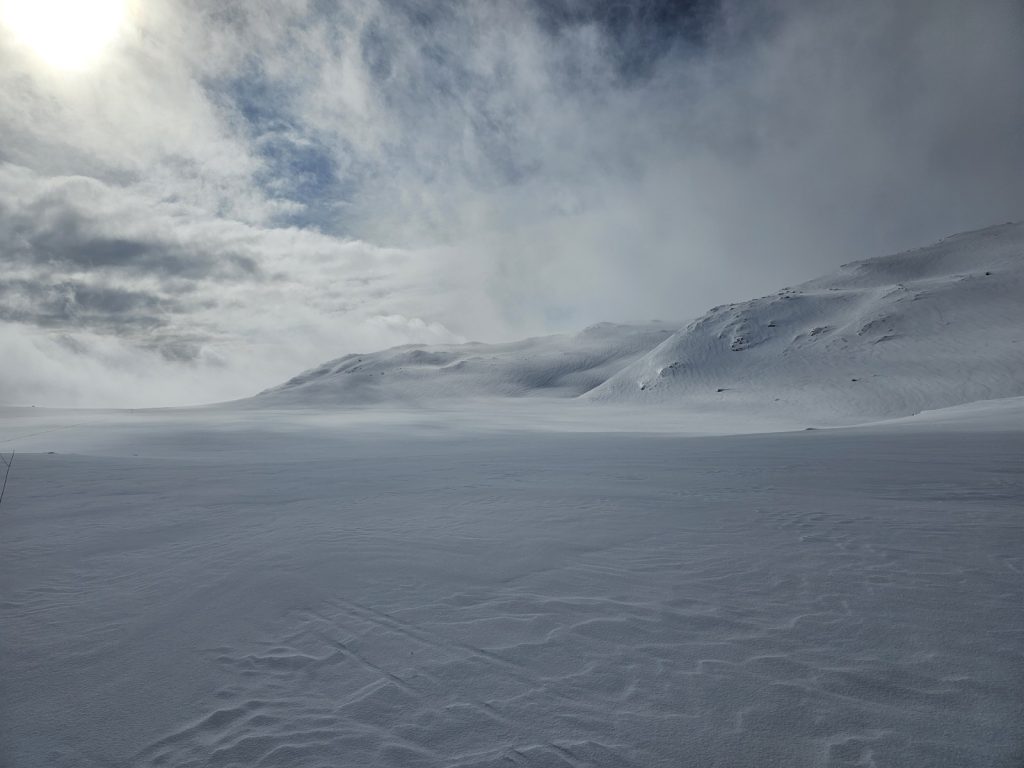
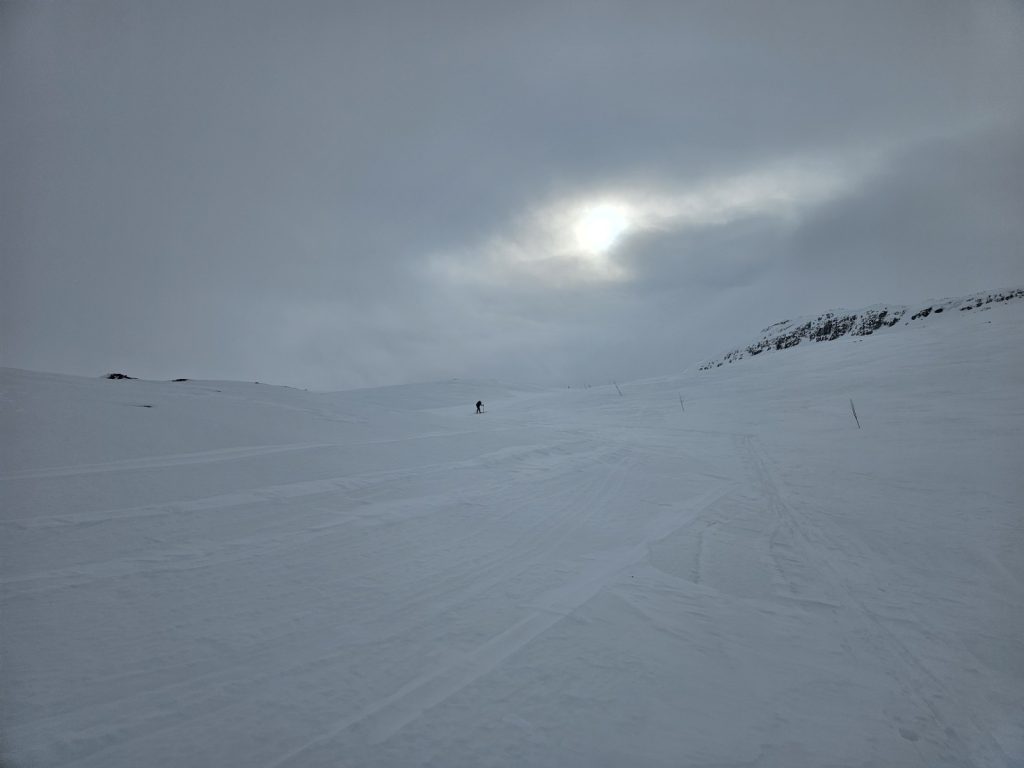
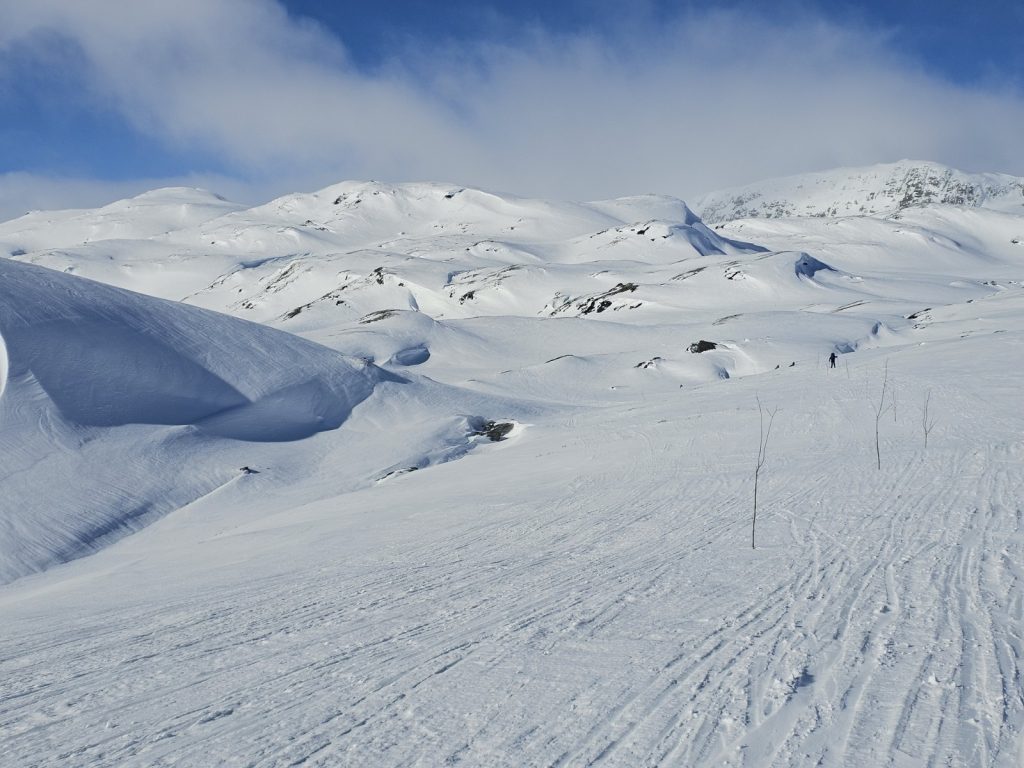
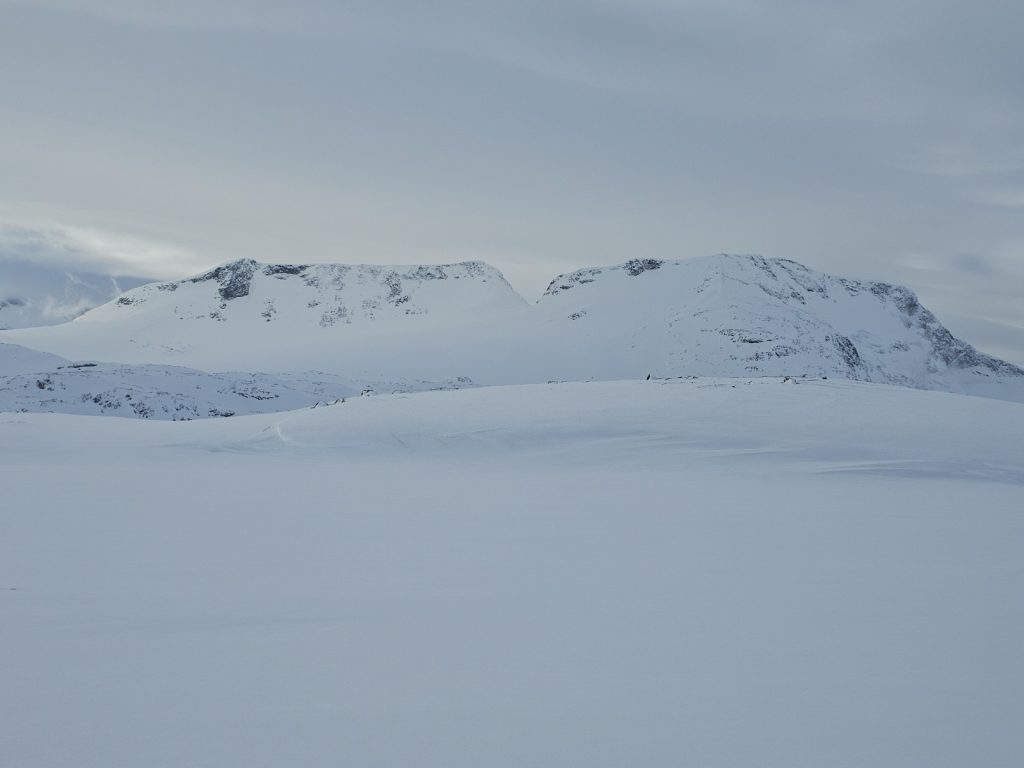
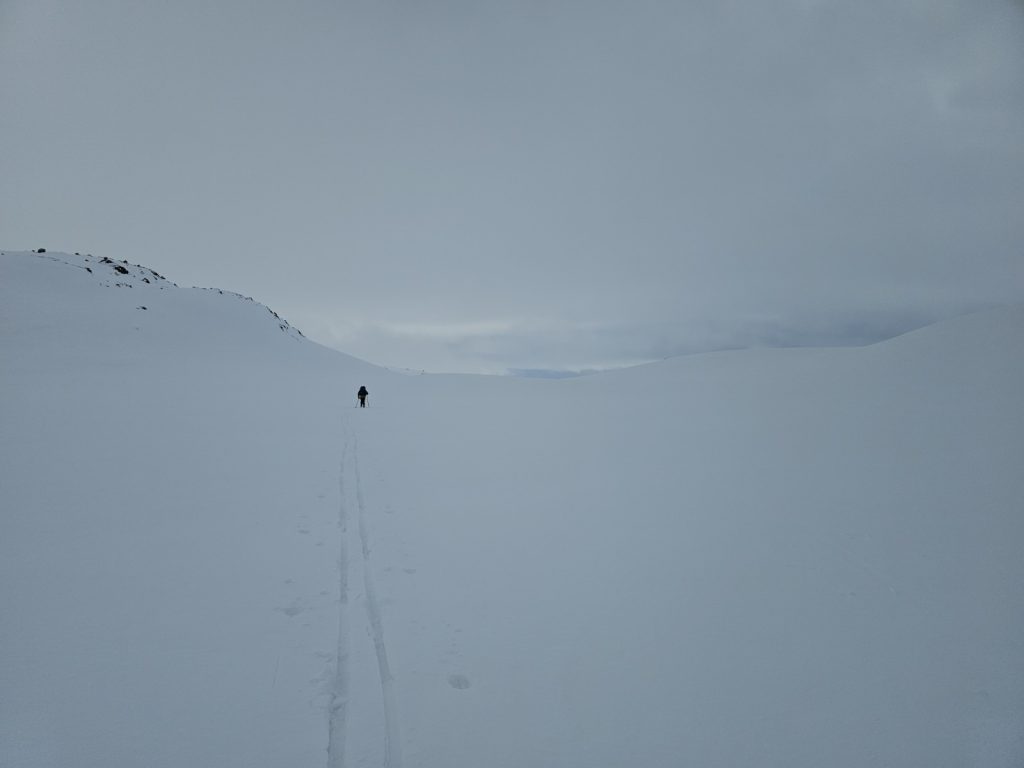
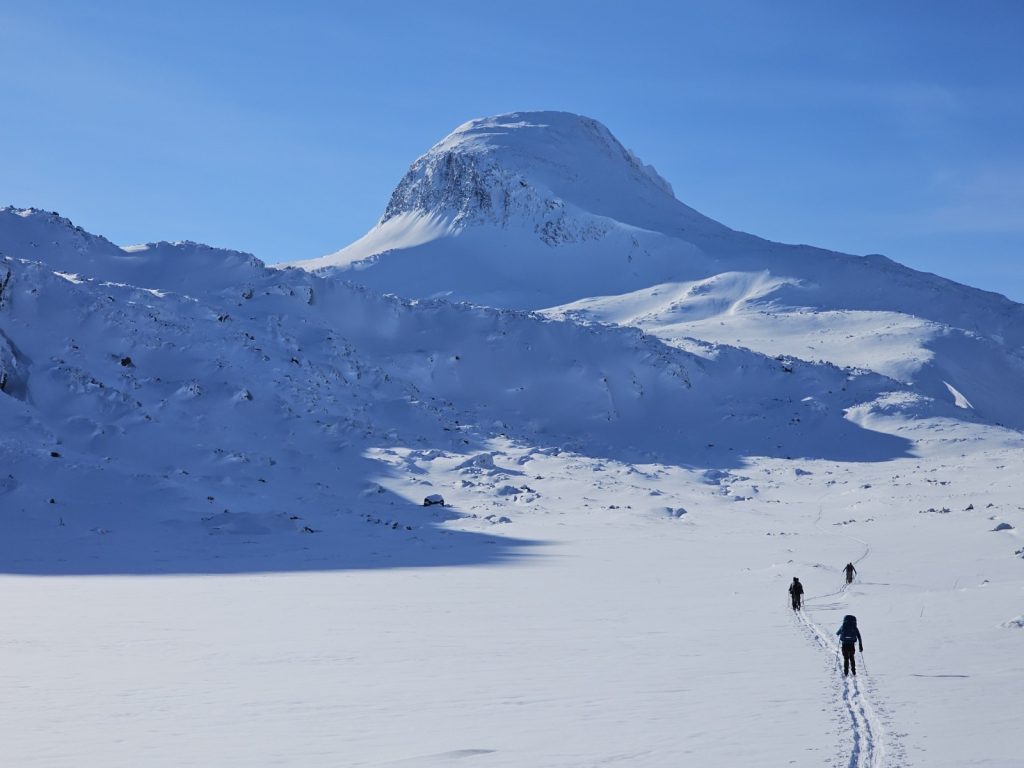
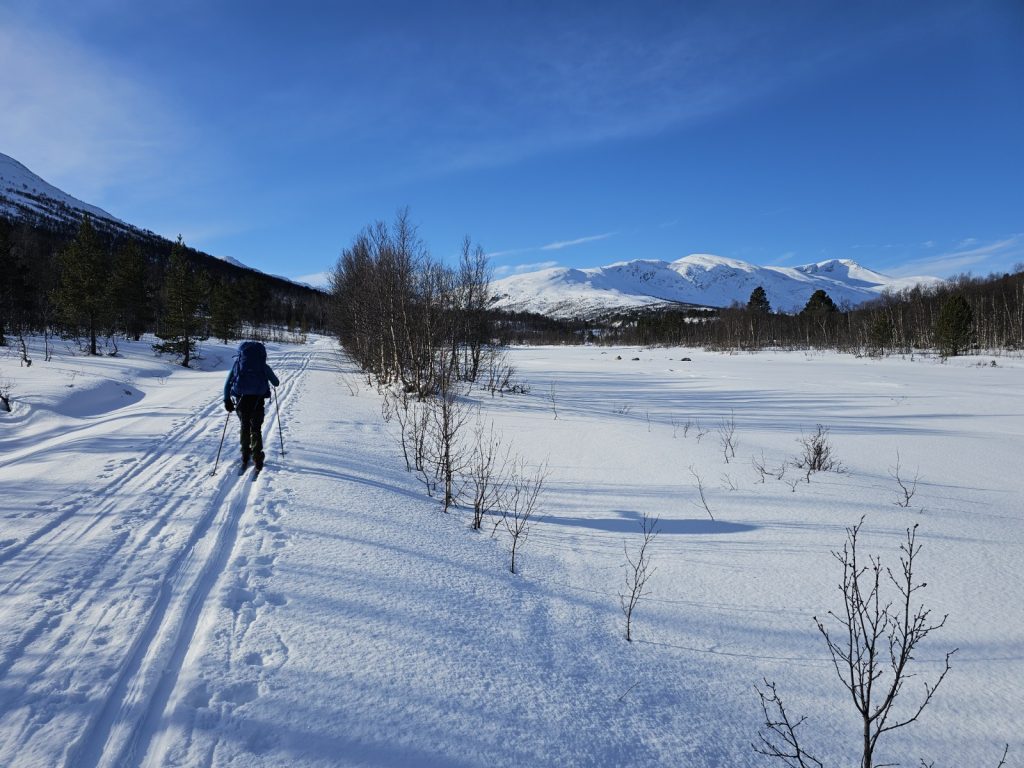
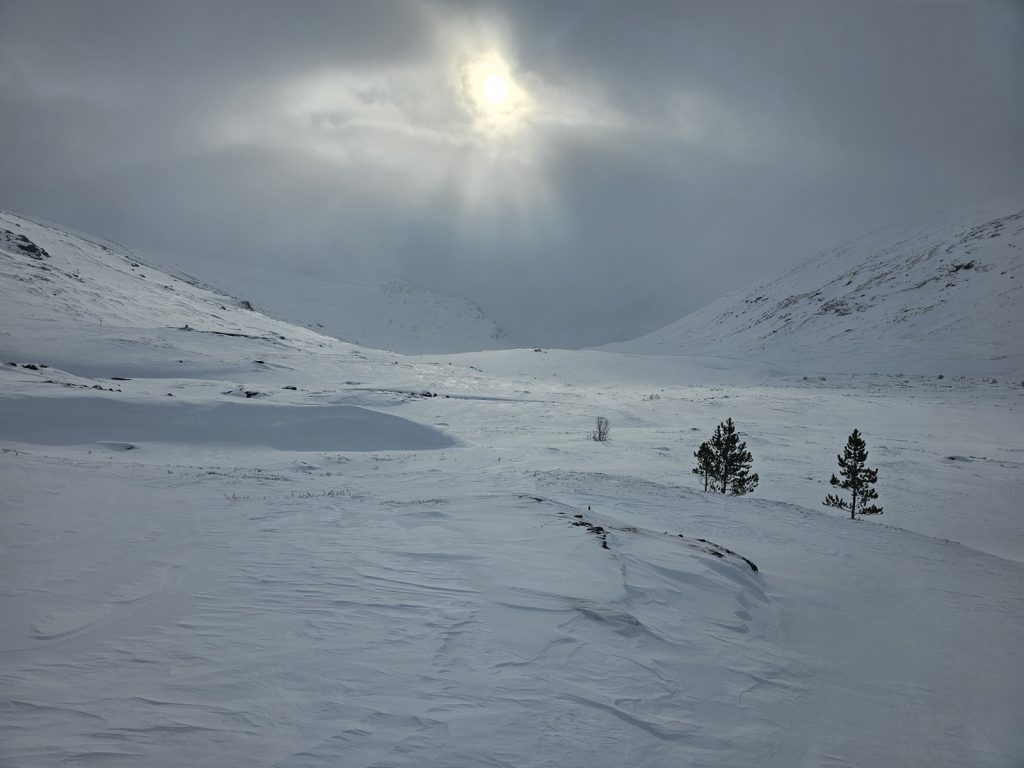
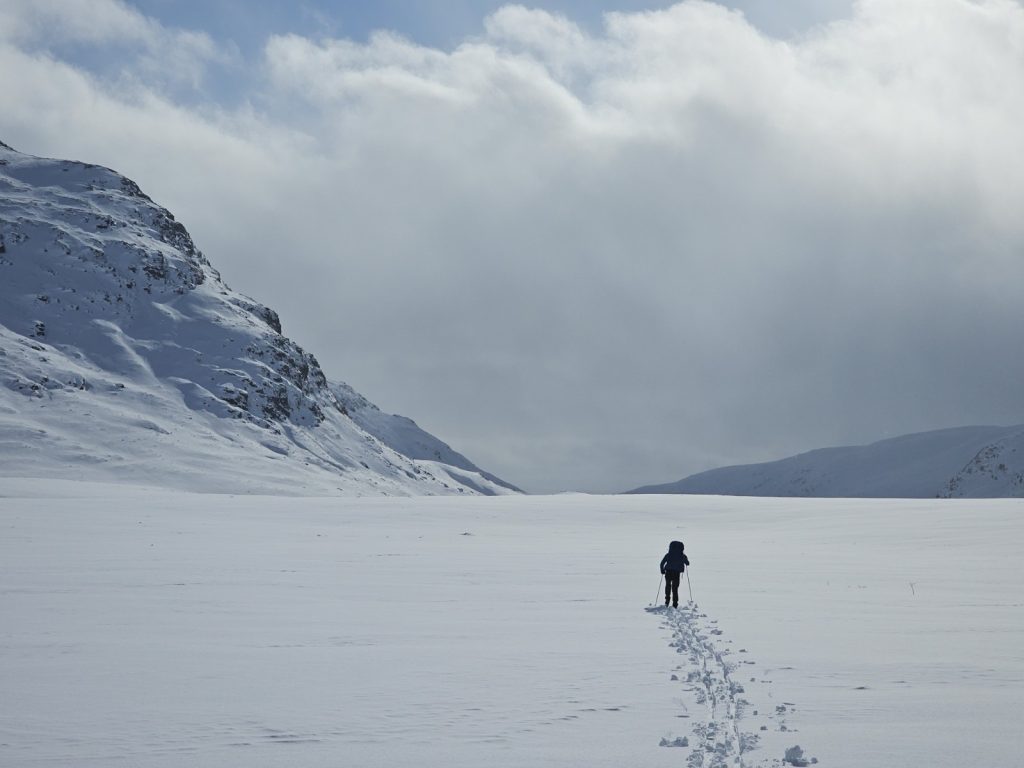
79. Heading south across Finsevatnet lake in the early morning as the cloud was starting to dissapate
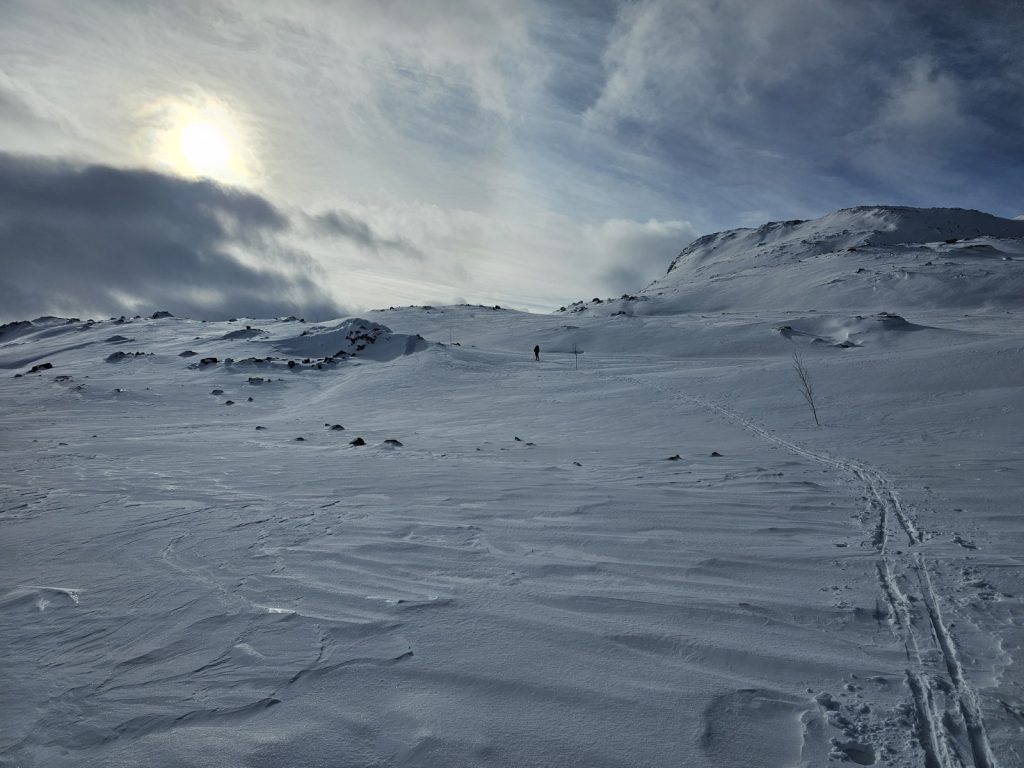
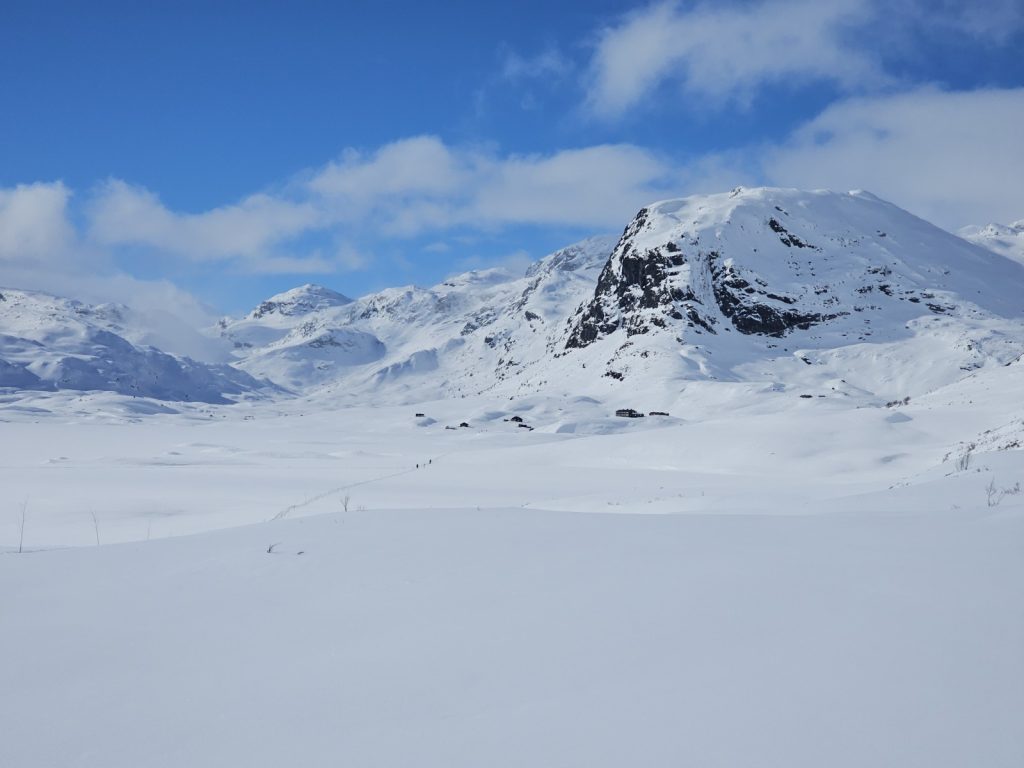
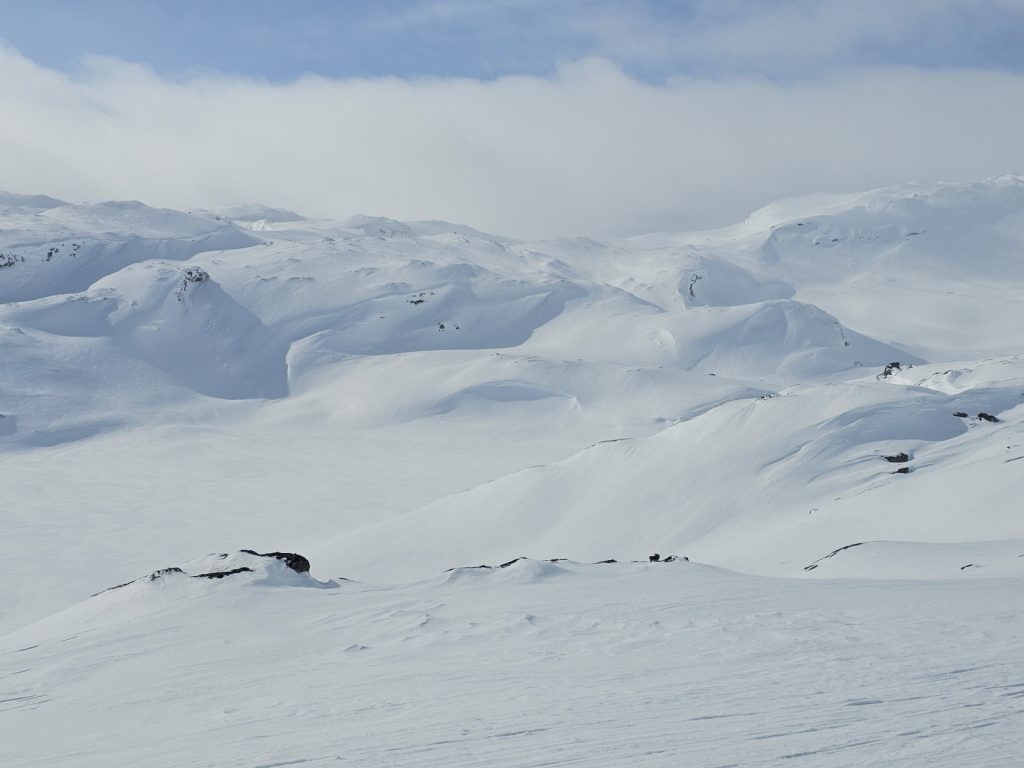
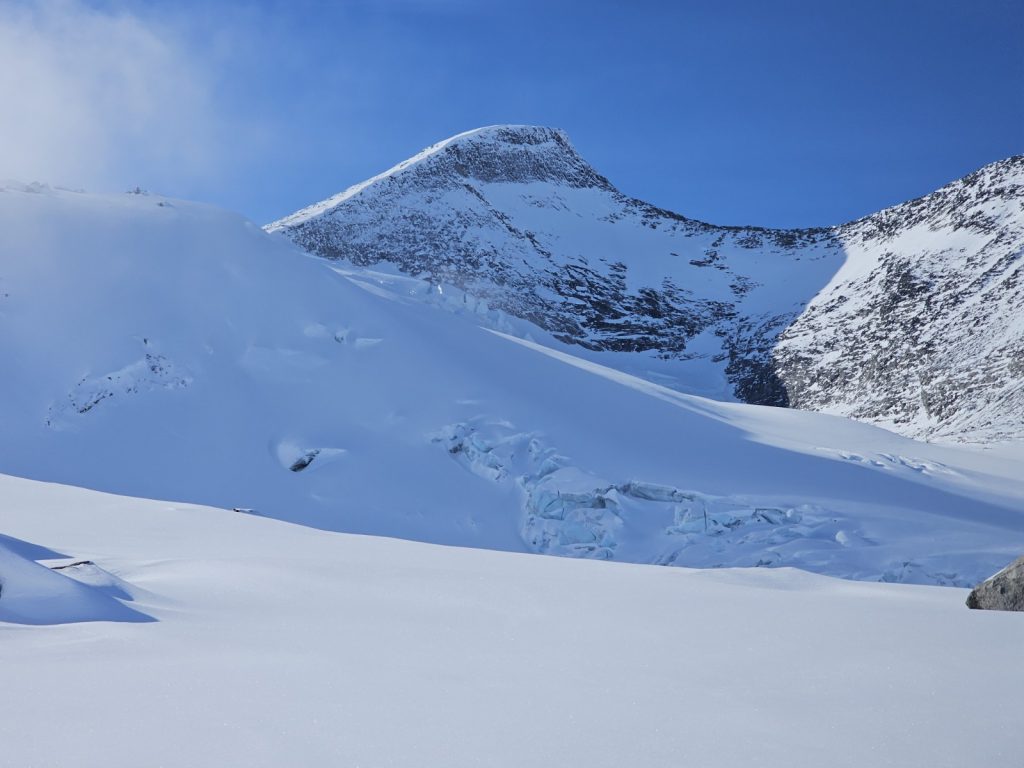
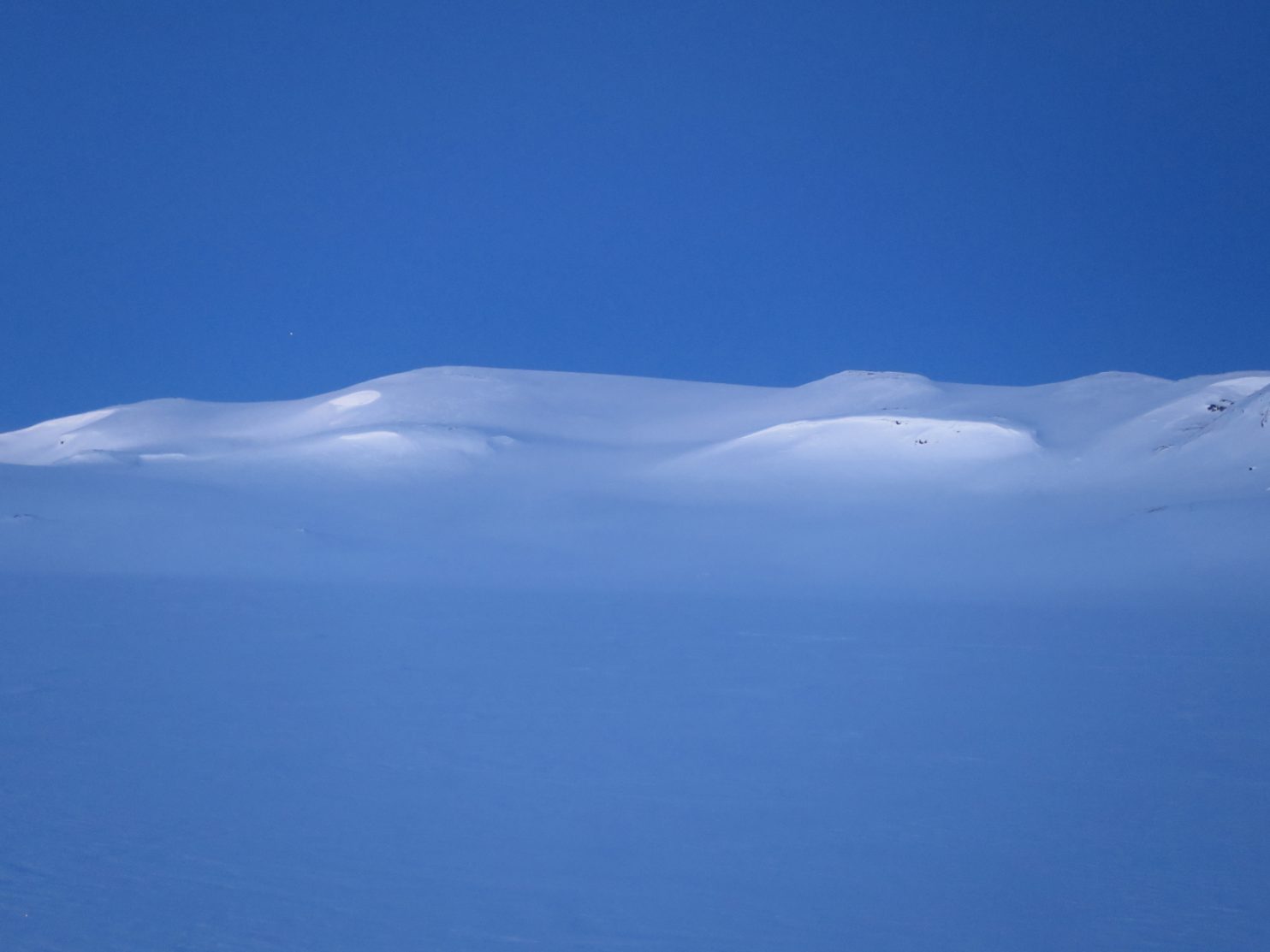
We skied across the lake and then started up the shallow slopes to the south. The cloud was breaking up and there were more and more bright patches across the surface of the snow. To the SW the lofty icecap of Hardangerjokull was emerging from the mists shrouding it. Hardangerjokull was an ice cap, perhaps 15 kilometres in diameter, which sat on a plinth on mountains whose steep ramparts rose out of the Hardangervidda plain. Here and there there were some chinks in the ramparts and down these flowed glaciers from the ice cap above. It was a tremendous sight which was slowly being revealed. By the time we climbed up to the top of the shallow pass by Brattefonnvatnet the whole ice cap was clear and the sky was almost pure blue.

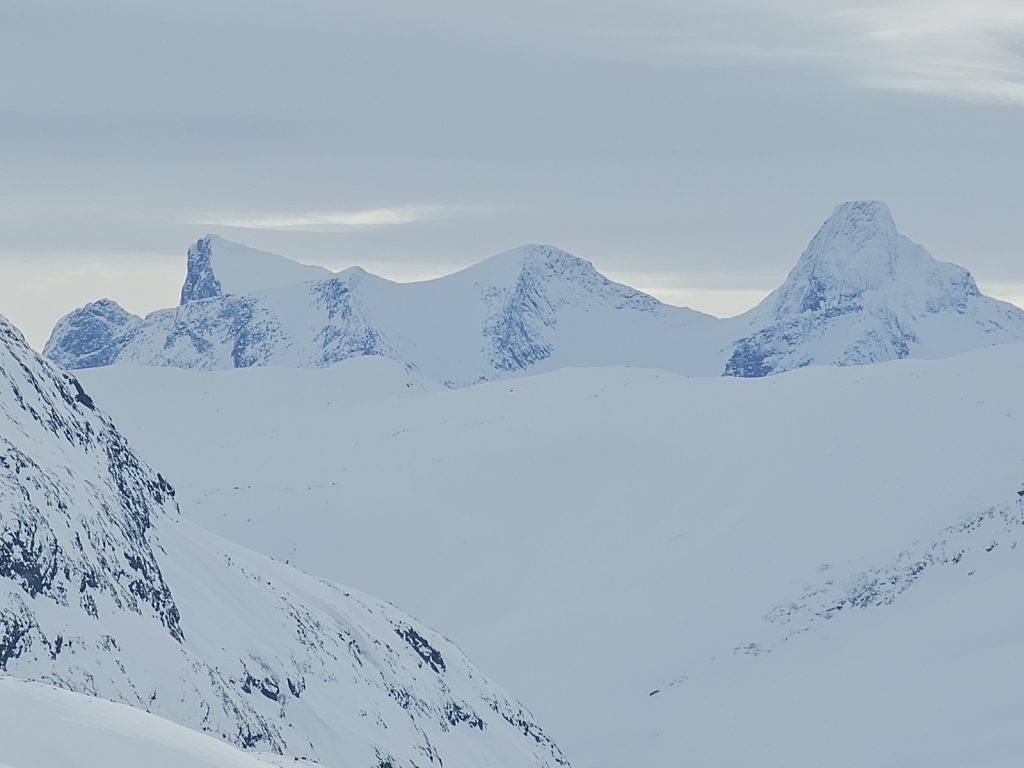
80. Looking up to the plinth on which the large Hardangerjokull ice cap sits covering the entire 15 km diameter plateau on top.
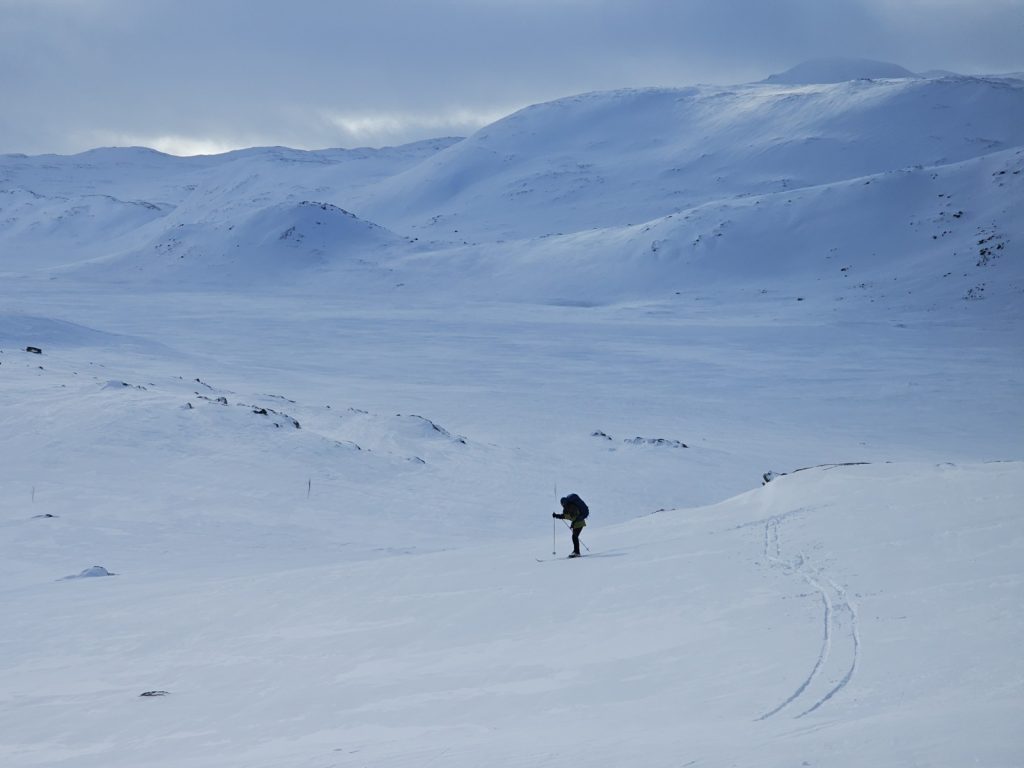
The trouble was as the temperature was rising the surface of the snow was getting less predictable and a few times when we went off the main trail, formed by hundreds of skiers, the frozen surface collapsed and our skis cut through to the sugar snow underneath. It was fine here but I thought the descent down the south side of Helvetes nutane would be too erratic for an easy ski down. We considered the options and decided to give this more adventurous route a miss and continue down to Finnsbergvatnet lake and then head west from here. It was two cautious easy sides of a triangle rather than an adventurous, exciting but potentially difficult one side of the triangle.
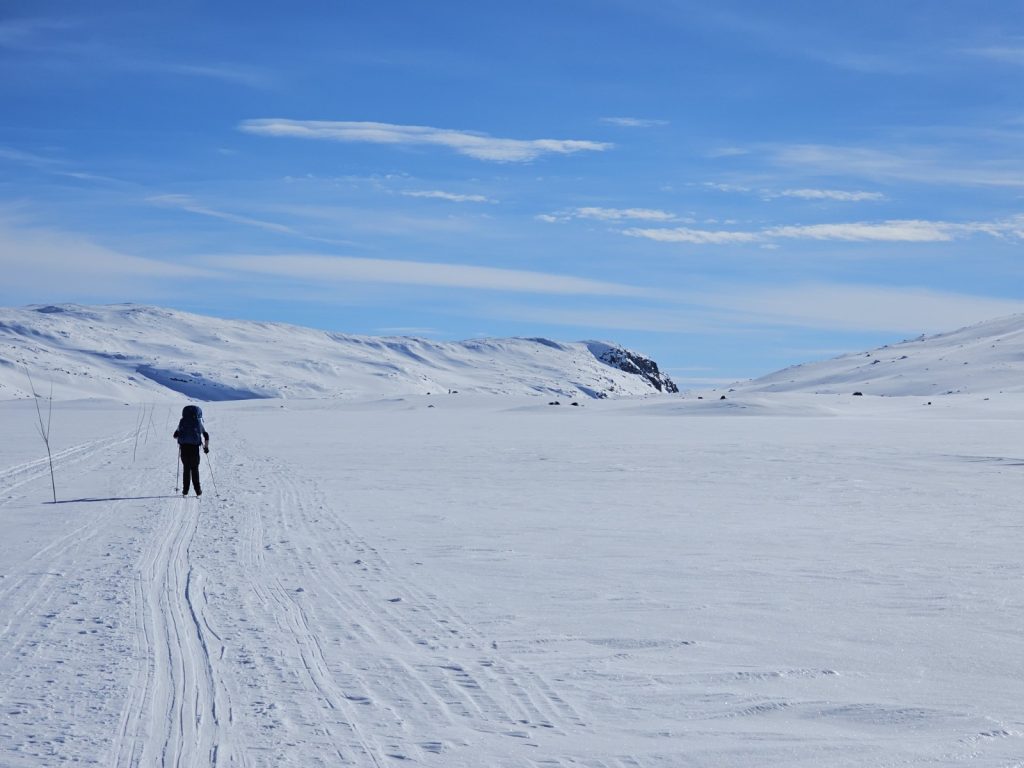
81. Having decided not to go over Helvetes Nutane we detoured round them and continued down the valley and across Midnutvatnet lake shown here.
As we continued down the valley it got warmer and warmer with the sun fierce in the clear sky. I stopped to put sunblock on my lips and nose. There were groups of Norwegians sitting everywhere having their lunch on rocks here and there. We passed one group and I heard someone shout “James?”. It was a blonde lady on a rock with 3 others and they were surrounded by 4 pulks. I skied over and suddenly realized it was Hannah McKeand. When I said yesterday that Louis Rudd was arguably the UK’s most prominent polar explorer, I had completely forgotten about Hannah, probably on account that she now lives in the States. Hannah is a prolific polar guide and trainer and has been some 6 times to the south pole and plenty of guiding in the Arctic also. She is the polar queen with a huge character to match it. She is very well known and highly respected. It was again such a coincidence to meet her here. We chatted for a good 15 minutes, mostly with Hannah holding court with great stories and insights.
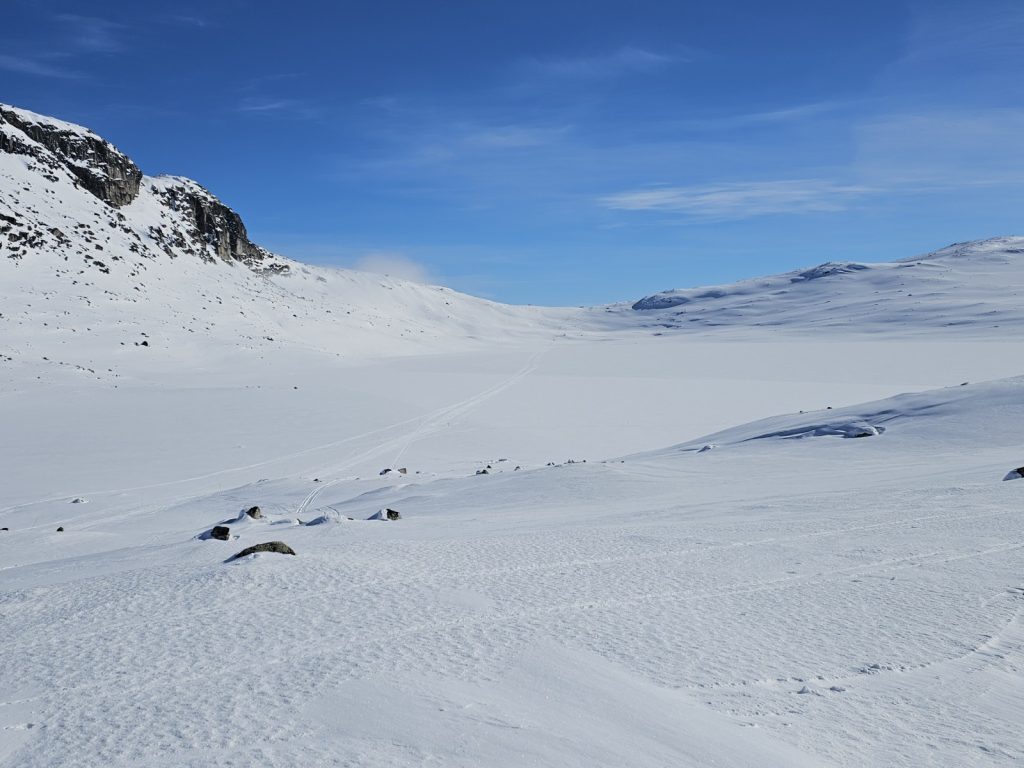
82. After meeting Hannah McKeand we dropped down to Finnsbergvatnet lake where there was a junction with a route to Kraekkjahytta lodge and another to Kjeldebu cabins.
After Hannah we continued down to Finnsbergvatnet and stopped there for lunch. It was very hot in the intense sun and we could just sit there in our shirts without gloves on. After our lunch we continued west down the lake passing a narrow point on the lake where two peninsulas protruded in on opposite sides. Throughout the millennia this has been a place where Stone Age Norwegians have been trapping reindeer and spearing them as they tried to swim across the lake between the peninsulas. There are archaeological finds here going back some 8000 years.

83. After the last climb there was an exciting run down the final slope to Kjeldedalen valley and Kjeldebu cabin.
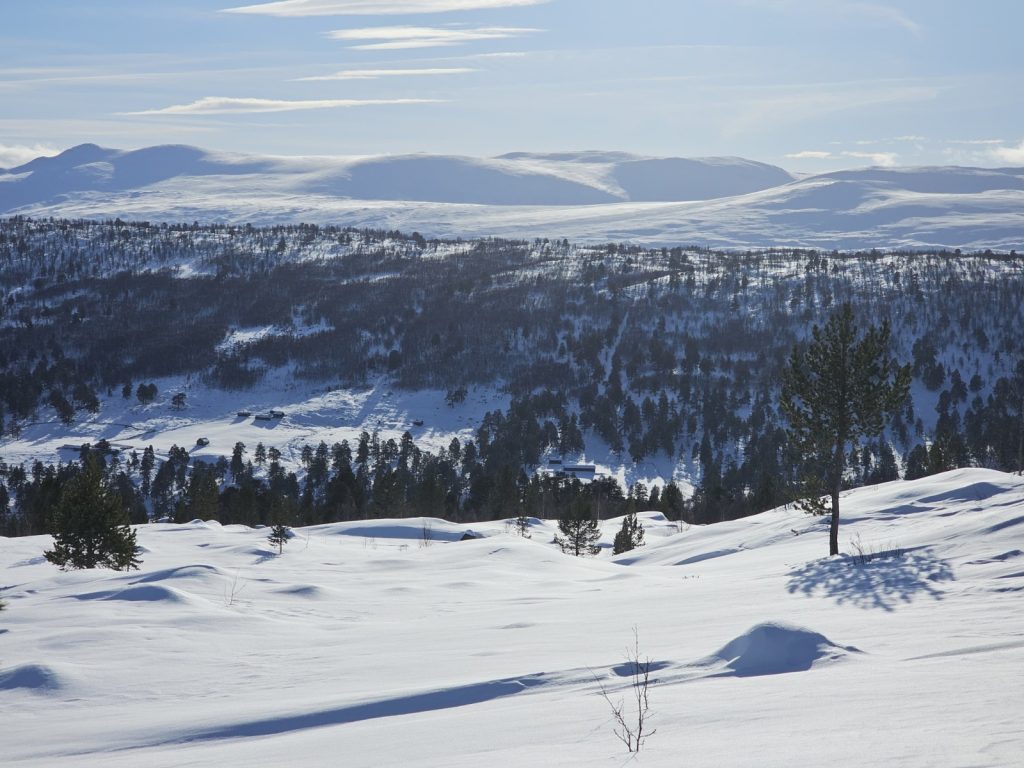
We passed the narrows and then continued west, and then south down the valley following a line of lakes. It was such an easy ski with great snow on firm tracks. There had been many skiers down here in the last week but only one today and he seemed to have a pulk. We passed the place where the unmarked route from Helvetes nutane came down from the mountains to join the marked track we were on. In all it was about 9-10 kilometres down this valley and due to all the downhill sections it took less than 2 hours. There was a last trick in the trail as we had to climb 100 vertical metres up and over a spur to reach the valley to the south called Kjeldedalen. It was an immensely hot climb and I could feel my head beginning to burn in the intense sun. From the top of this spurt there was a fantastic run down the south side of the valley side into the valley. In places it was quite steep but it was possible to snowplough down the wider solid track left by all the skiers. We occasionally zig-zagged into the virgin snow on each side of the track but it could be fraught as the icy surface frequently crumbled and you sank down to your shins and fell forwards. At the bottom of the slope the 4 cabins of Kjeldebu came into view just a few hundred metres away.
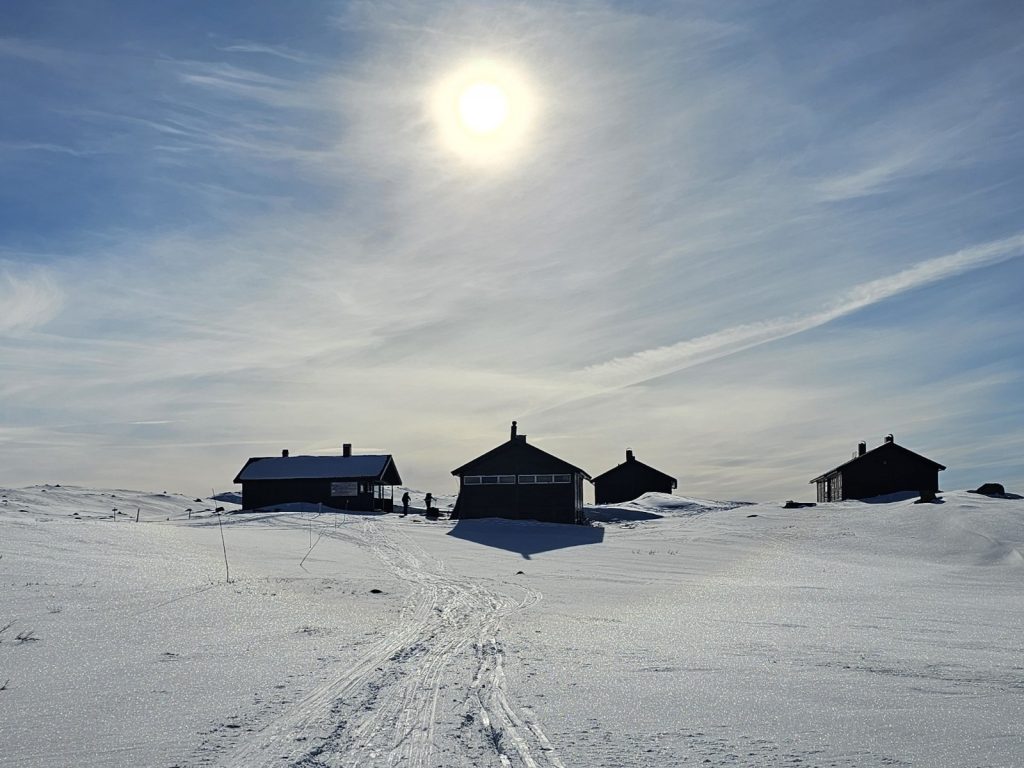
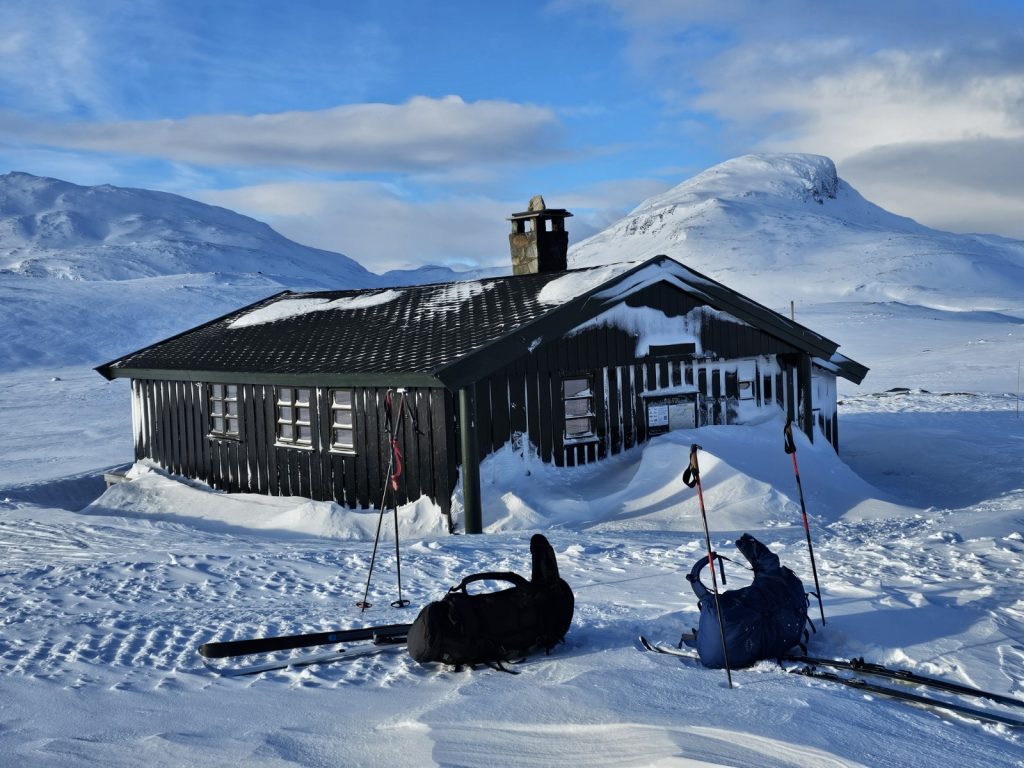
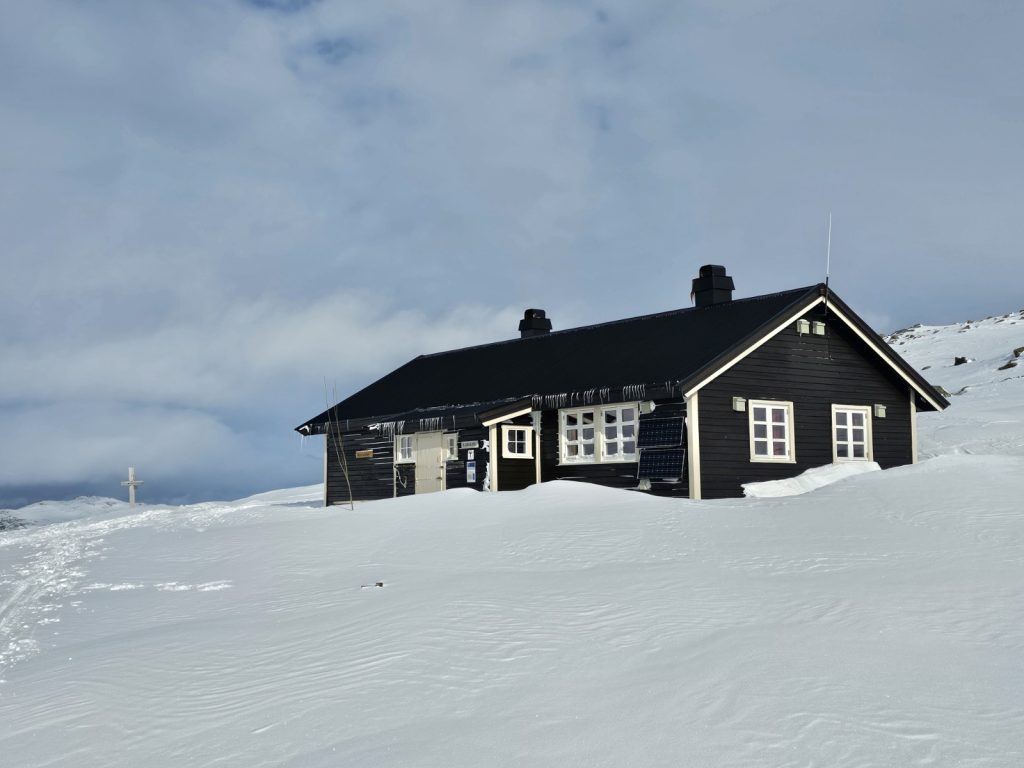
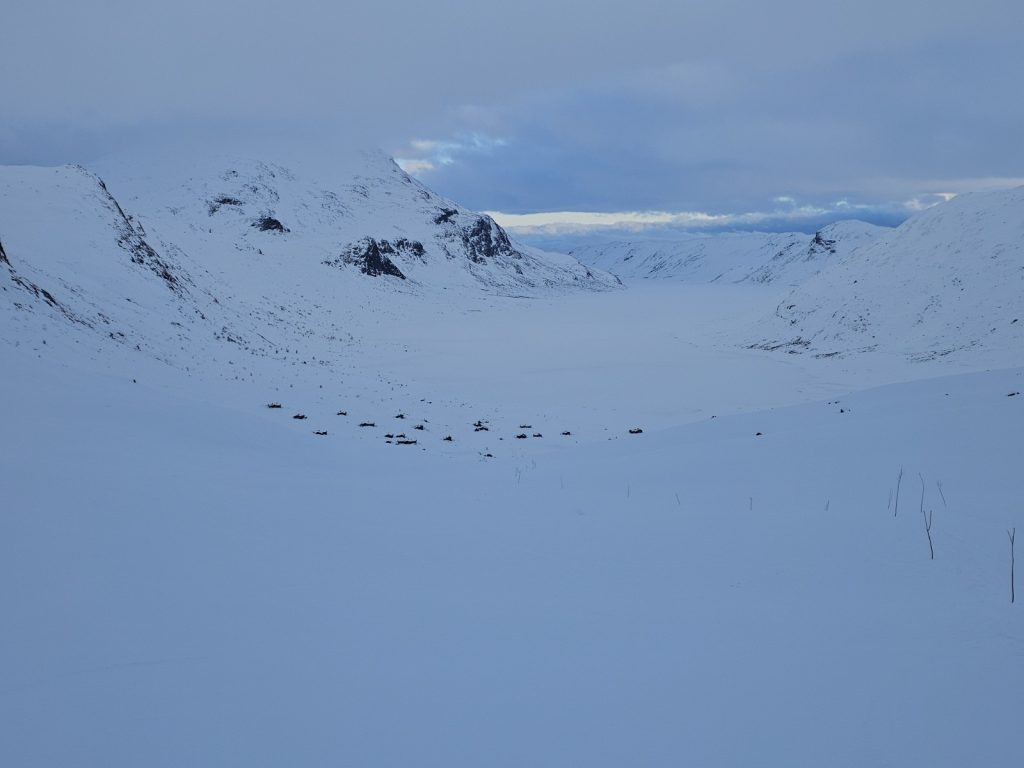
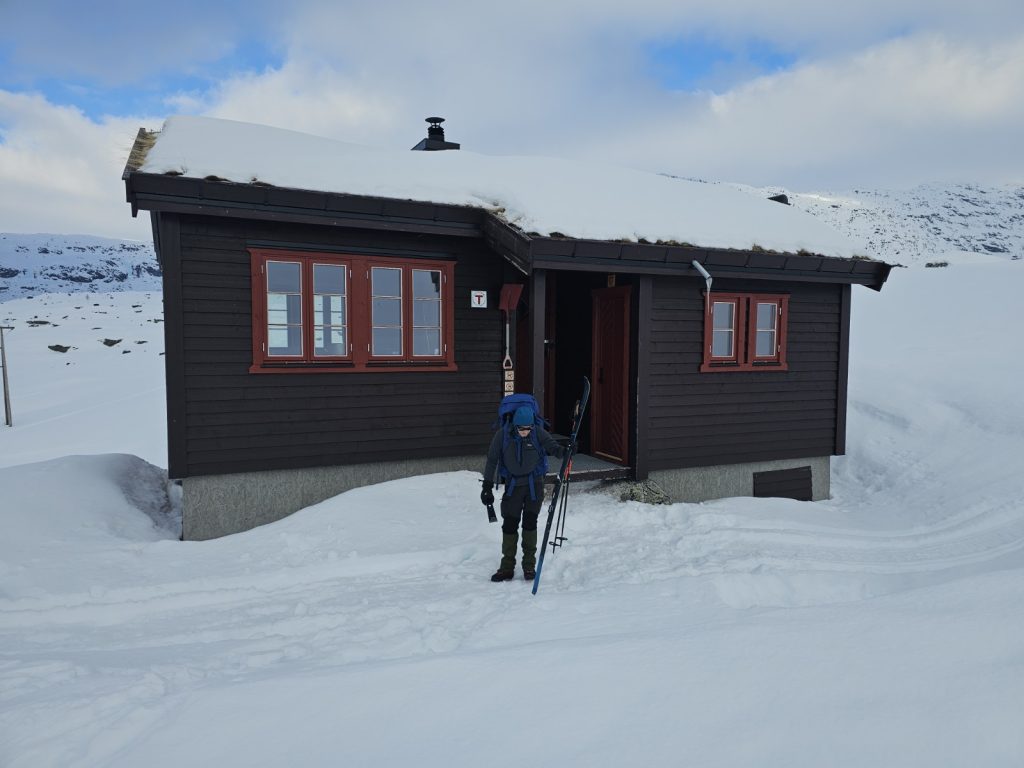
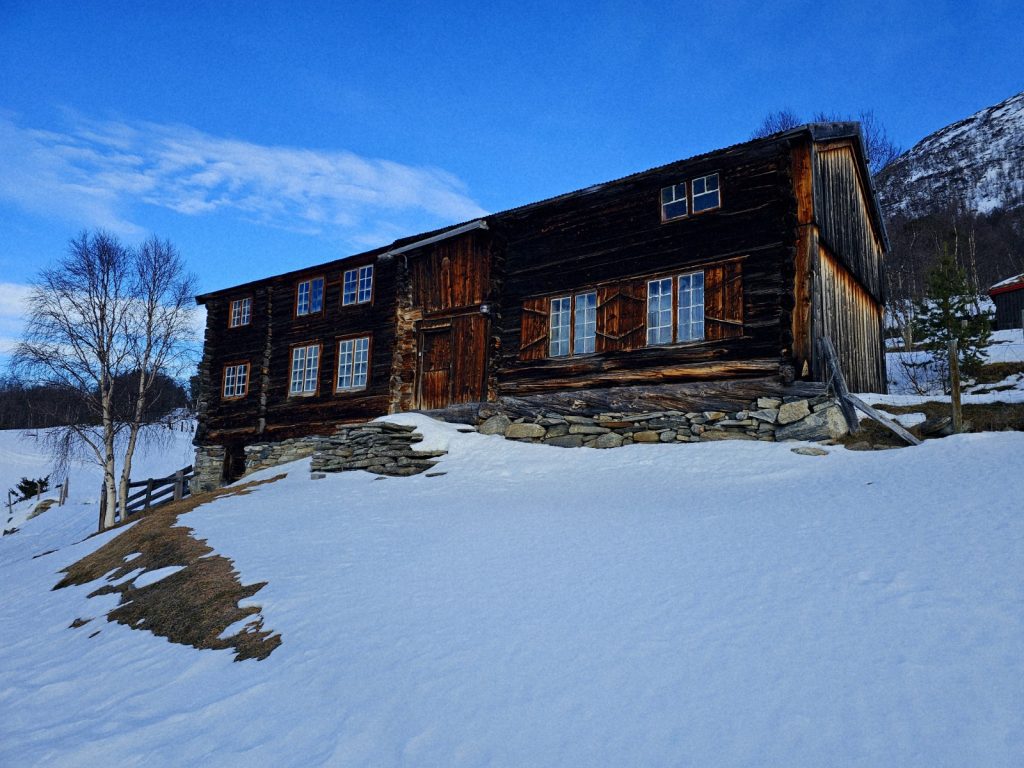
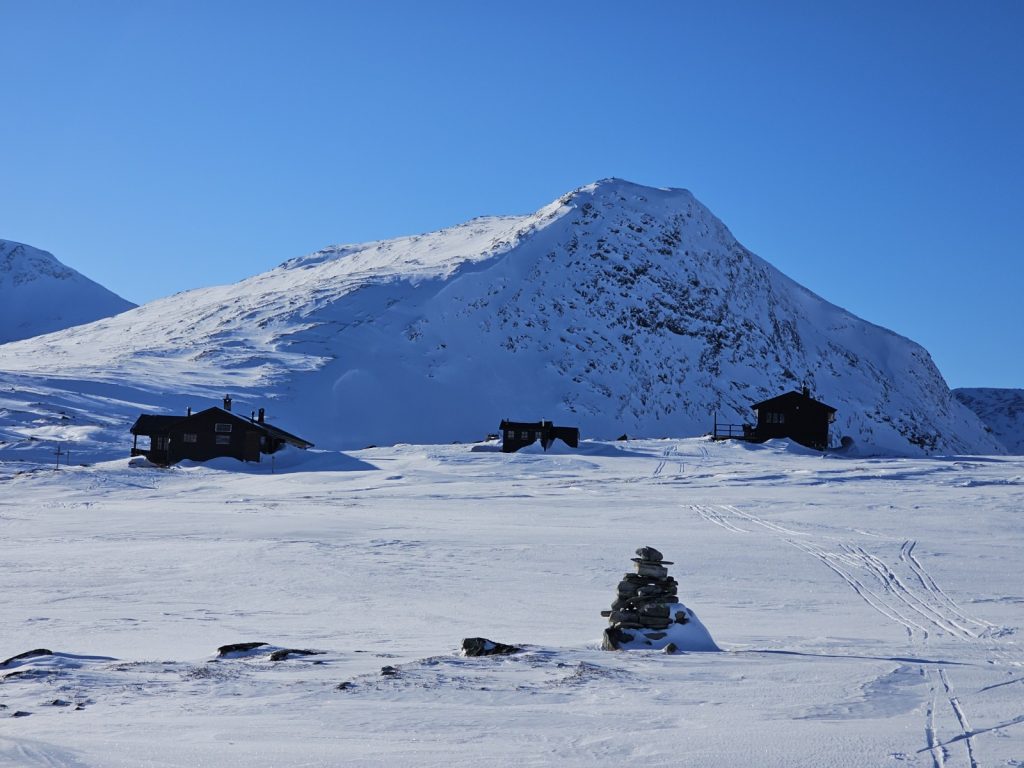
84. The cluster of cabins at Kjeldebu. The nearest is the toilet and wood shed. On the left are the provisions and on the right the one we stayed in without booked beds.
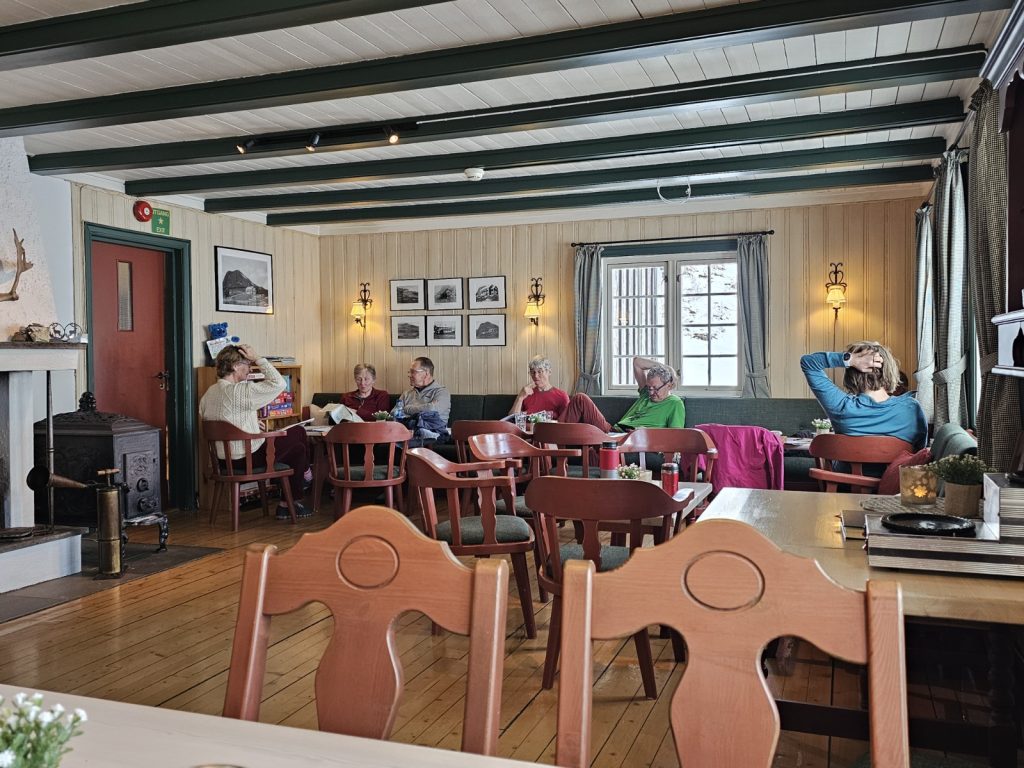
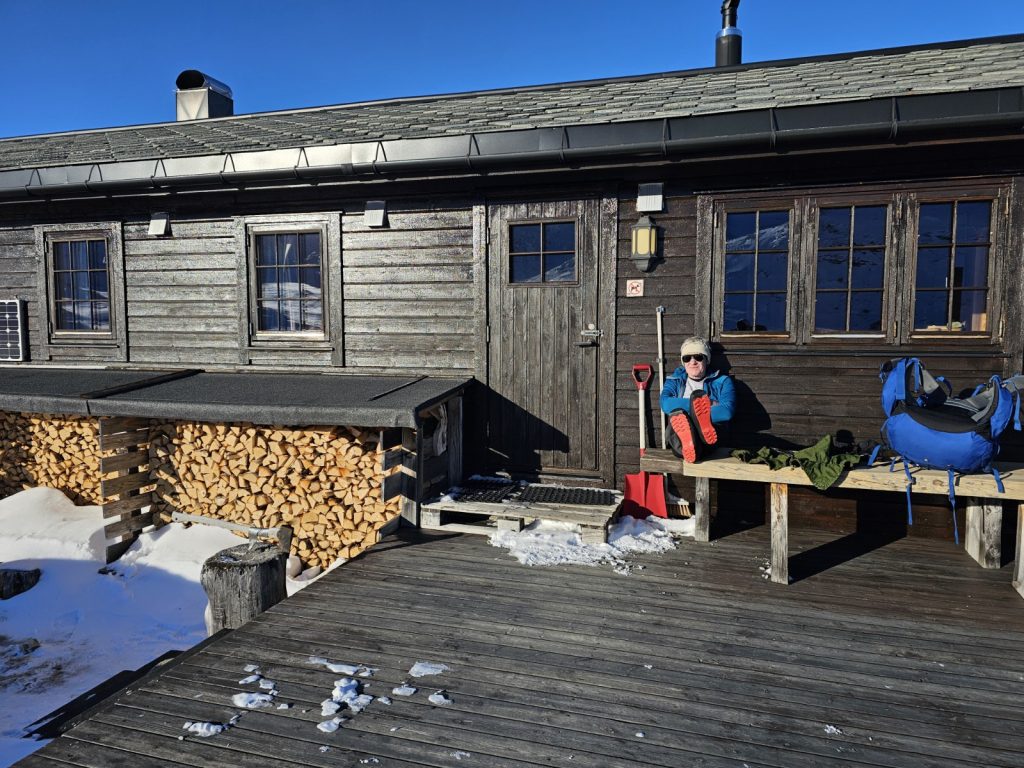
There were two main cabins and we went into one along with 2 Norwegians and 3 English who came down the slope with us. However it seemed many beds in this cabin were booked and we might be turfed out of our beds if the people turned up. Rather than risk it we all moved into the other cabin which did not have any bookable beds. In the end there were 9 of us in the cabin and it got very warm with the fire on. After dinner I wrote the blog while Stuart chatted with a few of the other guests until suddenly it was 2200 and time for bed. It had been a great day with the best skiing and best weather of the whole trip so far.

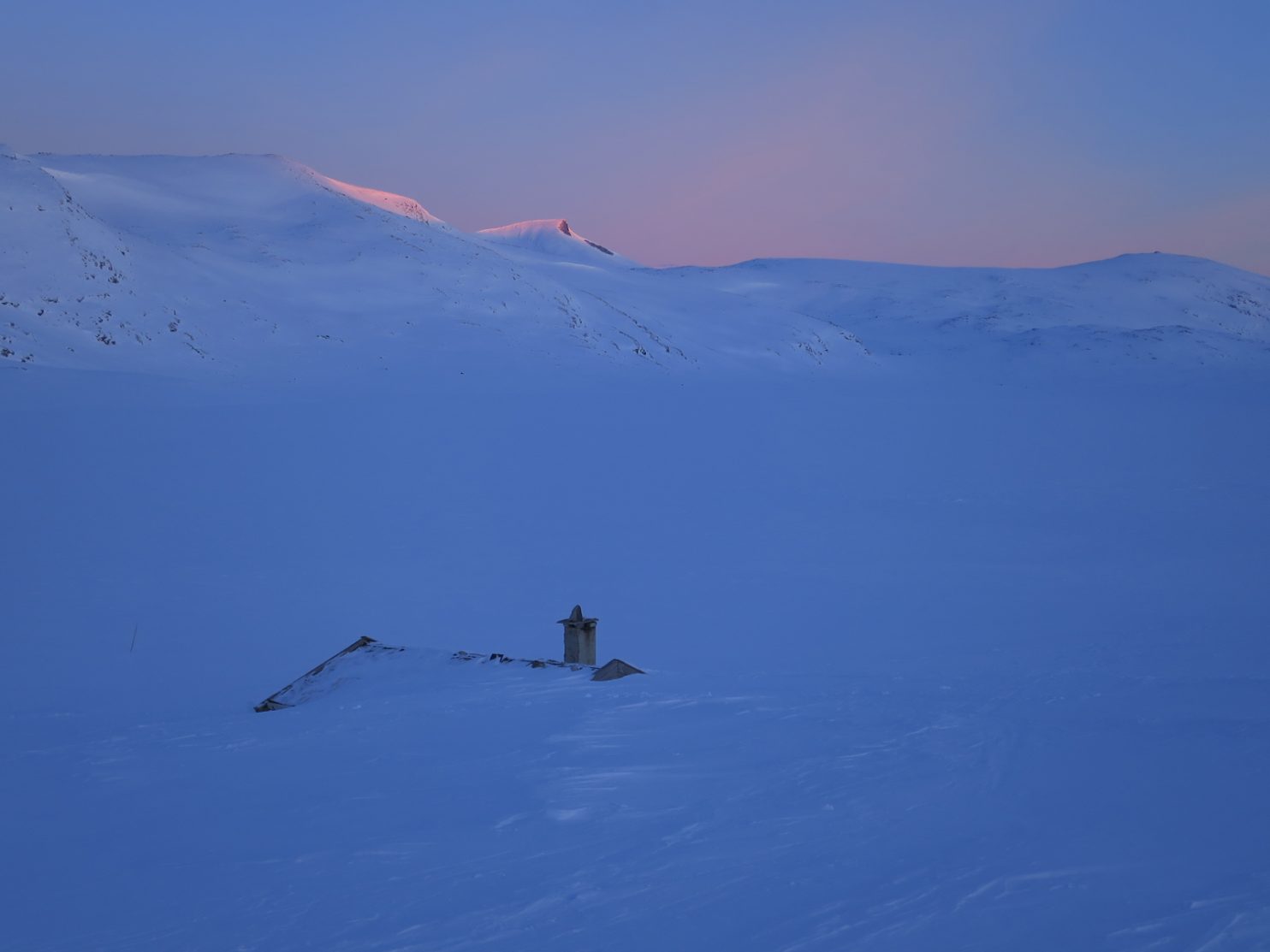
85. A superb sunset to end a perfect day at Kjeldebu cabin. Here looking SW across the flat Hardangervidda.
Day 21. Kjeldebu to Sandhaug. 31 km. 7 hours. 630m up. 430 m down. The 8 of us in the self service cabin had a quiet night and everyone was up for breakfast by 0700. We had porridge, fruit salad, chocolate pudding and coffee which we needed to set us up for the 31 km day. It sounded a lot but it was an easy 31 km. After doing some hut chores like refilling the water buckets with snow and sweeping the floor we were ready to go at 0900. The tremendous weather of yesterday was now a distant memory and outside it was overcast but windstill. There was little definition to the snow and the Hardangerjokull icecap was lost in the low cloud.
We left the cabin and started to climb SE out of Kjeldedalen valley. It was not a steep climb but it was quite sustained and it took the best part of an hour to reach the plateau where we headed south. There was a bitter wind but the temperatures were near zero. On the plateau there was an easy 5-6 kilometre undulating ski south towards Dyranut and the main road. Apart from the large cornice clad knoll of Dyranutane itself the area was very flat and many kiters had driven up and were flying across the plain with their huge kites dragging them. Occasionally they accelerated to go at about 30-40 kilometres an hour and some put it in large jumps. It looked like an exhilarating sport. All the kiters wore helmets. We rounded the knoll and then started the small descent to the tiny hamlet of Dyranut which just consisted of two tourist huts. One was closed and the other did not look inviting. We decided to skip a visit and instead carry on south and find somewhere to stop in the shallow valley we were just about to ski into.
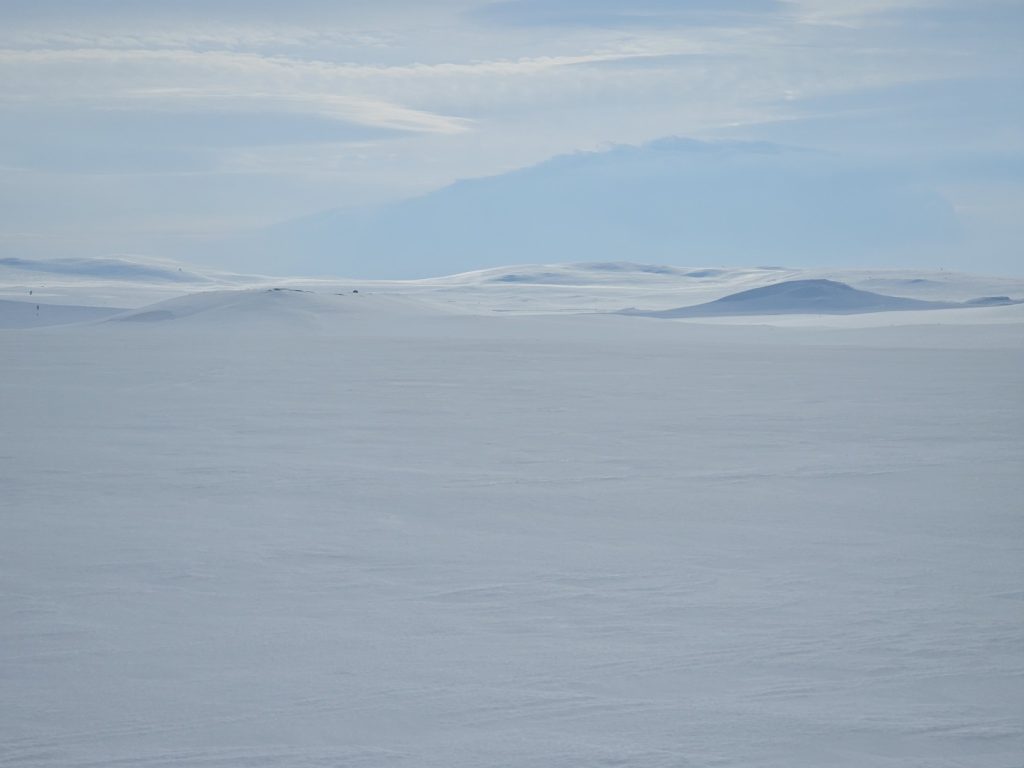
86. Approaching Dyranut after the climb up from Kjeldebu with the vast flat plain of HArdangervidda before us.
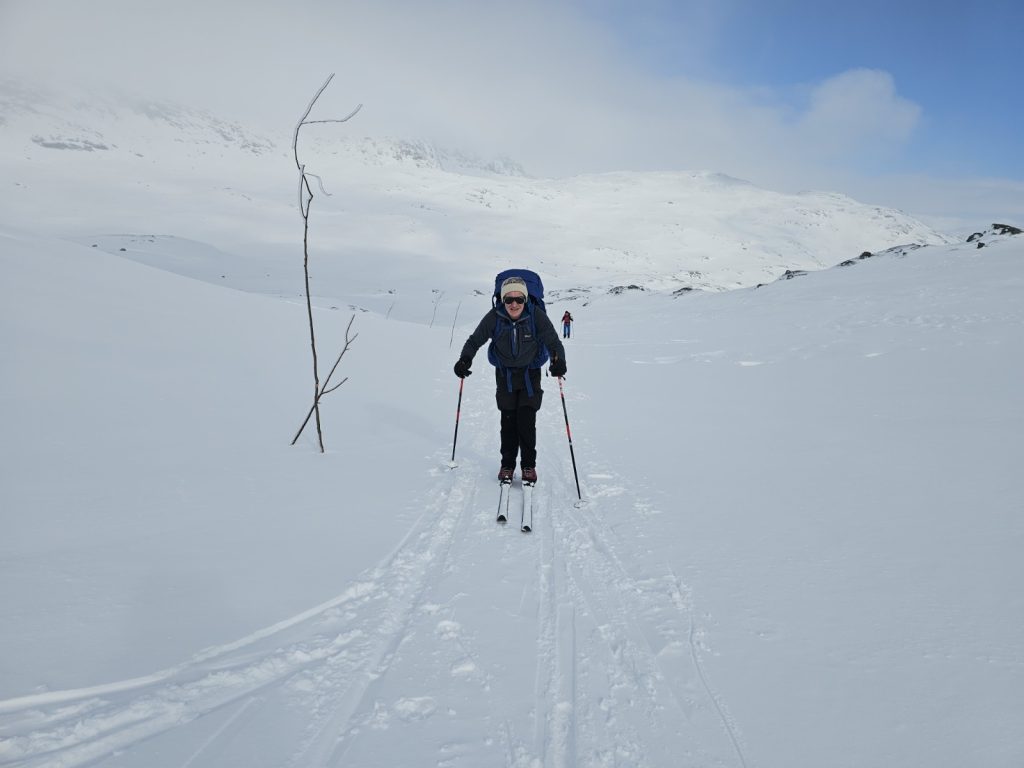
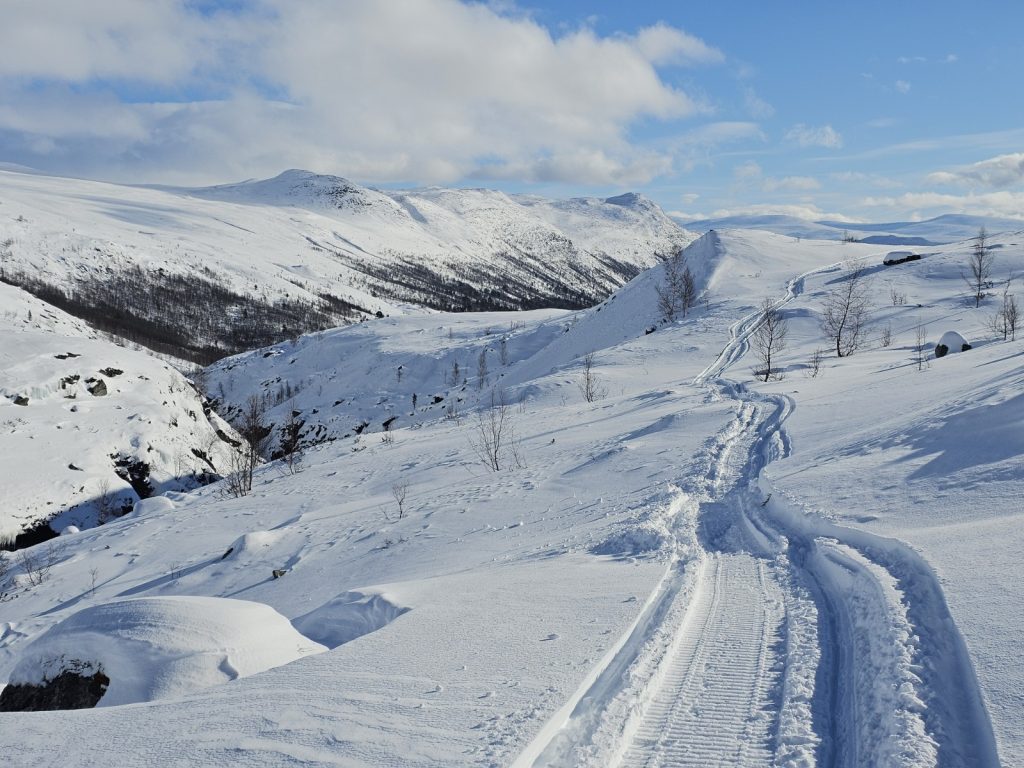
We left the tourist lodges, skied across the small Vetle Skiftessjøen lake and started the long gentle descent into Bjoreidalen valley. The descent was shallow and long at nearly 3 km. On the way down the snow was very thin and in many places the willow bushes poked through. Snow scooters had driven this way and battered a path through the vegetation which was covered with a smattering of sugar snow as we dropped down to 1000 metres. The descent was relatively quick and at the bottom we intended to have a snack and a drink. However there was a police and department of nature scooter here making sure the frequent scooter drivers to and from the private cabins on Hardangervidda around here. There are strict rules for scooter drivers and heavy fines for any breaches. Despite this there is a gradual proliferation of snow scooters as more and more of the private cabins are allowed to use them for maintenance and transport of goods. We stopped and chatted to the police for a good 10 minutes before finding somewhere for a break. After the break we started the long shallow climb up Bjoreidalen to the south.
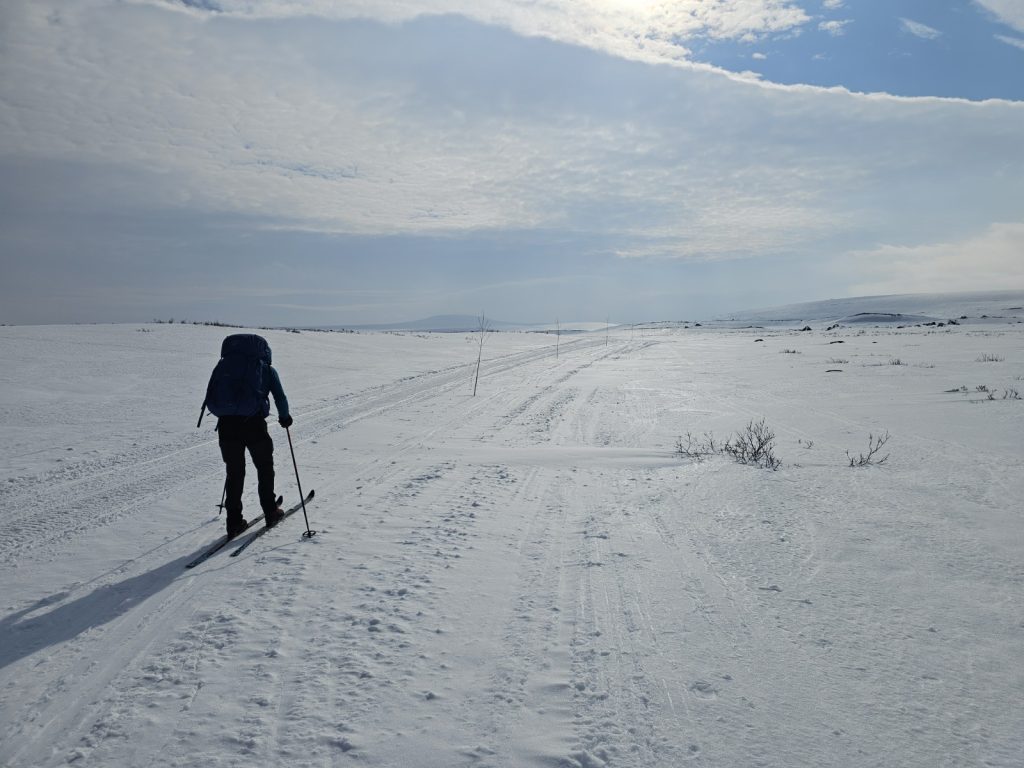
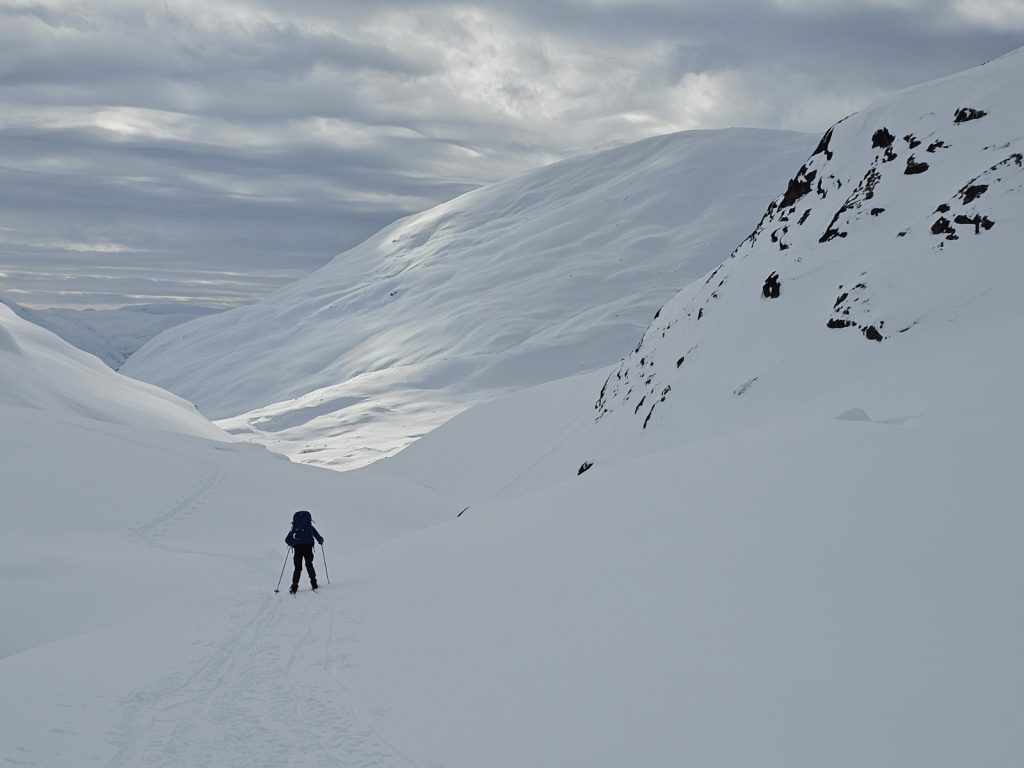
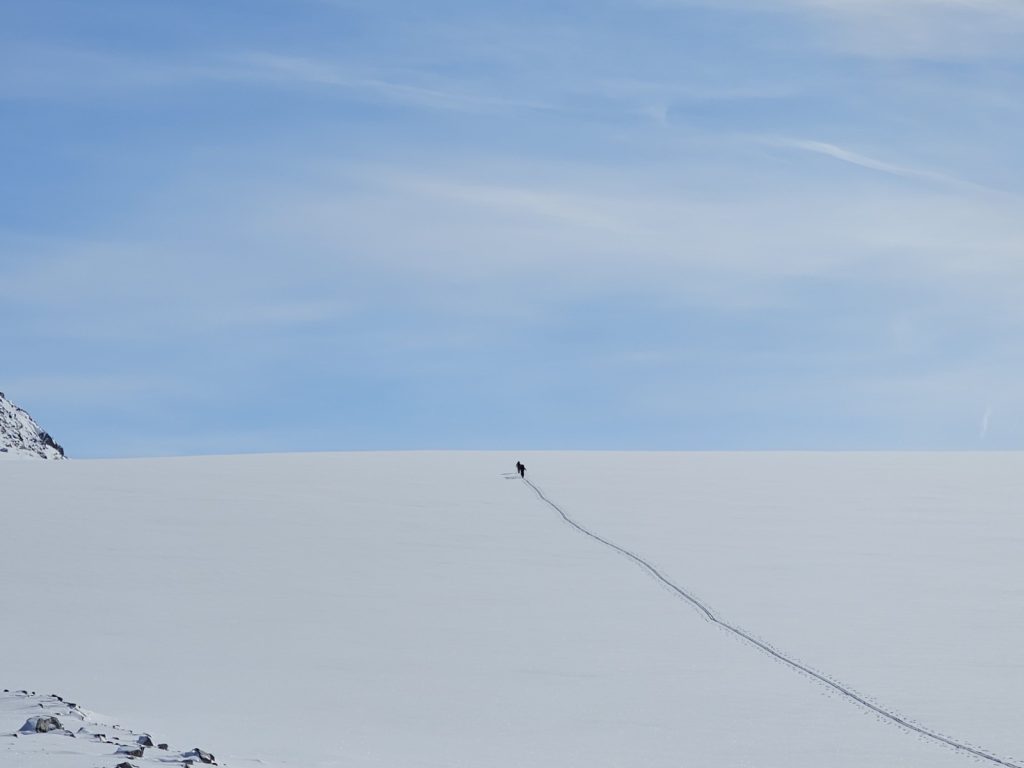
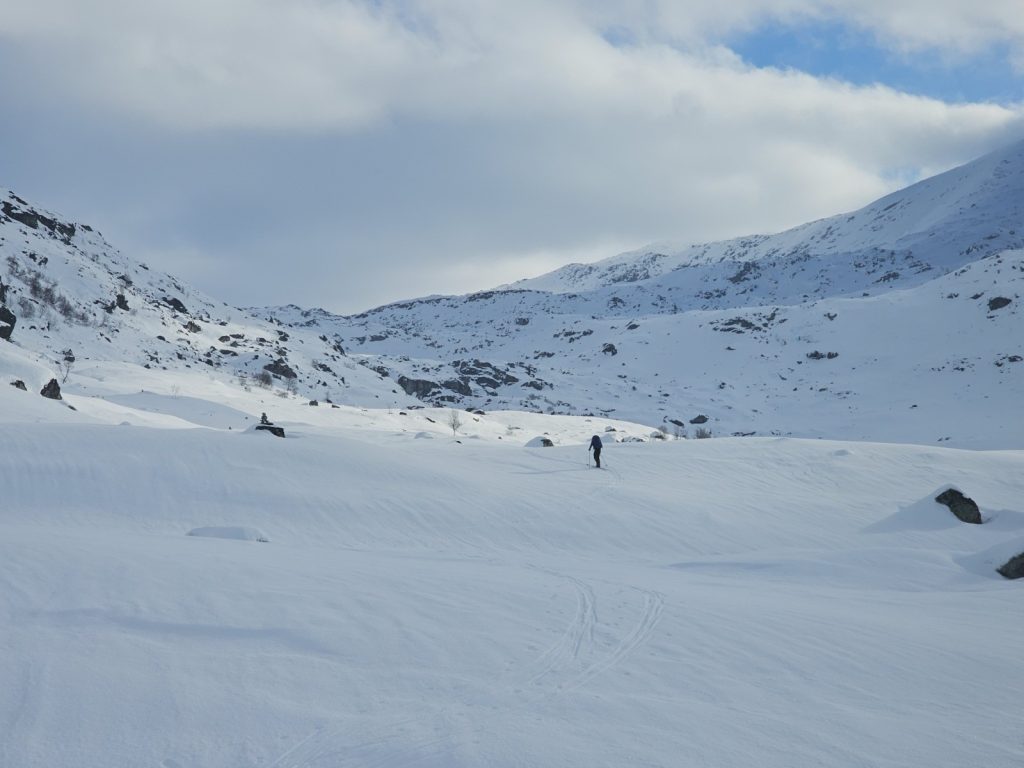
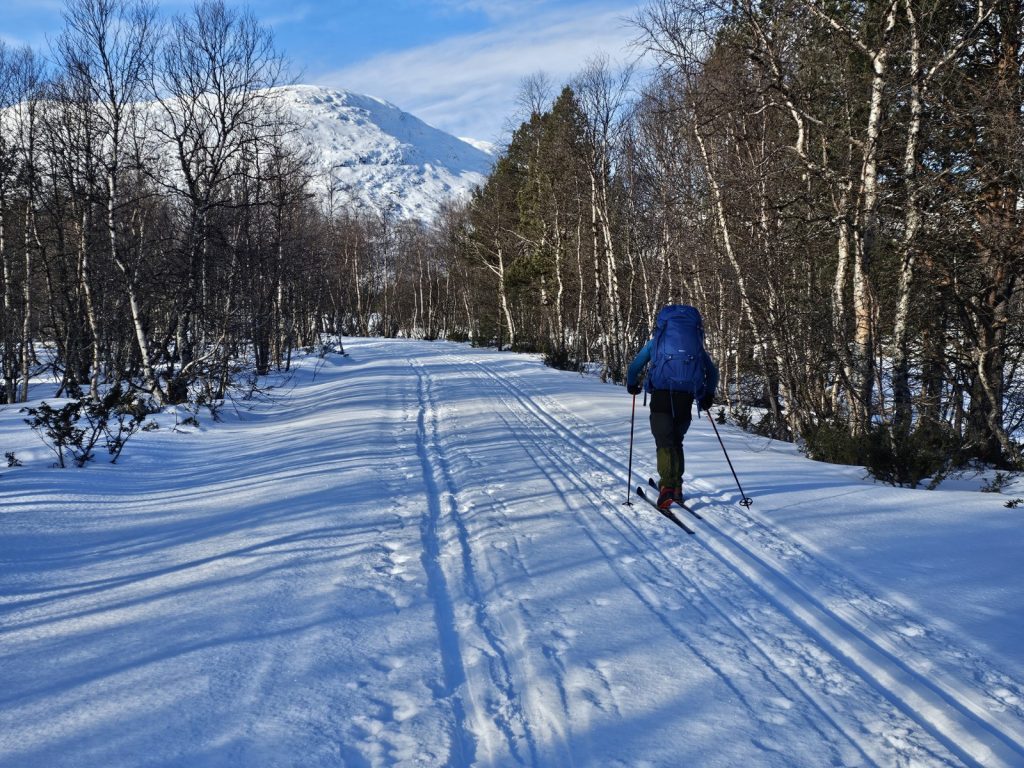
87. Skiing up the very shallow valley of Bjoreidalen as we head from Dyranut to Sandhaug.
The climb was about 6-7 kilometres but it was gentle. The sun frequently broke through the veil of clouds and it warmed us despite the bitter wind. I was quite slow and Stuart forged ahead. I told him we could stop at Langavatnet lake in about 10 km. He surged up the valley skiing well with a good glide while I caught up with some older Norwegians and chatted with them. It was a pleasant easy stroll up the slope for a good hour until we reached the very rounded top of the ridge at Gunnarshaug. Here I left the Norwegians and took long easy strides down the very shallow incline until the smattering of cabins appeared at Hellehalsen and I could see Stuart at the outflow of Langavatnet lake, crouched down beside some upturned dinghies, lashed down with rope and covered in snow.
There was only some 9 km to go now. We both set off at the same time and found the going easy. There was a gentle uphill ski of some 6 km where we just gained 100 metres in all. The slope was so shallow you could ski up most of it and still get a glide. There were many kiters here with most of them dragging a smaller pulk. I guess they were practicing for a longer trip in Norway or even Greenland. I have frequently come across them in cabins on Hardandervidda which is the ideal place for them to play. The sun was shining across large areas of the hillside, especially on the other side of the large Nordmannslågen lake in a slightly hillier country where we would be going tomorrow. After at least one and a half hours of climbing we reached the barely perceptible crest of the ridge and then started down the shallow slope on the other side. Hardangervidda is termed a Peneplain in geography where a previously undulating and lumpy plateau has been planed flat by recently vanished ice sheets. We smelt the wood smoke from the stove at Sandhaug Lodge and then soon afterwards it came into view just a few hundred metres away on the edge of the vast Nordmannslågen lake.
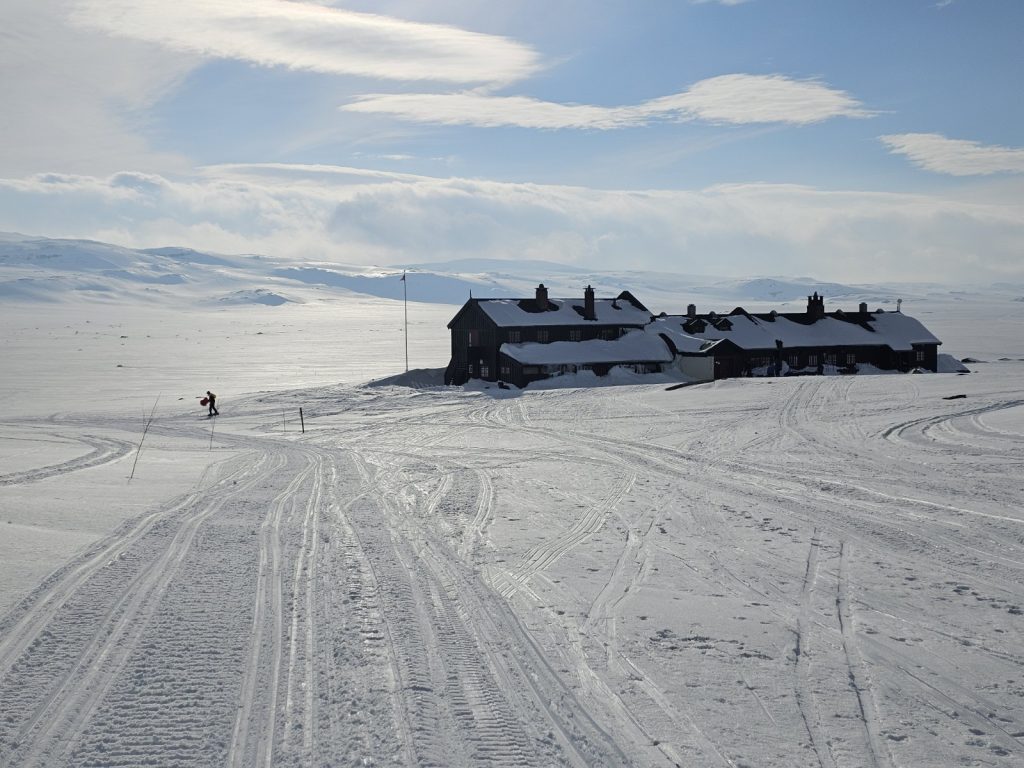
88. Approaching the large lodge of Sandhaug in the middle of Hardangervidda. The self service cabin in closed when the lodge is open. Beyond the lodge is the large Nordmannslågen lake.
The lodge was open and the small self service cabin I usually stay at when the lodge is closed was locked and out of use. We checked into the lodge and got a bed each in a 24 bed dormitory. There was only one other person in the dormitory at the moment and it was not likely to get busier while the smaller rooms were. We emptied out rucksacks near our beds, hung up our damp clothes and then Stuart had a shower while I wrote the blog, finishing just before dinner at 1900. The lodge was quite busy with at least 40 people staying and there seemed to be a few larger groups of Norwegians. Usually they are in the minority but certainly not tonight.
The meal was not impressive and well below the usual standard. They could take a leaf out of Fondsbu or Iungsdalhytta’s book. It had all the panache of army catering. After the meal I went and chatted with 3 clever and witty Dutchmen who were all around 60. They were kiters and had come from Dyranut. Indeed we had passed them en route as they played in the wind a few kilometres before the hut. Like most Dutch they were great conversationalists and very informed.
Day 22. Sandhaug to Litlos. 24 km. 6.5 hours. 490m up. 540 m down. We had a great breakfast in the morning, Sandhaug had redeemed itself from the poor dinner with a sumptuous spread, including waffles and scrambled eggs. After that we lingered a little in the morning chatting to the 3 Dutch kiters, who were also sharing our dormitory. In the end we did not leave until 0930. The weather was much better than the forecast with large bright patches and a SW force 4 wind. It was also about minus 5 so all the damp snow from yesterday was now frozen solid and the surface was very hard. Had we been going in the opposite direction we would have been blown along on the flat. However we were going to have to battle into it. We skied down to the large Nordmannslågen lake where the Dutch were just setting up and the policeman from yesterday came by on a scooter with a wave.
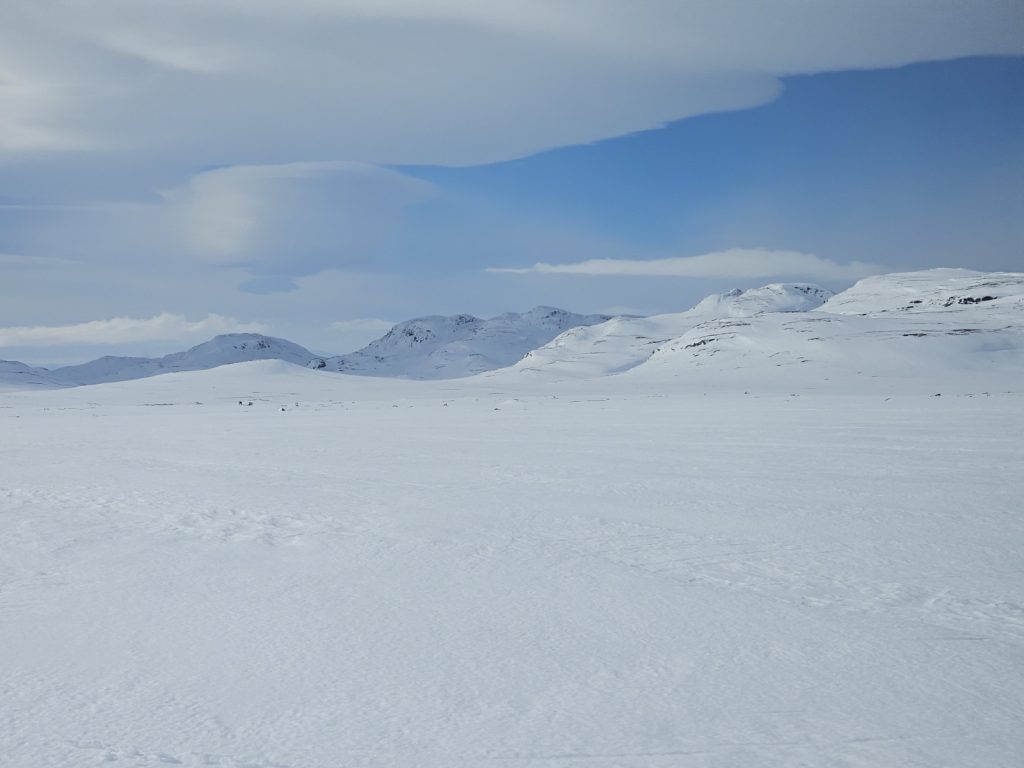
89. Skiing across Nordmannslågen lake towards Besso Turisthytta lodge on the way to Litlos lodge
We now headed west into the wind with our skis clattering on the frozen surface. It was hard to ski where there were ski or scooter tracks and we both found it easier to make our own tracks beside them on the virgin snow. After crossing the lake due west we crossed a barely perceptible rise of frozen marshes and very shallow ridges until we were south of Besso Turisthytte, which I think is only open in the summer. We then made our way SW in the bitter wind to the small Bessevatnet lake. The sticks and marked route carried on from here but I remember taking this way previously and it involved a lot of unnecessary up and down as it followed the summer route. In these icy conditions it would have been hard work climbing with slippery skis and descending on the fast surface with little control. Instead we decided to go a way I have been a few times previously which was up the gorge like Dimmedalen valley. It was a narrow cleft in the rounded hills and was a good kilometre long. It would take us to a series of lakes we could follow including Bismarvatnet. It would be much easier.
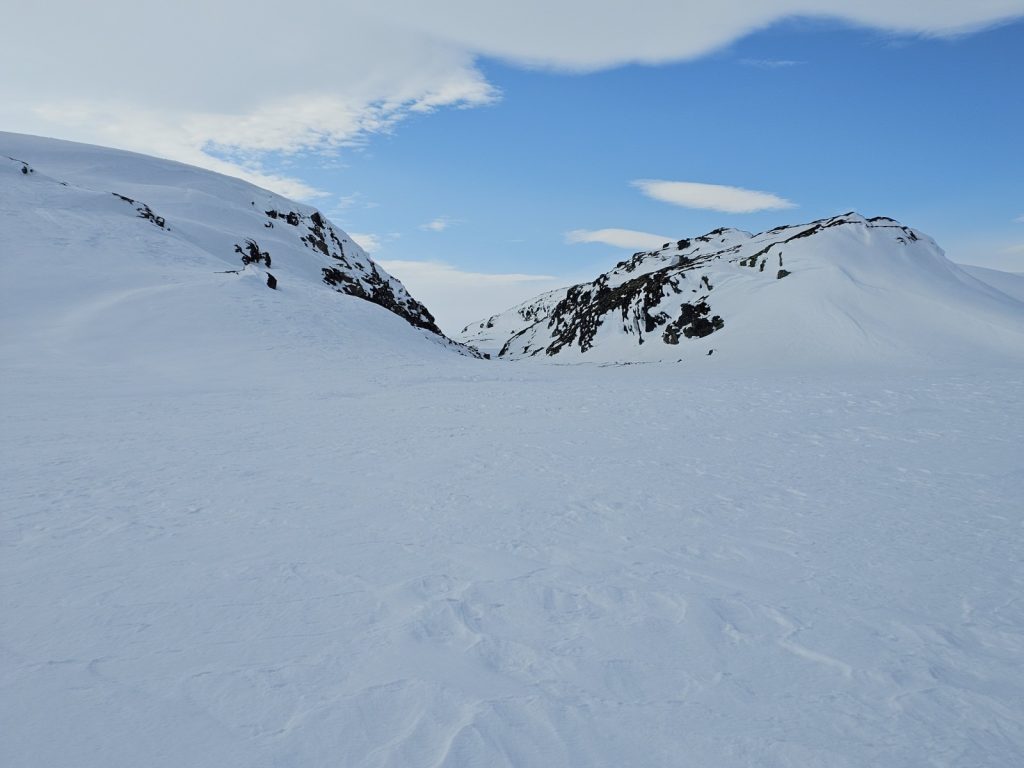
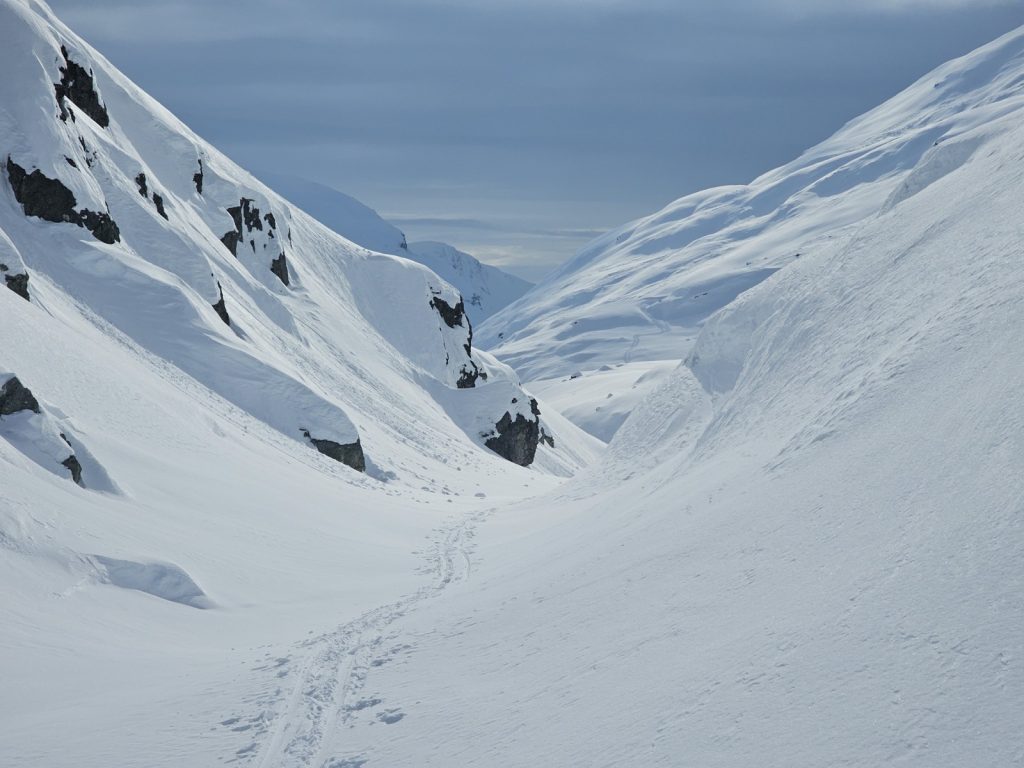
90. The narrow cleft in the undulating plateau of Dimmedalen provided a 2 km shortcut to Bismarvatnet lake.
So we left the sticks and headed up Dimmedalen valley. It was small and narrow with a stream, sometimes open running along the floor of the U shaped gorge. It was a lovely and interesting ski but occasionally there would be some potential from avalanches after a good storm when overhanging cornices might collapse. That, and the 4-5 sections of open stream which needed negotiating, were probably the reason DNT doesn’t mark this route. Today however it was safe. We skied up the floor of the valley and had to climb around 2 areas of open stream and saw another 2-4. However it was easy and with half an hour we had reached Dimmedalstørnet tarn. We carried on over the tarn, crossed a tiny saddle and then more west to reach the larger Bismarvatnet lake. We followed the hard frozen surface to this lake for 3 km until the west end. To my surprise the winter route had been changed and now also came over a low saddle and onto this lake. So half way down Bismarvatnet lake we merged with the sticks. We followed them to the west end and then climbed slightly to Engelstjørn tarn, which was off course frozen over.

91. Skiing up the narrow U shaped valley floor in Dimmedalen we had to skirt a few areas of open water.
We had gone half way now and it seemed a good place to stop for lunch. Two bearded Norwegians from Narvik whom we had overtaken on our easier, more level detour joined us just as we were leaving. The bright sunny patches of the morning were now being replaced by a dull flat light as the forecast weather moved in. The surface was now dull and low clouds were starting to cover the mountain tops. Hårteigen, a familiar nunatak on the plateau, was easily visible as we started to climb the 3 km long gentle slope from our lunch stop at Engelstjørn tarn to a small pass just south of Flautenuten. On the way up this slope we passed the footprints of a large herd of reindeer who were going backwards and forwards. There were perhaps 100 animals. However previously I have seen a herd of about 500 animals here. It is probably the same here which got struck by lightning some 5 years ago and which left 165 dead.
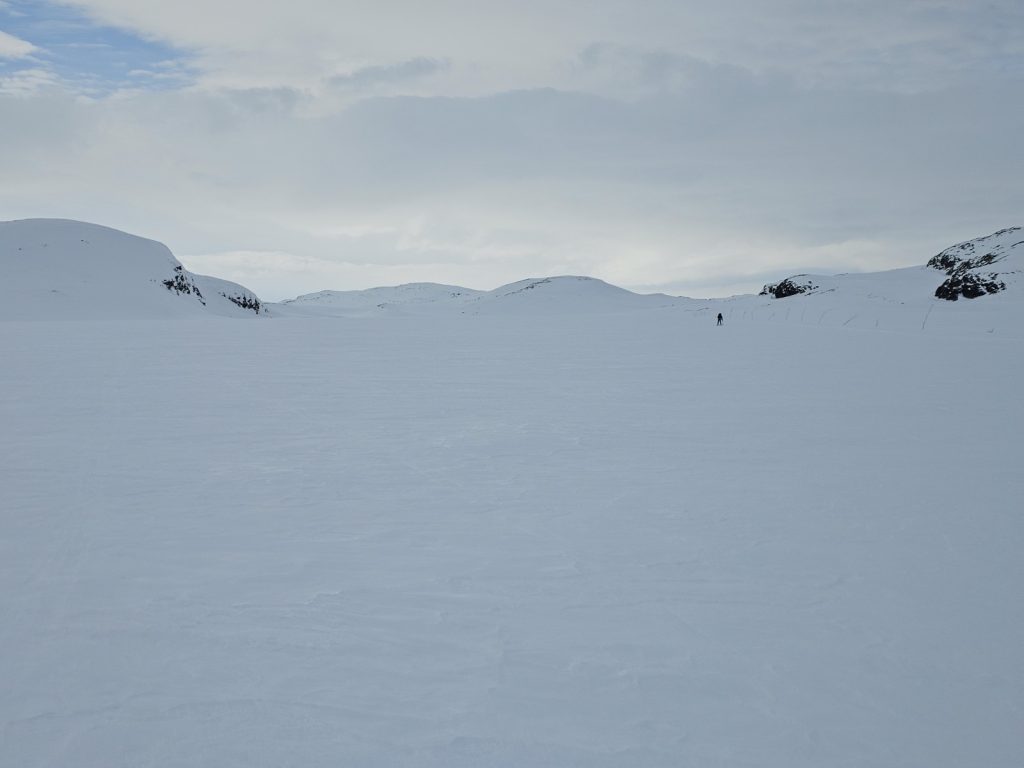
92. Skiing acroas Bismarvatnet lake with the weather slowly starting to close it before the blizzard arrived.
At the top there was a quite easy run down a shallow valley. It was almost like a very gentle version of the Cresta Run. The wind was now up to a force 6 and it helped brake us as we went down the ice surface. We whizzed down to Ambjørnsvatnet lake and crossed it. Ahead I saw a group all pulling pulks. I guessed it was a Ousland Explorers group as I know they went this way about now and wondered if I knew the guide. We soon caught them up and it was indeed an Ousland Explorers group. The guide was Angus, from Dorset, whom I had not heard of before. We chatted for a good 15 minutes as we climbed up the shallow slope to the pass on the east side of Holken. However as we chatted the weather started to turn for the worse and suddenly we were engulfed by a force 8 wind and increasing snowfall. Angus had to attend to his group of 6 who were suddenly struggling in the onslaught.
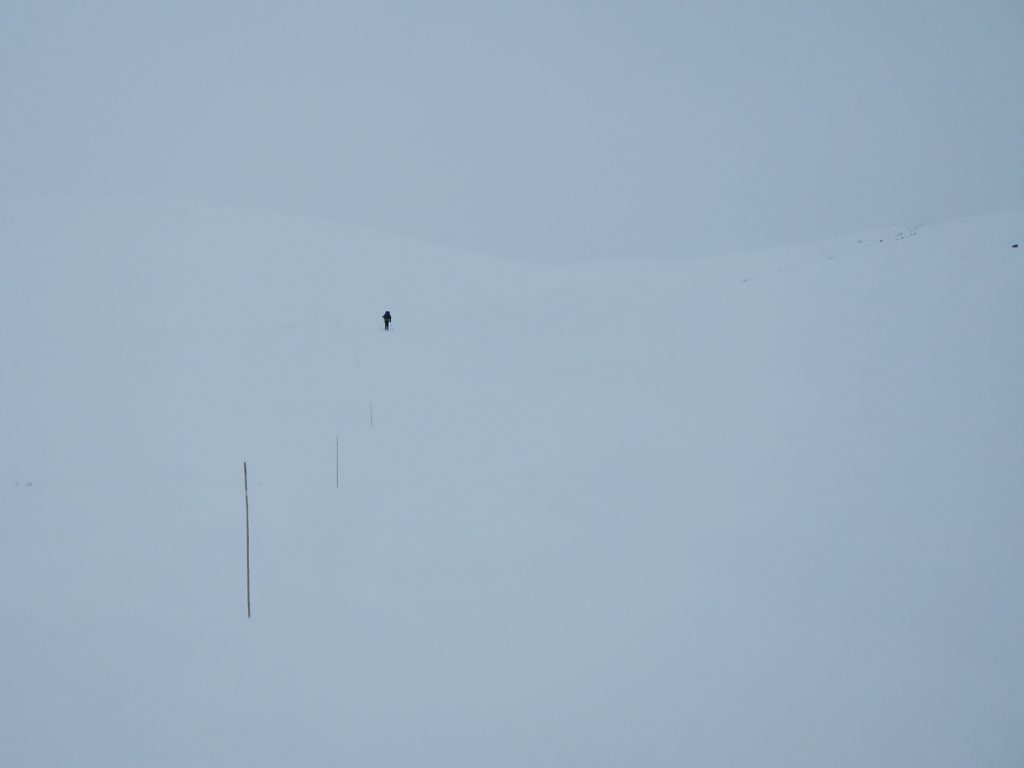
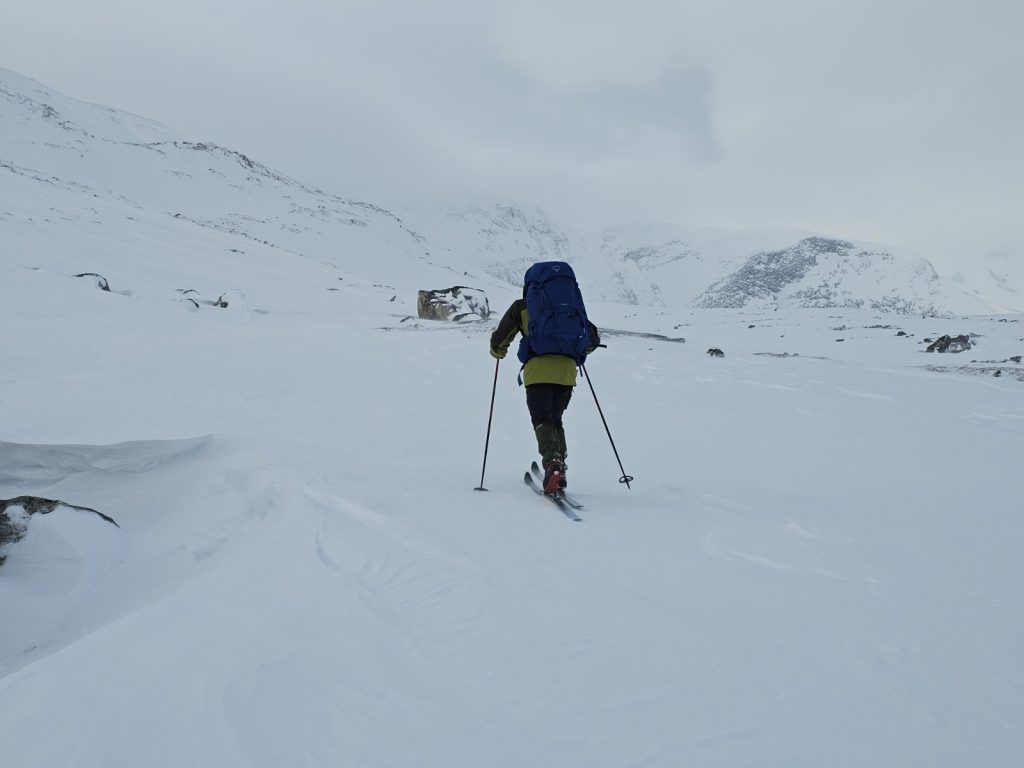
We carried on up in intensifying weather and I am sure the wind had increased to Force 11 near the top with an insane amount of snow and spindrift. It was nearly impossible to ski forwards and even at the level saddle of the pass I had to herring bone forwards and Stuart even more so as he struggled to stay on his feet. It was an absolute mayhem and nearly impossible to see as the glasses were covered in snow. If you took the glasses off your eyeballs were peppered with snow like shot from a cartridge and it stung. I was very thankful for the sticks and it gave me some reference to the whiteout. At times I could not see the next stick and just clawed my way forwards leaning heavily into the wind until the stick appeared. The descent was full of difficulties and we crept from one stick to the next for a good kilometre. The sticks are about 30 metres apart so it took well over 30 sticks to reach Litlos cabin. It was one of the most intensive snow storms I can remember being in and we were both a bit shocked and in awe of its ferocity. When the lodge appeared it was a welcome relief.
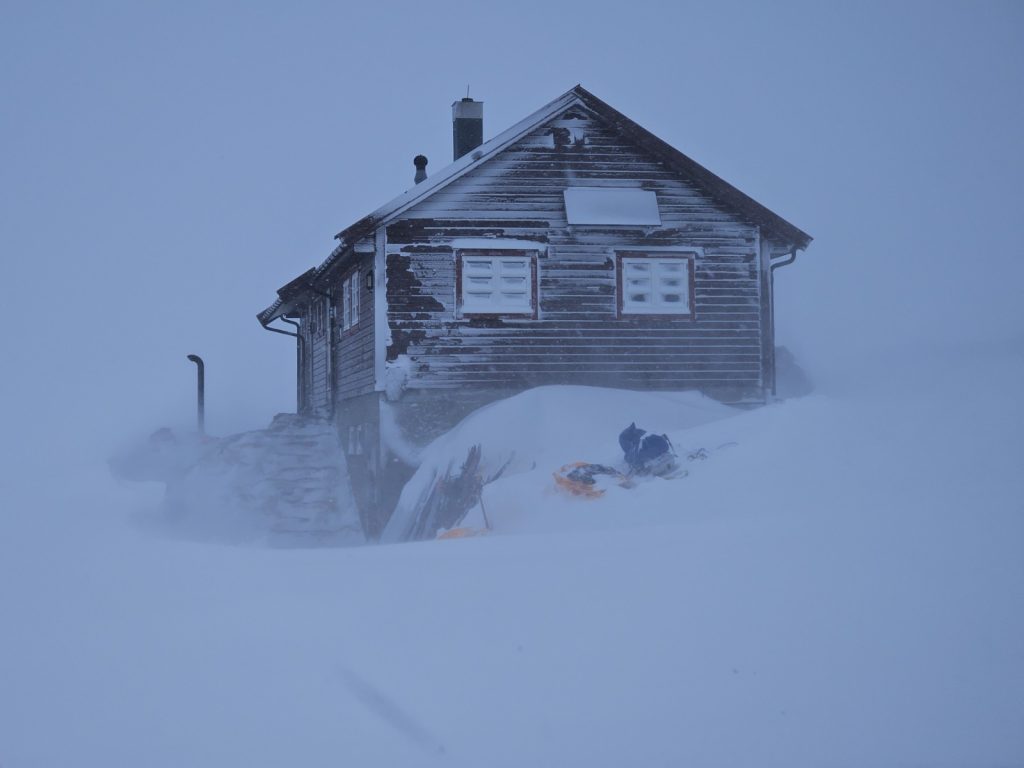
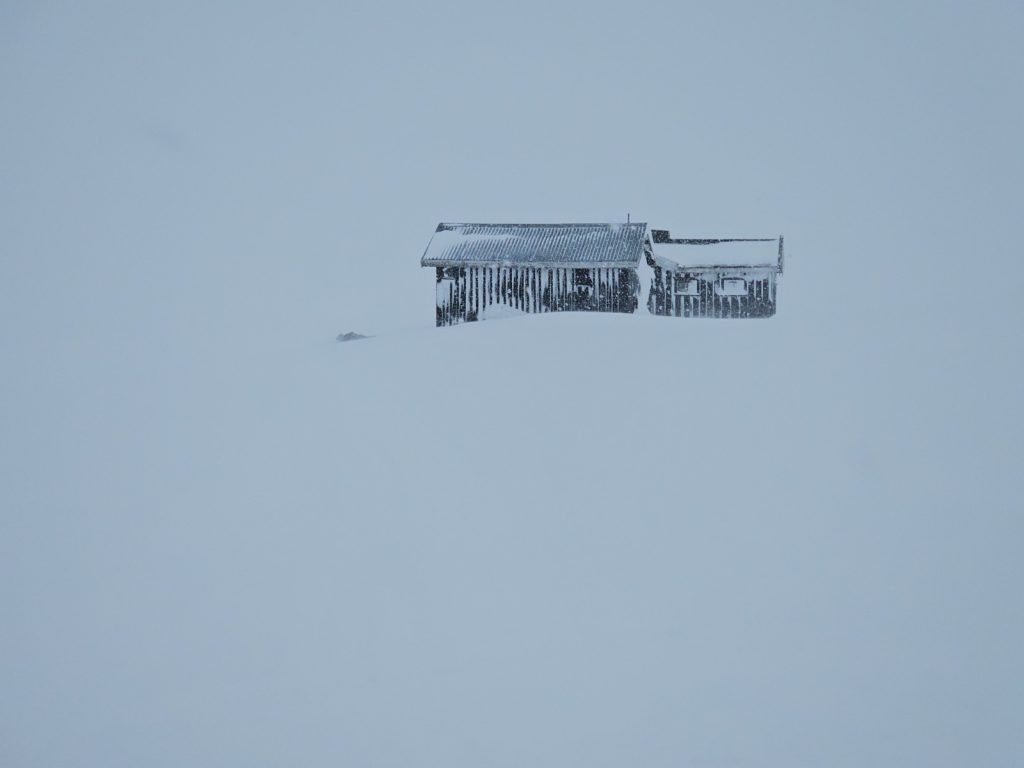
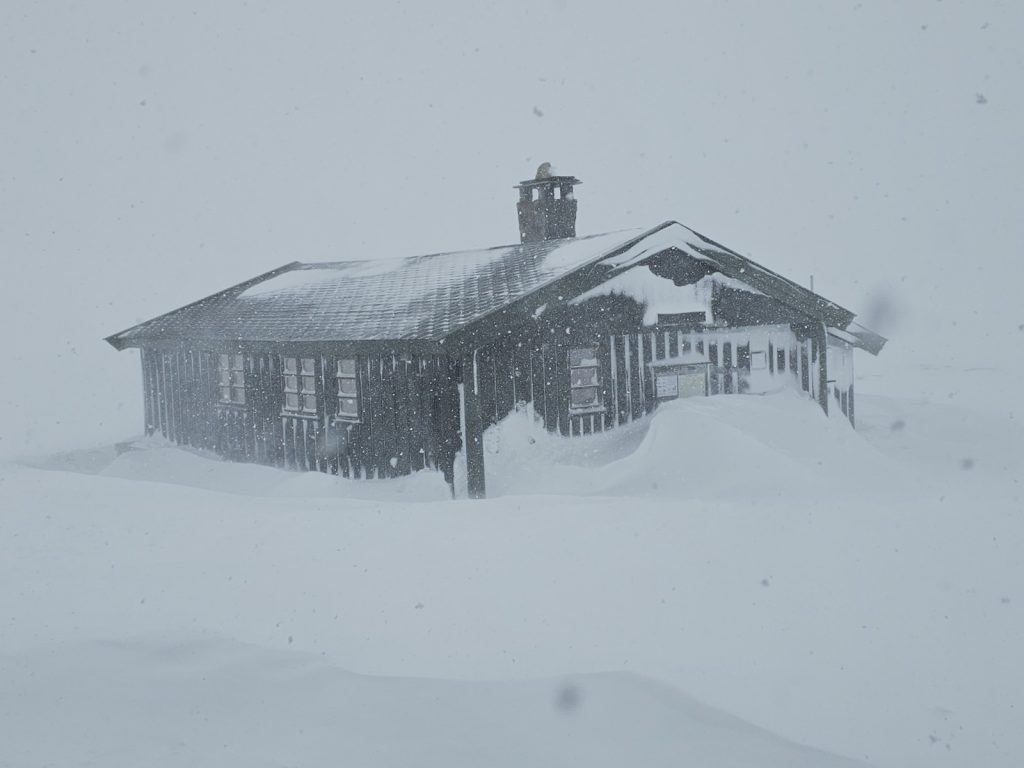
93. The self service cabin at Litlos during a lull in the blizzard. At the height of the gale the cabin was barely visible from 75 metres away.
The main lodge opened in two days time for the Easter season. However there was a staff member, Bridget, warming the place up. The self-service cabin was open but there was already a group of 10 Norwegians staying there and they commandeered the whole small cabin for 2 nights. We could have pushed our way in and slept on the sofa in the main room but they told us the lodge was accepting guests just to stay and we could stay in the lodge and return to the cabin to cook. We met Bridget at the lodge and she was incredibly helpful and cheerful and showed us a room we could sleep in. The drying room was already warm so we unpacked in there and then Stuart brought a chair in and read his book while I found a table in the empty lodge and wrote the blog until 1930 when we went over to the cabin to cook and meet the Norwegians.
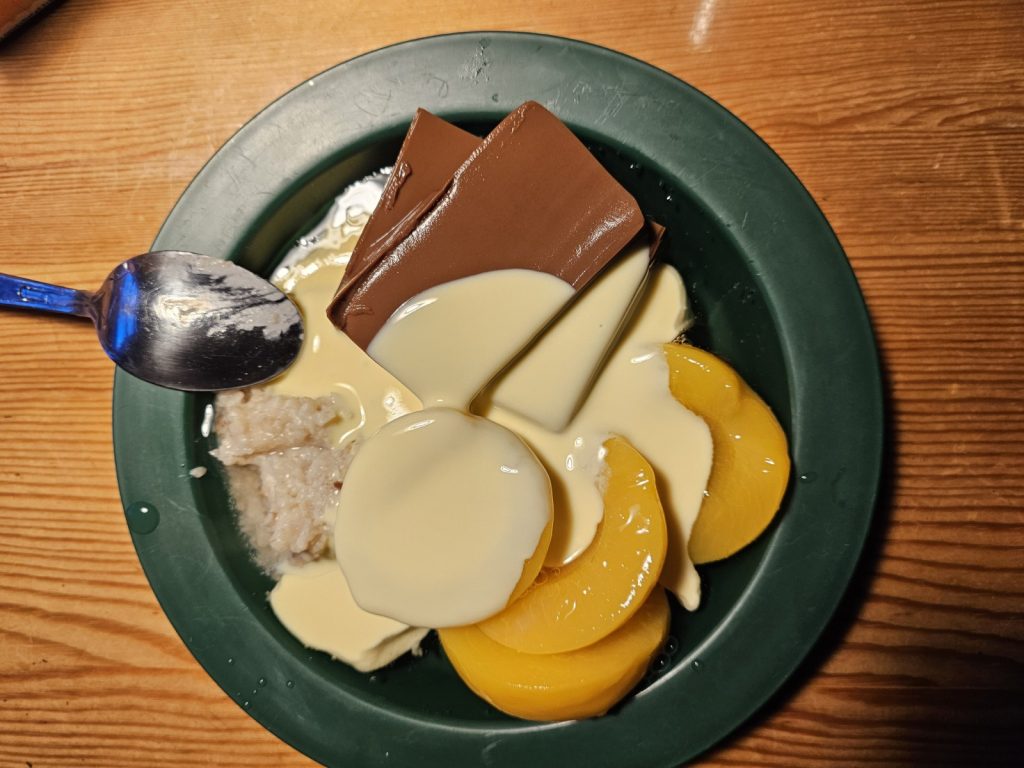
There were 10 beds in the self service cabin in 3 bedrooms. All were taken by students and teachers from Sogndals Folkehøgskole, an alternative school to a university or technical college where students study sports or more artisanal trades like traditional boat building. In this case they were studying outdoor sports. They had tried to go up Hårtiegen today but the instructor decided to turn back when he saw the weather coming in. There was also an older German couple there who were sleeping in the main room. The whole place was too busy although the students were very chatty and friendly. We ate our dehydrated meal and a tin of peaches and then withdrew across the 50 metres of blizzard back to our room in the main lodge which had better facilities and was quiet.
Day 23. Litlos to Hellevassbu. 19 km. 5.5 hours. 440m up. 470 m down. It was wild in the night and I heard the wind roaring as it buffeted the lodge. I spared a thought for Angus and his team of clients on the Ousland Explorers trip who were crossing Hardangervidda using tents rather than staying in cabins and lodges. After such a trip one would be ready for a crossing of Greenland or Spitsbergen and many used it as training for such a trip. In the morning we went back to the self service cabin to cook breakfast of porridge and peaches. It was a little chaotic in the cabin with the 8 youth and the 2 instructors and they had taken over the whole place. However we muscled into a corner of the single table as they went to pack. Some of them seemed just 16 years old and it was admirable they were on such a trip. I spoke to one of the instructors, Jacob, who himself only seemed in his early 20’s but remarkably strong and capable. As we ate the sun appeared and the wind seemed to diminish.
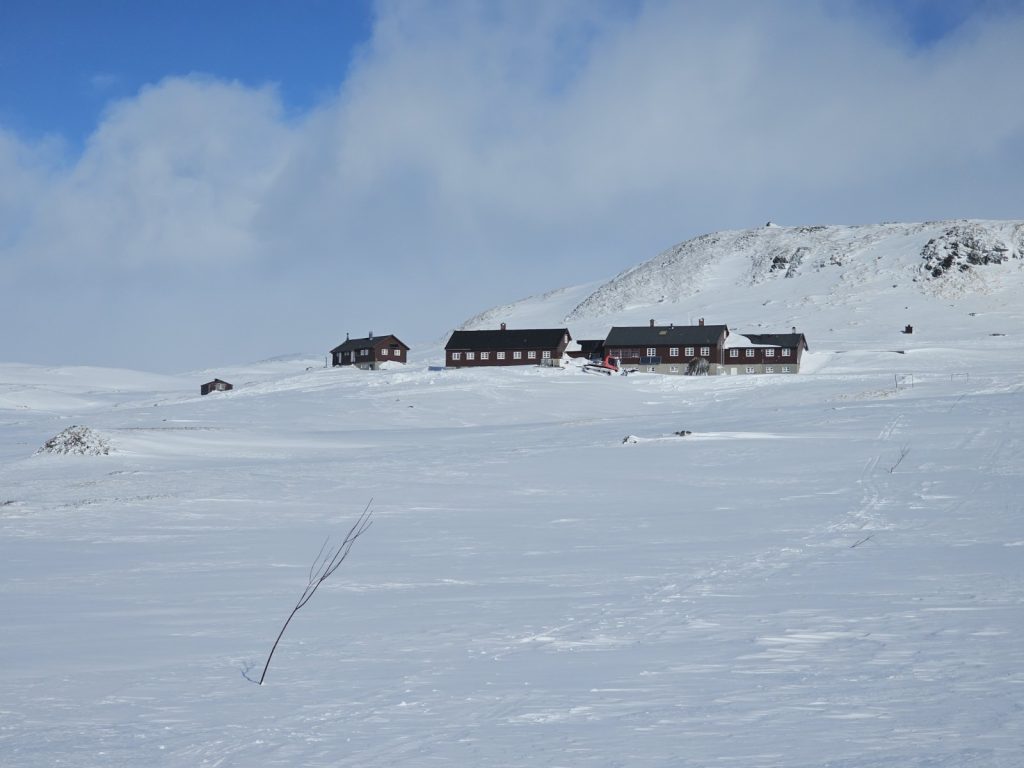
94. Leaving Litlos lodge for Hellevassbu cabin on a glorious morning after the gale. The small self seevice cabin is ob the left and everything else is the lodge.
By the time we were ready to go it was very bright with virtually the whole landscape bathed in sunshine despite large areas of cloud. However the wind was strong, up to a force 7, and there was a sea of spindrift flowing across the surface. The team of youths from Sogndal had already gone and we followed in their footsteps. However it did us little good as they were filled in nearly as soon as they stepped out of them such was the quantity of spindrift. Luckily it all stayed below waist height so our vision was not impeded. As we glided across first Litlosvatnet, and then Kvennsjøen, lakes we caught the youth up and I chatted again to Jacob. I thought what they were doing was great. They even intended to camp that night. It was such a far cry from what 99.9% of the rest of today’s youth were doing. The ski across the lakes was a delight and there was a great glide in the new snow which was not too deep and evenly spaced.

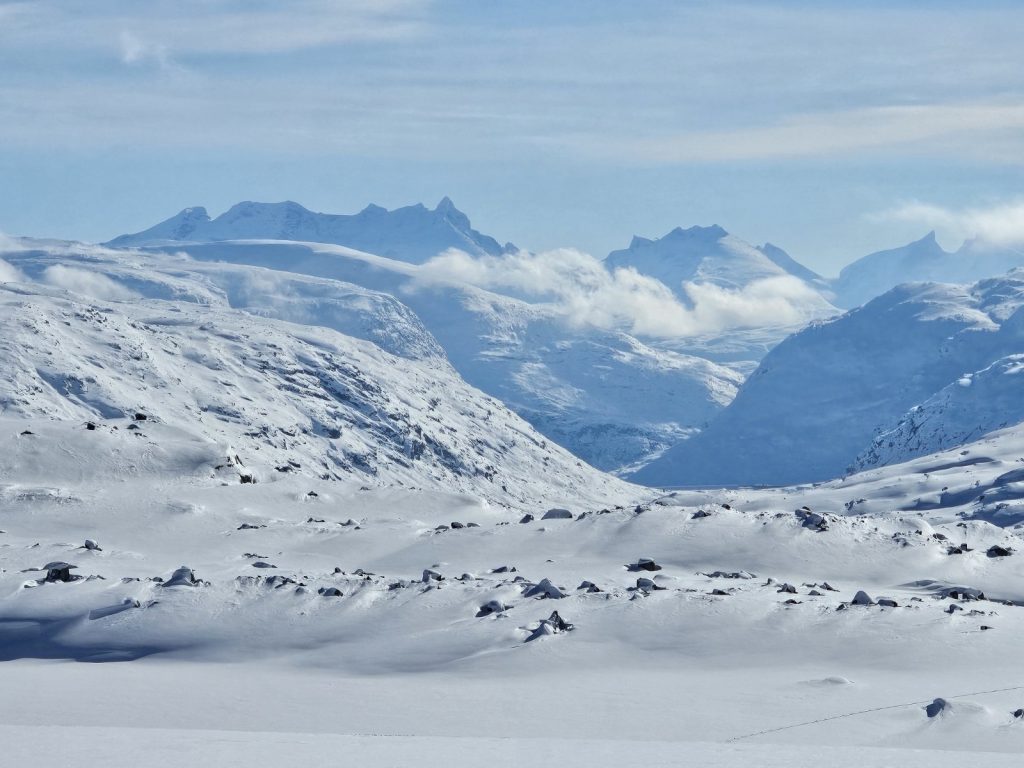
95. Skiing across Kvennsjøen lake and looking west towards the mountains between Hardangervidda plateau and Sørfjorden, an arm of the sea which penetrates deep into the mountains.
At the south end of the lakes were caught the two Norwegians from Narvik whom we met in Sandhaug. They had pulks with their “Arctic Bedding” bags poorly strapped on so they dragged on the snow. Here we all started to climb together up about 100 metres of vertical ascent straight up the steep valley side. The athletic Jacob stormed up with two pulks and then at the top descended the slope doing graceful telemark turns to go and help more of his clients. I am sure he will end up on polar expeditions. Most of the youth managed fine but the Norwegians had problems with their pulks blowing over and had to walk the icier sections. It was a good half hour climb and it was quite strenuous, especially where it was icy and polished by the wind. We tried to stay in the areas where the spindrift was lying as it offered more grip to our ski skins.
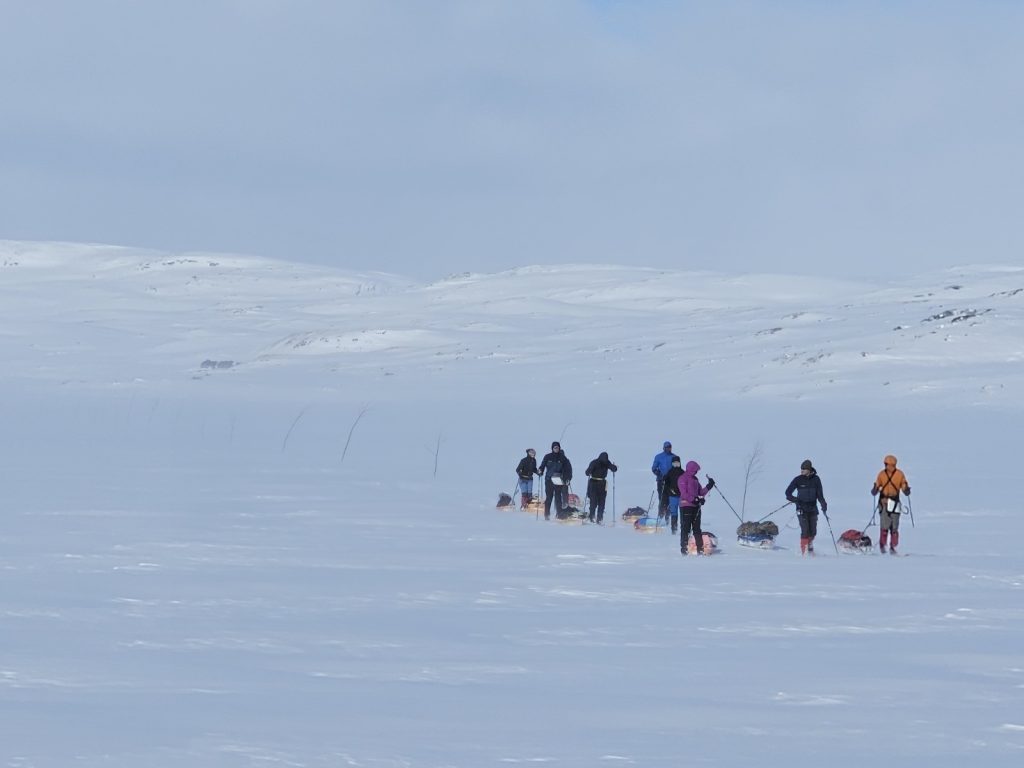
96. The lively youth from Sogndals Folkehøgskole ourdoor education programme skiing across Kvennsjøen lake towards a campsite near Hellevassbu cabin.
At the top of the climb we reached a wide shelf above Kvennsjøen lake to the north and the higher mountains to the south. As we headed east on this undulating shelf the wind was at our backs and we flew along with the sun in our face. Huge amounts of spindrift were blowing off the ridges which came down from the small mountains and it looked like there was thick smoke in places. Cornices were forming all along the lee sides and frequently became so big they collapsed and then another would form above the debris of snow blocks below. After a pleasant hour we crossed the most westerly of the two Tuevatni Lakes and found a sheltered spot on the shallow ridge connecting the two where we could stop and have a snack. The two Narvik Norwegians passed us and chose to stop a little further in a bit of a wind tunnel on the lake.
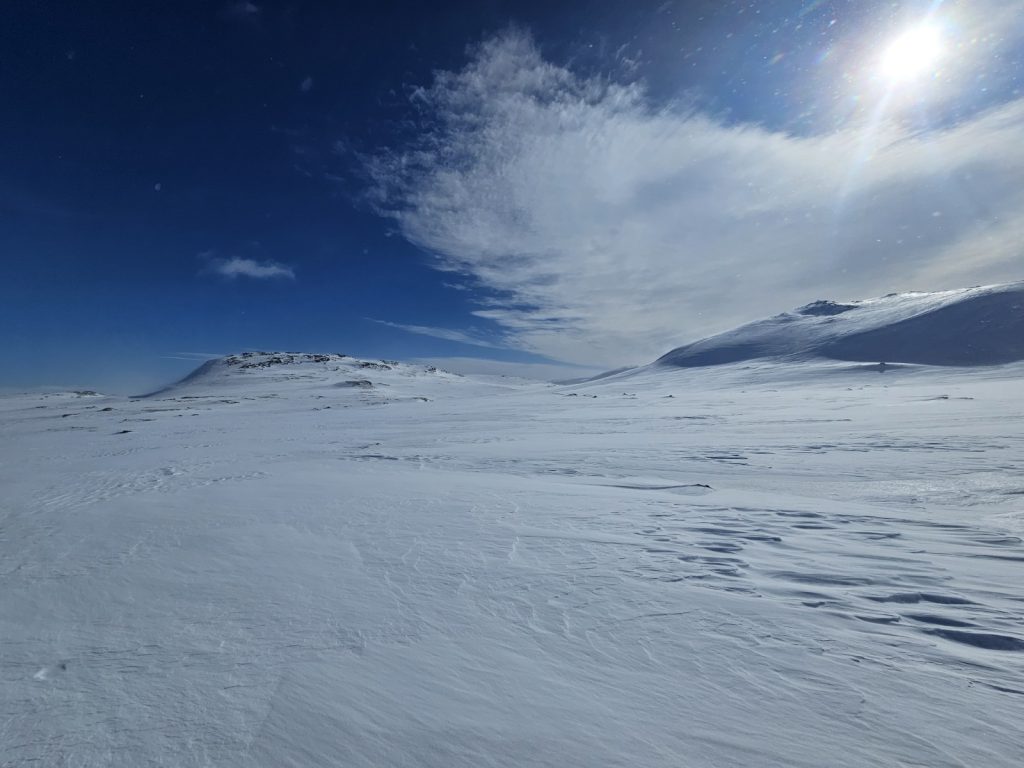
97. Skiing along the high wide shelf towards the Tuevotni lakes above Kvennsjøen lake on the left and the small range of mountains to the south (right).
After our snack we continued across the easterly Tuevatni lake and up a shallow small valley to the pass. I had come this way on my Norge På Langs trip and remember getting into a terrible navigational muddle here some 16 years ago using map and compass in the mist as it was before GPS navigation was readily available. It is so much more precise and easier with GPS today but I always carry a map and compass in case of a gadget failure.
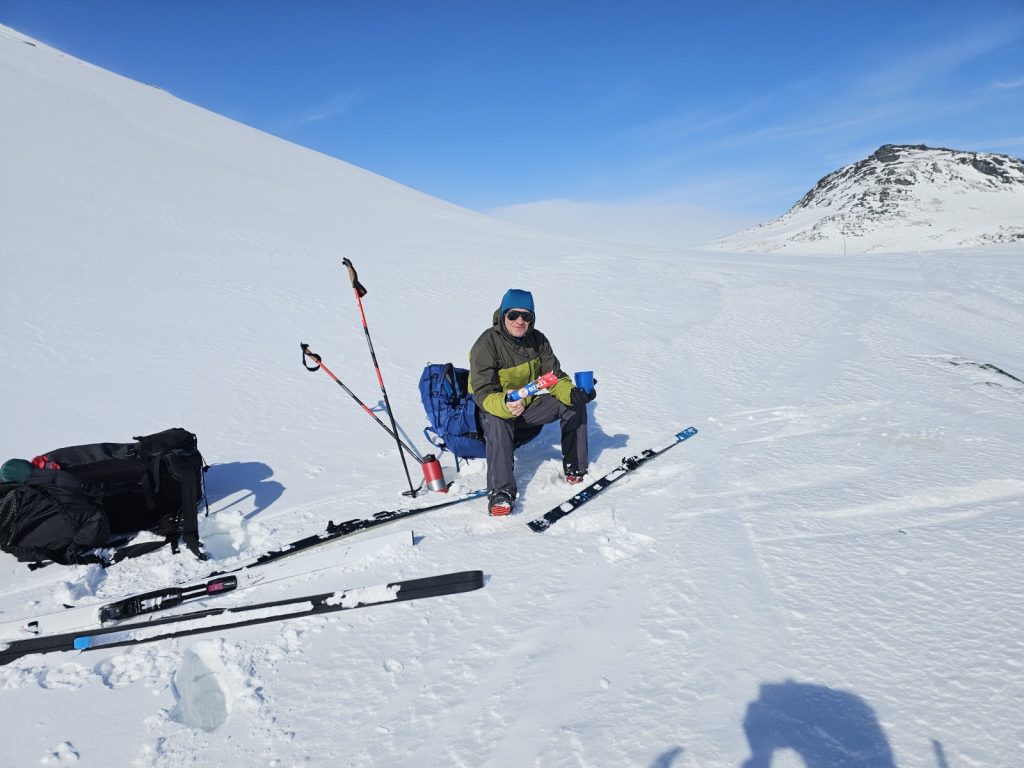
98. Despite the wind we managed to find a sheltered spot on the ridge between the Tuevotni lakes to have the usual snack of Bixit biscuits.
The descent down the south side of this small pass was great fun. The snow was either icy and very fast or settled spindrift lying on the ice in patches. It was easy to see the difference between the two in this light and you could accelerate across the ice and slow down in the powder at will across the hillside. It only took some 20 minutes to descend the entire 3 km to reach the Bjørno valley at the head of the Ovsta Bjørnavatnet lake and all of it was fun. It made such a difference with good visibility and sun illuminating all the nuances of the snow. Had it been flat light or even a snow storm this descent would have been much harder and we would have been much more cautious.

99. Skiing up from Bjørnadalen towards the saddle between the hills of Sandvikenuten and Buanuten with the sun reflecting off the wind polished ice.
Once in Bjørna valley we continued SW up to a pass between the craggy Buanuten and Sandvikenuten. The sun beat down on the white polished domes on these hills and shone as if covered in mirrors. Yet there were streams of spindrift flying off the cornices like a giant Himalayan mountain. With the bright sun and the constant flow of spindrift towards me it reminded me of Antarctica. Occasionally there were steeper bits to the climb but generally it was easy and we reached the second pass of the day after some 45 minutes of climbing.
The descent down the other side was again great fun. We could traverse the icy hillside with the strong wind keeping us from accelerating down out of control. Eventually the descending traverse ended and it was more steeply straight down to the cabin which had just appeared less than a kilometre away. Again all we had to do to manage the descent comfortably was to go from a patch of softer snow to a patch of softer snow. It slowed our descent and meant we could turn at will. Most of the softer snow was on the lee of the ridge we were coming down the crest of. So if we strayed onto the icier windward side and shot off down the slope we knew we could just veer left or east onto the lee side and slow down in a drift.
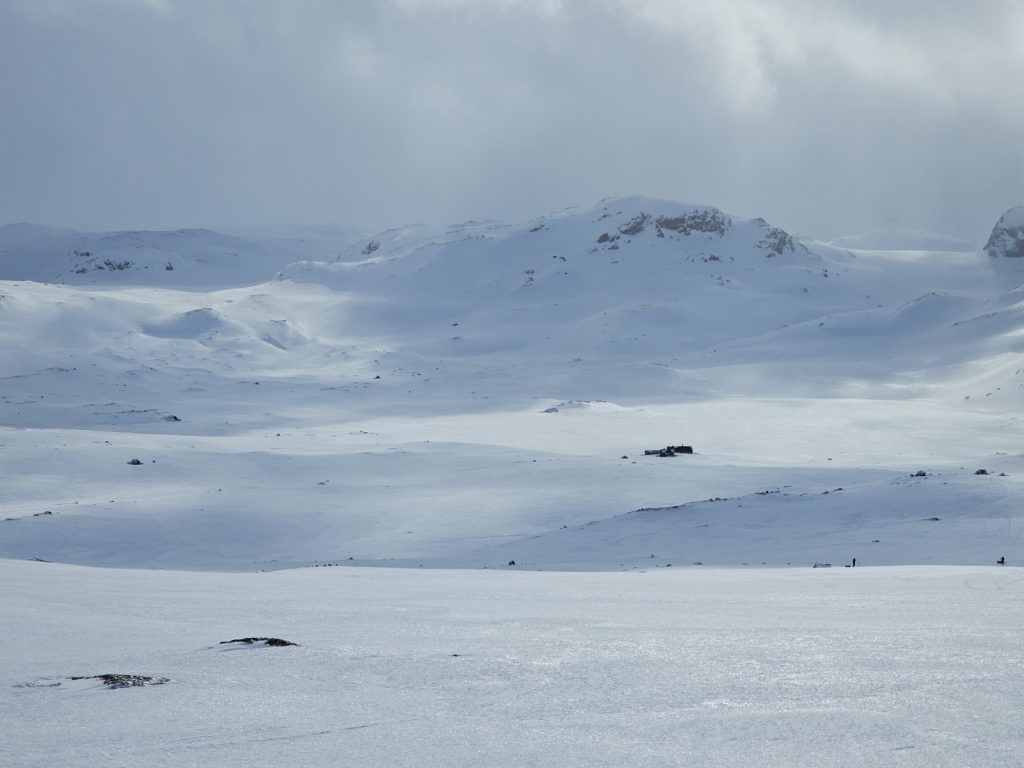
100. The descent from the final saddle of the day down to Hellevassbu cabin (centre right) was an easy downhill ski.
Just as we neared the cabin we caught up with the team from Ousland Explorers. They were in good spirits after their nights out and were not stopping at the hut but going on for another hour or two. It must have been very tempting for them to be seduced by the fleshpots in the cabin and the smell of birchwood smoke, but they resisted. We on the other hand relished it and were soon taking our boots off and putting slippers on on the dry varnished floor. There were already three others in the cabin: a very, gentle, nice older Norwegian, called Espen, who had just retired as a psychiatric nurse, and two other Norwegians on inappropriate racing skis who got lost on the way here from Haukeliseter and found the icy surfaces extremely difficult. We took a 4 man room in the immaculate cabin which was extremely well maintained and I wrote before dinner while Stuart read more of his book in the cosy warm comfortable dining room. The weather closed in as the late afternoon unfolded and the sky clouded over and joy went from the landscape, however the wind dropped off. The rumour was it would pick up later and tomorrow would be a difficult day weatherwise. That evening we had mashed potatoes and bacalao again. Probably for the last time this trip as we hope to finish tomorrow at Haukeliseter.
Day 24. Hellevassbu Rest and Weather Day. 0 km. 0 hours. 0m up. 0 m down. Stuart and myself were up early at 0600 to make the final push to Haukeliseter some 25 kilometres away. We could hear the wind whistling and roaring outside the cabin but both ignored it as we ate breakfast and packed up. Stuart had to go outside to the wood and toilet shed and came back 10 minutes later. He was covered in spindrift and unusually quiet and pensive. I followed soon after. Getting to the wood shed was quite spectacular with the wind at my back but the return to the main cabin with its 20 metres into the strong gale in blizzard conditions was more than spectacular. It was a maelstrom of ice crystals and snow rushing headlong into my face like being pelted with a firehose of frozen water. When I returned we both agreed simultaneously that it would be foolhardy and unpleasant to set off for Haukeliseter in these conditions – especially as the forecast was for it to get slightly worse. We still had a spare day and this seemed the perfect opportunity to cash it in. Espen was also up and he was in no doubt he was staying put. The other two Norwegians from Drøbak were full of bluster about how they were going to go to Litlos but it was slowly emerging they were quite incompetent and clueless.
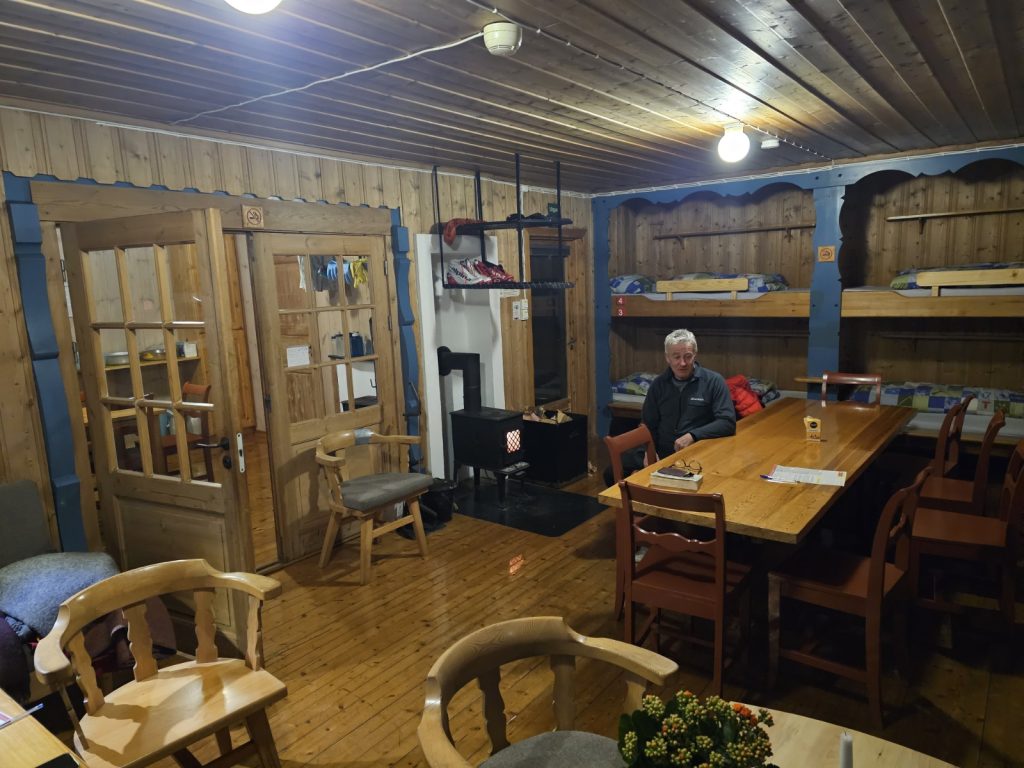
101. We had to spend a day at Hellevassbu cabin as there was a blizzard outside making skiing quite difficult.
Once we made the decision to stay it was easy to settle down for a restful day of reading, eating, keeping the stove going and melting water. The Drøbak Duo kept looking out of the window and making plans to go to Litlos but Espen was determined to stop them. It later emerged on the way to Hellevassbu 2 days ago they had misread the GPS gadget and got lost. After some 12 hours, with darkness approaching, they pressed the SOS button on the GPS gadget. This sent a SOS signal to Garmin in the USA who in turn contacted the search and rescue authorities in Stavanger in Norway. Stavanger search and rescue dispatched a Sea King helicopter to find them. However at the same time they finally figured out where they were and skied the last 2 km to the Hellevassbu cabin. At the cabin they asked for help from 2 Polish skiers as to how to cancel the SOS as it was beyond them. As the Poles were sending the signal the whole cabin started to shudder and vibrate as the Sea King hovered overhead. However when they received the request to cancel the rescue the helicopter flew off back to Stavanger leaving the Drøbak Duo still at the cabin. The whole thing was a farce. Unembarrassed by their escapade they were now contemplating skiing in a blizzard to Litlos on their inappropriate skis without metal edges, in inappropriate footwear, which were like sports training shoes, without a spade or windsack or emergency shelter.
During the mid morning the 8 youth and the 2 instructors arrived after having spent the night in a tent. They were wet as the temperature had risen and the snow was now falling as sleet. However they were cheerful and the teachers were well organized and experienced. We quickly helped unpack their pulks and moved all their bags upstairs into the two dormitories. We then put on the two other stoves and collected 5 full buckets of water by heating the stainless buckets on the stove and then taking them outside to fill with snow which melted at once allowing the bucket to fill with water after 5-7 shovelfuls of snow. This Sogndals Folkehøgskole team soon settled down and became the main centre of conversation. The instructors found a quiz book and soon we were all involved except the Drøbak Duo who had given up stressing and returned to their room for a siesta.
In the evening the instructors and Espen tried to persuade the Drøbak duo to return with us to Haukeliseter tomorrow morning, but they were having none of it. Tomorrow they naively thought were going to ski to Litlos for lunch and then on to Sandhaug for the night. Stuart and myself kept out of it but it was painfully obvious the Drøbak duo were out of their depth but too stubborn to admit it. Norwegians are very practical, cautious and humble but not these two. Stuart and myself went to bed just after dinner, which was the leftovers from the Sogndal team. It was their self made dehydrated chili con carne and it was delicious. Making it on a dehydrator at the school was all part of their outdoor education course. We set the alarm for 0400.
Day 25. Hellevassbu to Haukeliseter. 25 km. 6.5 hours. 490m up. 680 m down. The wind did not abate in the evening but by the time the alarm went at 0400 it seemed a strong breeze, but there was still spindrift flying off the edges of the drifts outside in the torchlight. However I could also see that there were a few stars so the sky was at least partially clear. It was essential we had an early start as I wanted to catch the 1315 bus from Haukeliseter to Oslo and we had to ski 25 km to get there. As we were having breakfast the Drøbak duo got up and started spouting how they were going to ski 45 km that day. I was finding them quite irritating and ignored them. We had our breakfast and were packed and ready to go at 0500. It was still dark but the next 2 km were either flat or up and by then the first light would have arrived. As we set off a snow flurry arrived and there was a mesmerizing stream of snowflakes flashing sideways across the beam of the headlights. It was short lived and passed soon and with it the last wind of what must have been a squall.
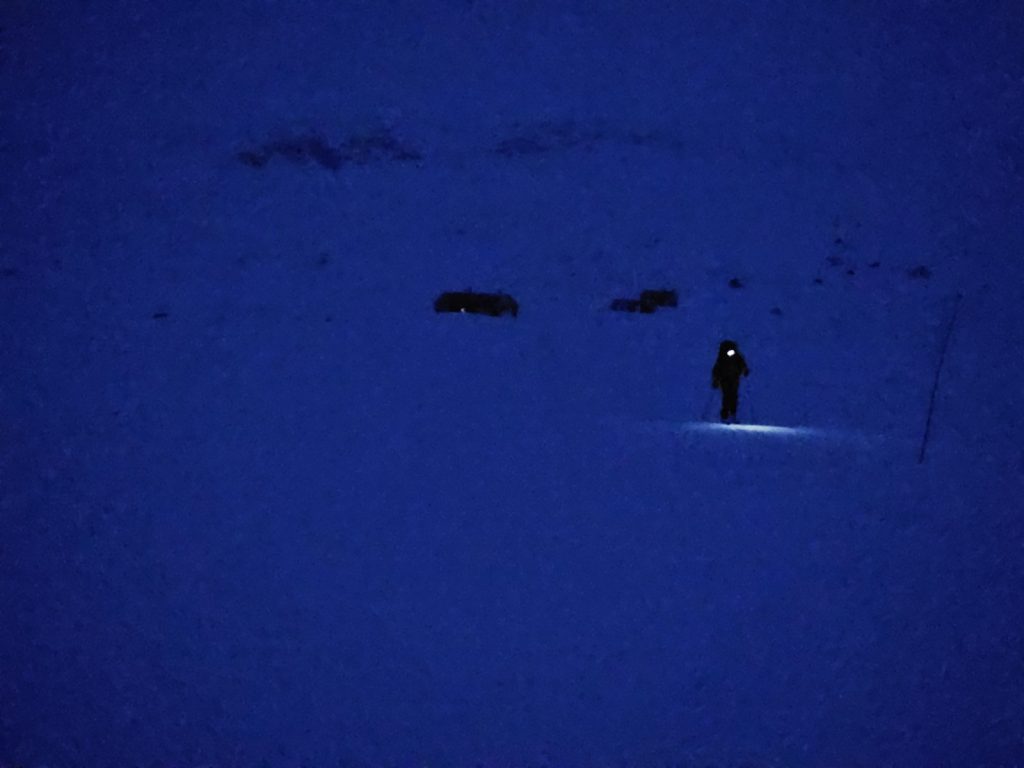
102. Leaving Helkevassbu cabin at 0500 in the morning with headtorches to ski the 25 km to Haukeliseter before rhe bus at 1315 hrs.
We reached the bottom of the climb after a kilometre and started up. All the hard icy frozen surface of the snow from 2 days ago was now submerged under a layer of compacted spindrift which was firm and easy to ski across. It offered a great glide and even on the steeper climb gave enough grip so we hardly had to zig-zag at all. By the time we reached the top of the slope it was approaching 0600 and dawn had broken and we could turn the torches off. It was mostly overcast but there were enough areas of blue sky to let the sun shine onto a few of the higher slopes and bathe them in a golden orange light. It was all going well.
It got even better when we passed the watershed at Skudskar at Simletind mountain and started to ski down the upper reaches of Borddalen. The snow was beautifully firm and it offered a fantastic glide. With each stride we flew forwards down the very shallow incline from one frozen lake to the next. The kilometres were starting to pass quickly and we soared past the small locked cabin at Kuntsbu on Midnutsvatnet lake. At the far end of the lake we spotted the red tent of the Narvik Norwegians and saw they were already up. We skied over to them for a chat and to find out how yesterday had gone. The first thing they said was what were the “crazy guys in the cabin doing”. We told them they were going to ski to Sandhaug 45 km away and they laughed. They said yesterday they had gone about 6 km but it was just too difficult to see so they stopped and put the tent up at the height of the blizzard. The reason they found it difficult, and indeed why the Drøbak duo got lost was because this section of the skiing route was not marked at all. Out of the entire 25 km only the first 3 km and last 3 km were marked. This was due to a dispute with a difficult landowner and the DNT. Without the twigs in the snow in a whiteout and blizzard all visual references disappear and it is like scuba diving in milk. After an all too short chat we carried on. It was a shame our paths did not cross more with the Norwegians from Narvik as they were fun and lively guys.
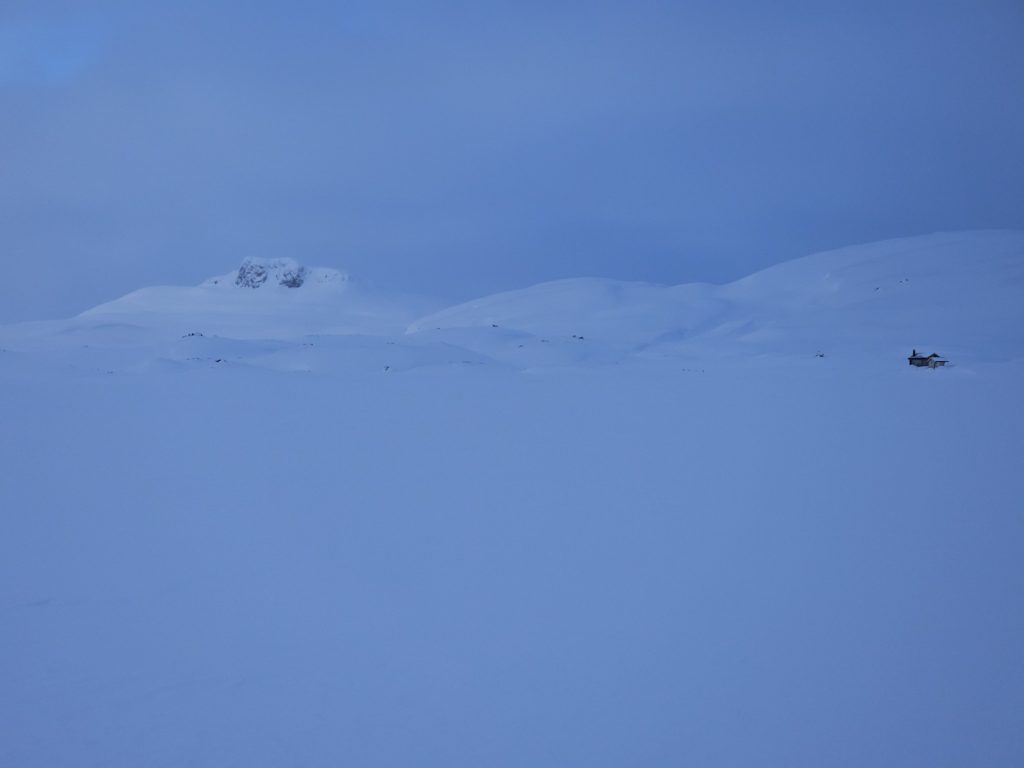
103. Crossing Årmotsvatnet lake after skiing 12 km in the early morning en route to Haukeliseter.
Pretty soon we reached Åmotsvatnet lake and skied down the lake to the small locked hydropower cabin at the south end by the small dam. By now the sky was opening up even more and there were large areas of blue sky and the mountains on each side were all visible. There was hardly any wind at all – in total contrast to yesterday. We passed the cabin and then skied down the narrower valley which was plastered in deep drifts for another couple of easy kilometres until we reached the start of the last climb. We had been skiing for a little under 3 hours and had already done 14 km. As it was not yet 0900 and we now had good time, we stopped here for a snack and drink for a few minutes in the cold, under a still low-angled sun.
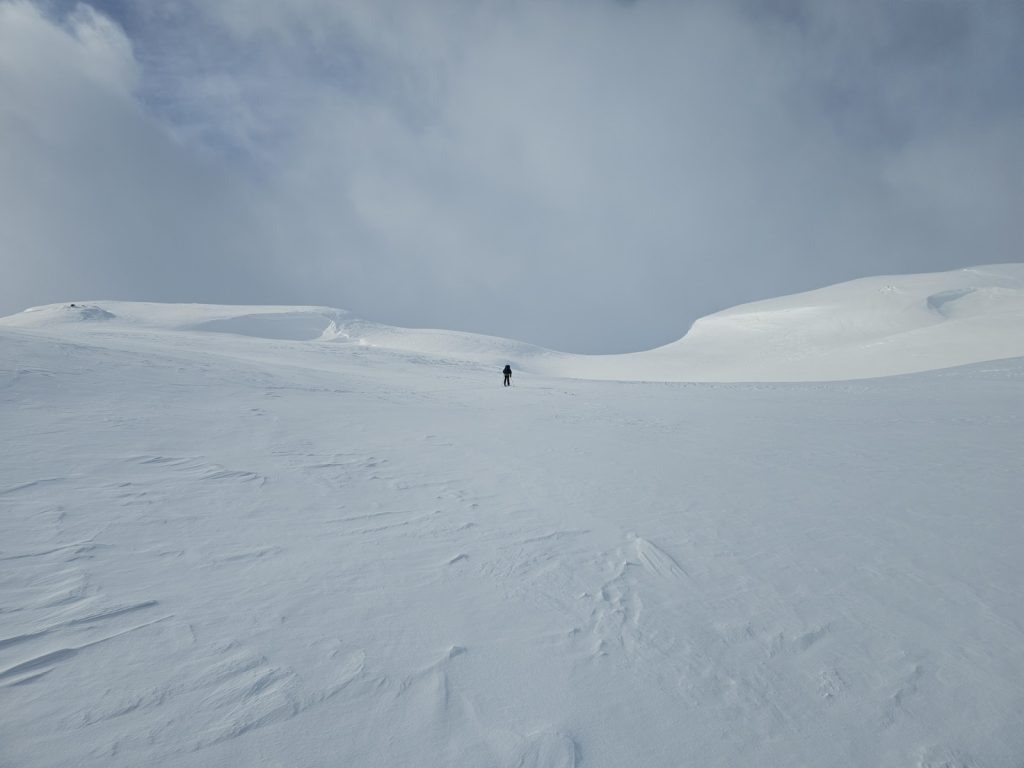
104. Stuart about to reach the saddle to the west of Vesle Nup where we had to negotiate through a section of large drifts and cornices to reach the actual saddle.
I had to change my ski skins here to wider nylon ones which would afford me a better grip for the near 300 meter climb to the last saddle just to the west of Vesle Nup. The new skins were perfect and I managed to keep up with Stuart who was at a slight disadvantage with his narrower skins offering less traction. He had to zig-zag more while I could go straight up the slope. We passed to the south of Mannevatnet Lake and then traversed up the slope to the saddle itself which was covered in huge drifts and cornices as it was on the lee side of the prevailing winds and also yesterday’s blizzard. It was in these drifts that the Sogndals Folkehøgskule team intended to snowhole tonight before finishing tomorrow. Stuart and myself were very impressed by their ethos. We skirted the drifts and cornices and then found ourselves skiing up the final slope to the saddle itself. From here we could see the way down the otherside all the way to Slåvatn Lake which was our final destination some 400 metres below us. The descent was not marked by sticks and quite how the team from Ousland Explorers made it down here yesterday with the gales force winds, white out and snow driving into their face I don’t know. It must have been a very difficult descent and Angus very skilled with an intuitive knowledge to lead them down. For us now it was a delight as there was a very shallow ravine with softer deep snow on the west flank and floor of the ravine. We could simply come down in a series of turns in the easy, predictable, forgiving snow. It only took half an hour for us to make it. The “Heroes of Telemark” namely Terje, Anders and Erik from 2 weeks ago in Breheimen would have done it in 5 minutes through such was their skiing prowess. At the bottom by Loftsdokktjønn tarn the terrain became a bit more tricky with many small knolls most of which had small cornices on them. Again this would have been immensely difficult for Angus and his team yesterday.
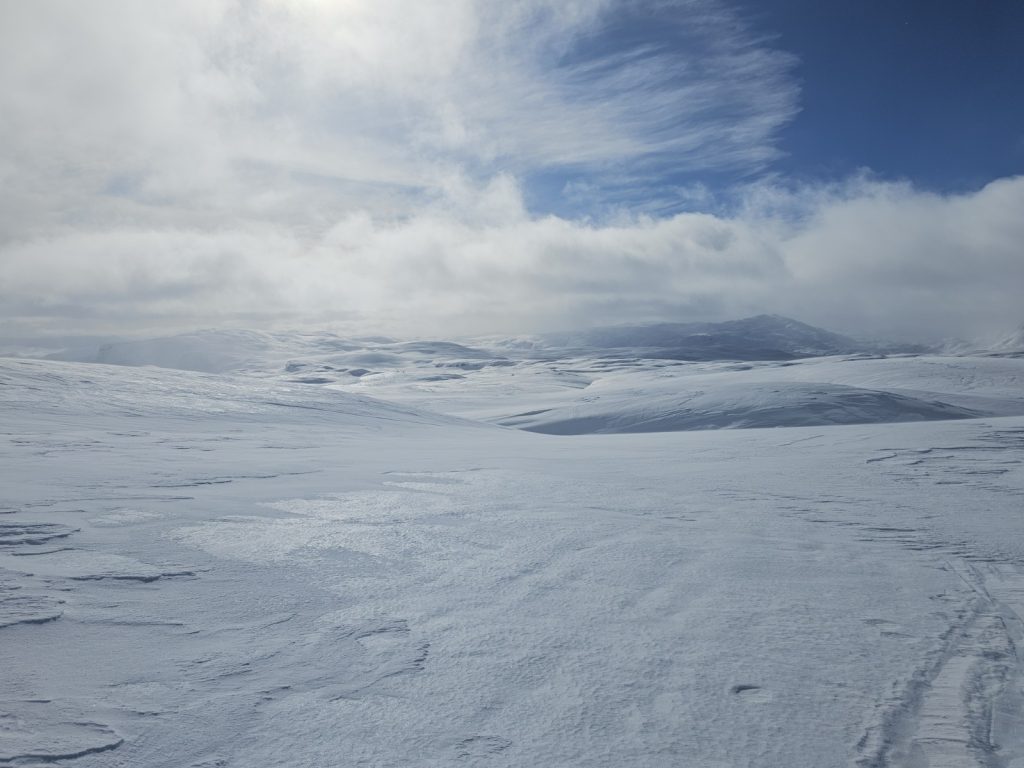
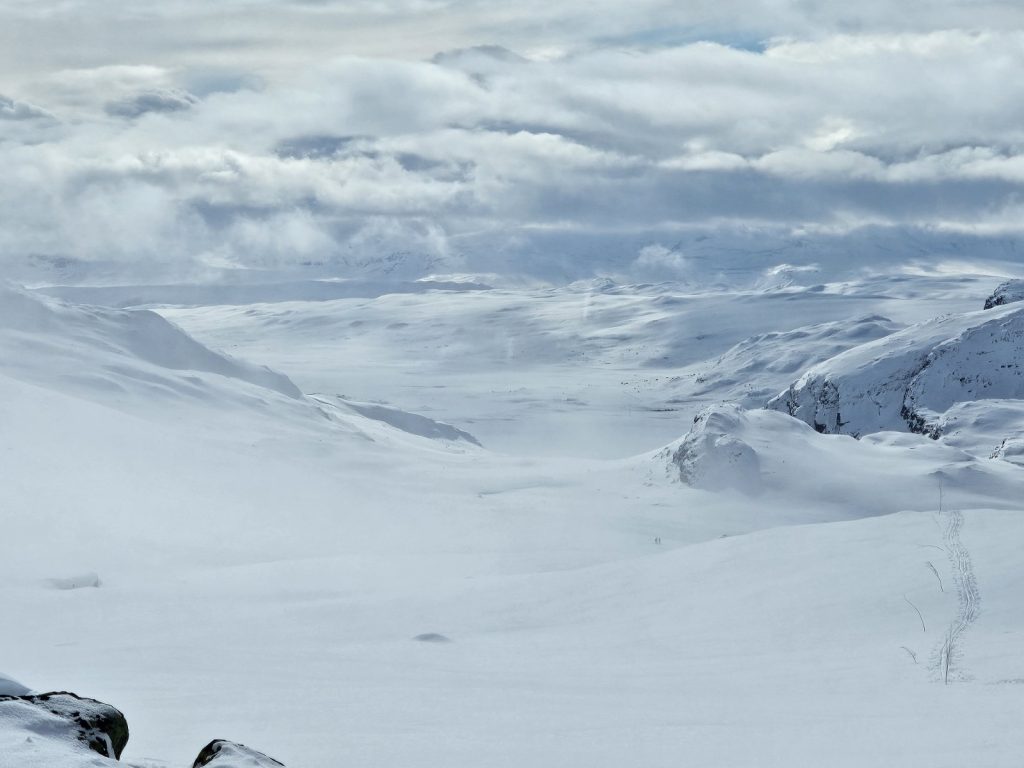
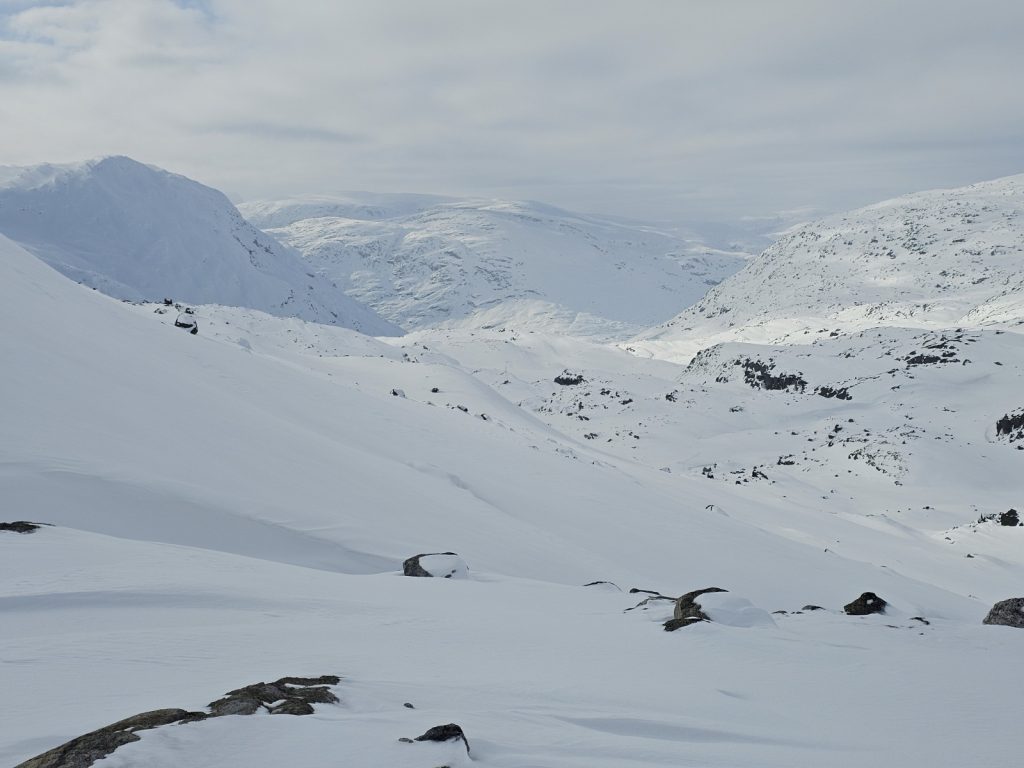
105. Looking south from the saddle to the west of Vesle Nup and down the 400 metres of near continious vertical descent ro the larger lake of Sjåvatnet, just visibke on the far right.
When we reached the tarn the sticks reappeared in the snow as there was a marked circular route from Hauleliseter up here. Rather than go the usual way to the south which led to an impossibly steep descent we decided to go to the west over a nearly imperceptible saddle, called Ulveåskaret, and then down a wonderful fun descent for 2 km until we reached the main road. It was the first time I have made this descent as opposed to about 3 times the other way and this is by far the preferable. We crossed the main road and skied the last remaining metres to Gråvatn Lake which was bathed in sunshine and nearly windstill. We had now still 2 hours before the bus went and just 3 km to ski across the problem-free lake to reach Haukeliseter. It was a pleasant ski, almost a stroll, and we soon rounded a spur and there just a few hundred metres away was Haukeliseter with its beautiful old buildings on the edge of the frozen lake. The most impressive of these buildings was the old Nansenstue where polar explorers from the early romantic age over 100 years ago used to come and stay before heading out across Hardangervidda for polar training. We arrived and congratulated each other on what had been a great and memorable trip despite the poor conditions caused by 3 weeks of unseasonably warm weather. I would say on average it was at least 10 degrees warmer than it should have been.
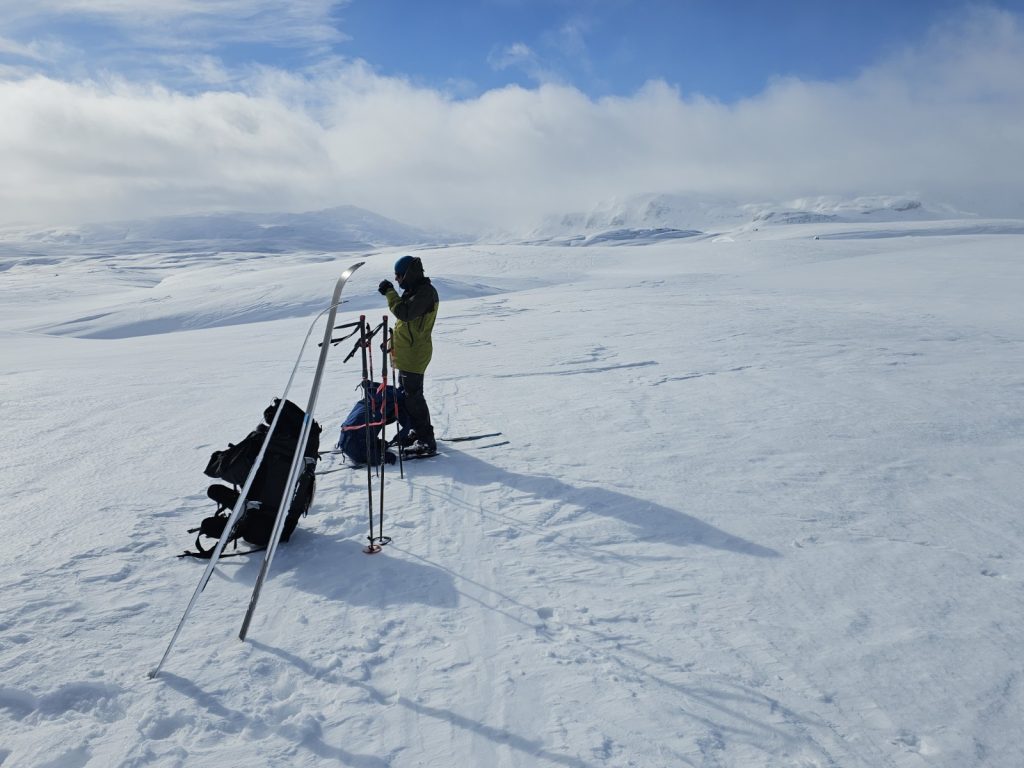
106. A final cup of tea before the long and fun descent to Sjåvatnet Lake and the final ski along this lake to Haukeliseter lodge.
We had an hour to go into the lodge’s bathrooms, clean ourselves up a bit, and put on less dirty clothes for the bus ride. Angus came down to meet us as we changed and told us about the difficulty they faced yesterday. We were in awe of his skills and I must take my hat off to them for seeing it through. The bus came at 1315 and both Angus’s team and Stuart and myself got on. I was nervous the bus would be full but it was still not quite the Easter rush so there were many seats available.
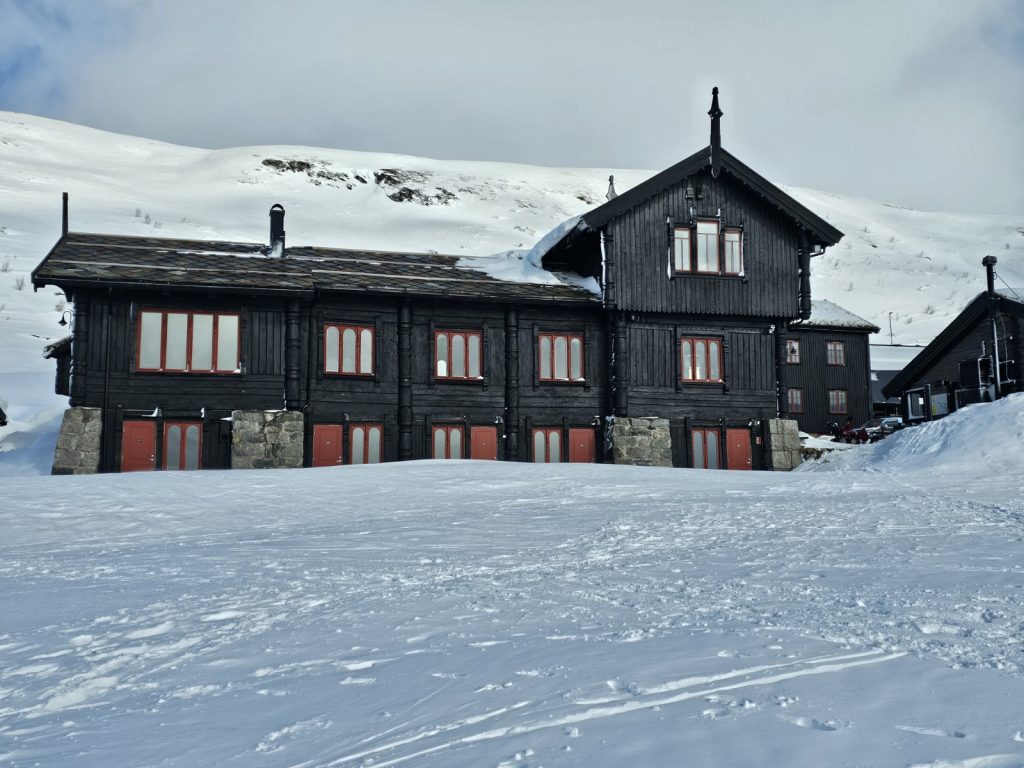
107. After skiing 423 km over the last 25 days we finally reach Haukeliseter lodge and the bus to Oslo. This is the Nansenstue at Haukeliseter where the earliest polar explorers stayed over 100 years ago.
Some 4 hours later we got off at Hovik and were met by Roland, a friend from the past 10 years. He drove us to Hartmut’s near Sandvika, a friend for the last 43 years. Hartmut is an exceptional cook and there was a large and delicious curry waiting for us after a quick shower. It was a great welcome back into the world away from the winter wonderland we had immersed ourselves into for the last three and a half weeks.
Total Statistics. 25 Days (1 March 2026 – 25 March 2026). 423 km. 131 skiing hours. 10730m ascent 10750m descent.